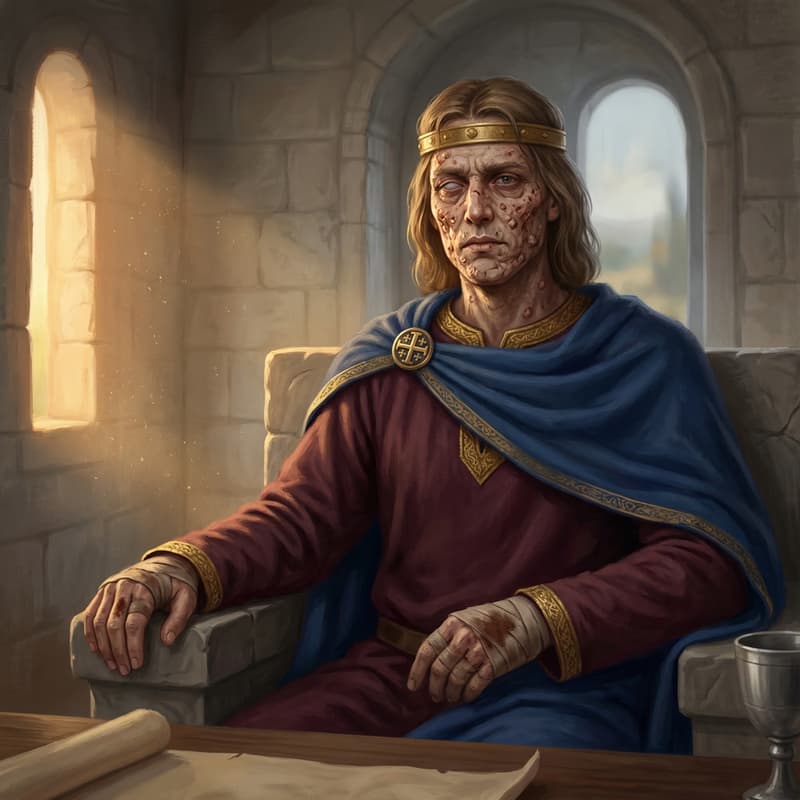
November 25th, 1177. A sixteen-year-old king kneels in the mud. His hands are wrapped in bandages. His right arm has no feeling. And somewhere ahead, scattered across the hills of Palestine, twenty-six thousand of Saladin's soldiers are about to learn what happens when you underestimate a dying boy.
The Battle of Montgisard shouldn't have happened. The numbers made it impossible. The geography made it suicide. And the king leading the charge? He was rotting from the inside out. But what unfolds in the next few hours will haunt Saladin for a decade--and become a military case study that still gets taught today.
The Kingdom Left Defenseless
The problem began three weeks earlier.
Philip of Alsace had arrived in Jerusalem on pilgrimage, and everyone expected him to help defend the kingdom. Instead, he marched north with the bulk of the Crusader army--the Knights Hospitaller, most of the Templars, the best heavy cavalry in Outremer--to attack a Syrian fortress that posed no immediate threat.
He left Baldwin IV with almost nothing.
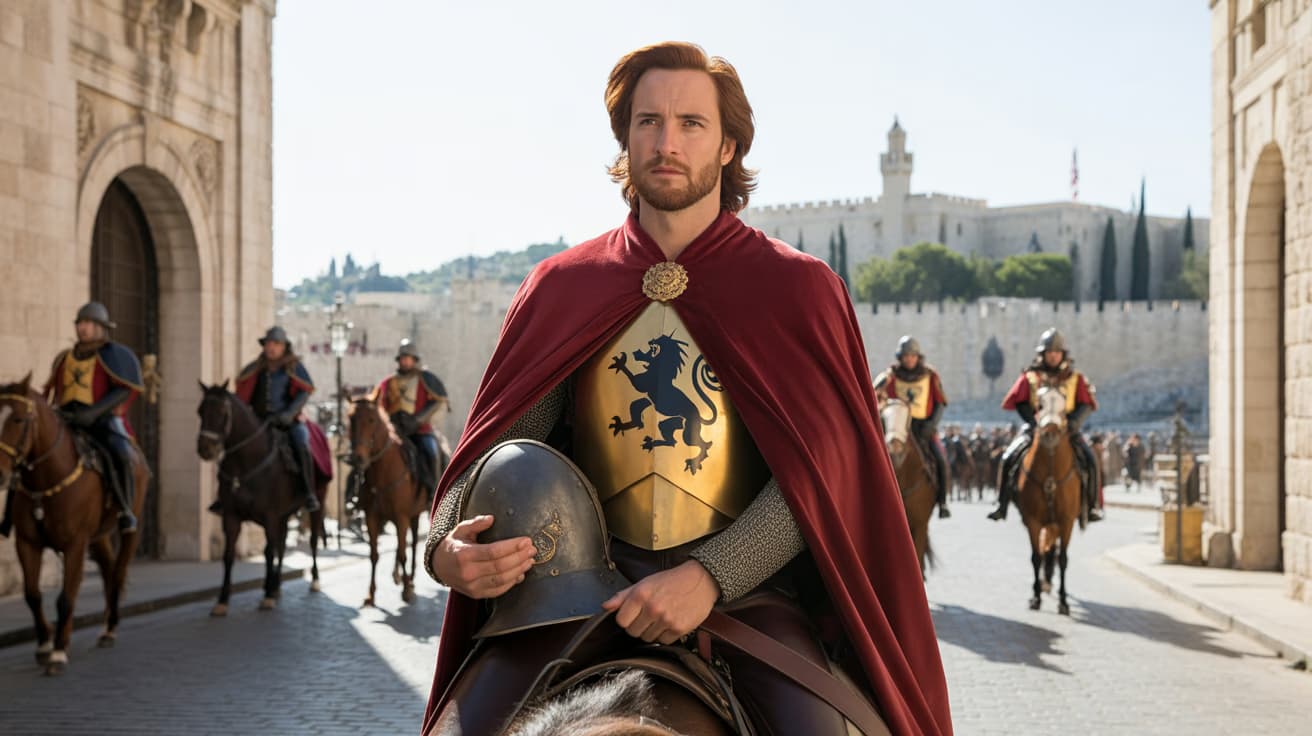
When Saladin's spies reported the news, the sultan moved fast. On November 18th, he led his army out of Egypt: twenty-six thousand men, siege engines, a massive baggage train, and his personal guard of elite Mamluk bodyguards. The road to Jerusalem was open.
Baldwin was sixteen years old. He'd been king since he was thirteen. And he'd known since he was nine that his body was destroying itself.
His tutor, William of Tyre, had discovered it during a game. Young Baldwin and his friends were pinching each other's arms, seeing who could endure the most pain. The other boys yelped. Baldwin felt nothing. William watched, then examined the boy's right arm and hand. Dead. No sensation at all.
Leprosy.
By the time Baldwin rode to meet Saladin's army, the disease had begun its advance. His hands were wrapped to hide the spreading sores. Puberty was accelerating the decay. In a few years, he would be blind, his face eaten away, his limbs curling into useless claws.
But that hadn't happened yet. Not quite. And right now, he could still ride a horse better than most grown men in his kingdom.
Subscribe to Nightfall History on YouTube
Join our community on YouTube for more historical deep dives and visual storytelling
Rats in a Hole
Baldwin reached Ascalon on November 22nd with three hundred seventy-five knights. When scouts reported Saladin's numbers, the math was simple: they were outnumbered roughly fifty to one.
The council that night nearly broke him.
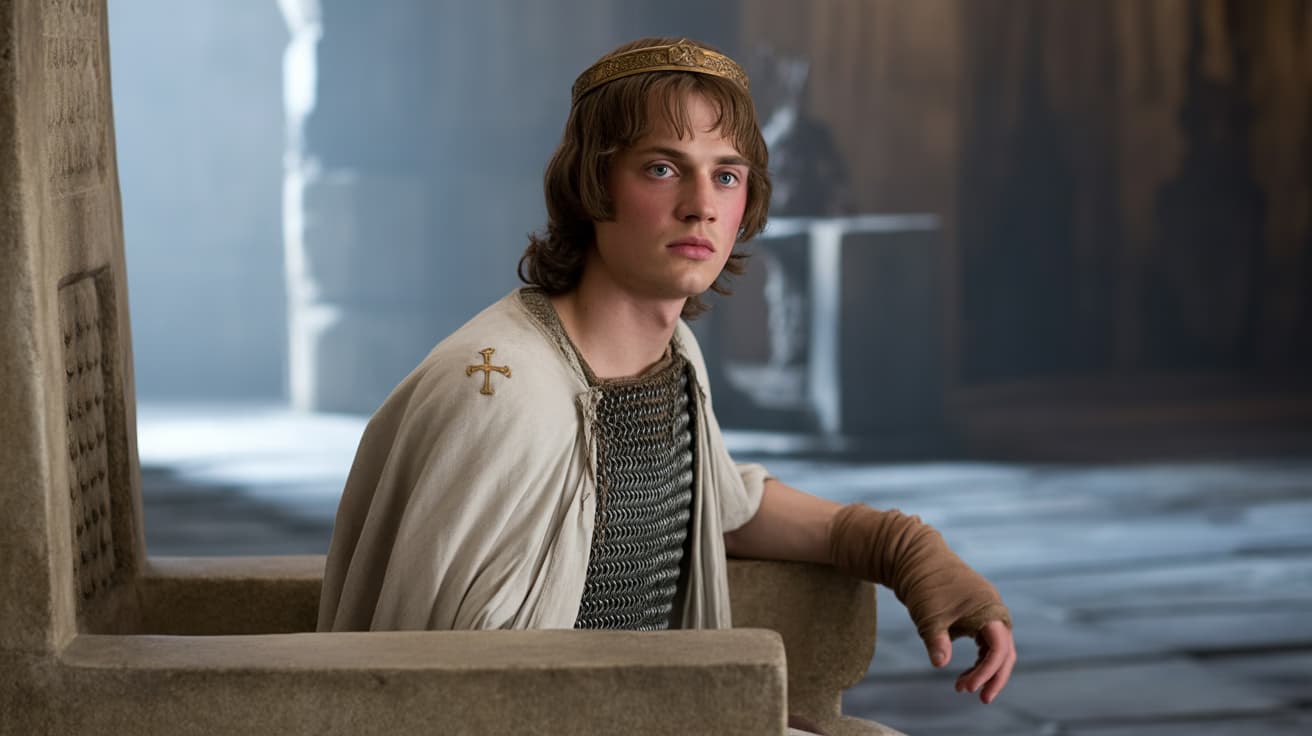
His commanders laid out the options, and none of them were good. Ride out and die. Stay behind the walls and watch Jerusalem fall. Send messengers begging Philip to return--but Philip was three weeks away, and Saladin would reach the Holy City in four days.
One of the older knights--a man who had served Baldwin's father--spoke the thing no one else would say. "Your Grace, we cannot win this battle. We can only choose how we die."
Baldwin listened. His hands throbbed beneath the bandages, the familiar burning that meant the sores were spreading. The fever that came and went with the leprosy was rising again, making the torchlight swim and blur. He was sixteen years old, and every man in that room was waiting for him to admit what they already believed: that this was the end.
For a moment, he nearly gave them what they wanted.
He thought about the walls of Ascalon--thick, well-supplied, defensible. He could wait here. Pray for a miracle. Write letters to the Pope explaining how the numbers made any other choice impossible. History would understand. His commanders would understand. God Himself would surely understand.
Everyone except the people of Jerusalem, who would be dead or enslaved by Christmas.
Stay in the Loop
Get notified when new articles and videos drop. Unsubscribe anytime.
Baldwin dismissed the council. He needed to think. He needed to pray. But mostly, he needed everyone to stop looking at him like he was already in the grave.
At dawn, he made a decision that looked like cowardice. He withdrew into the city and closed the gates.
Saladin arrived, assessed the fortress, and made his own calculation. That boy and his handful of knights weren't a threat. They were rats hiding in a hole. The road to Jerusalem was wide open, and there was no army between here and the Holy City.
The sultan didn't even bother to leave scouts behind.
He pushed north, his army spreading across the countryside like a flood. Soldiers scattered to forage. Others raided villages--Ramla, Lydda, Arsuf--collecting loot and supplies. The baggage train stretched for miles, crawling along muddy November roads.
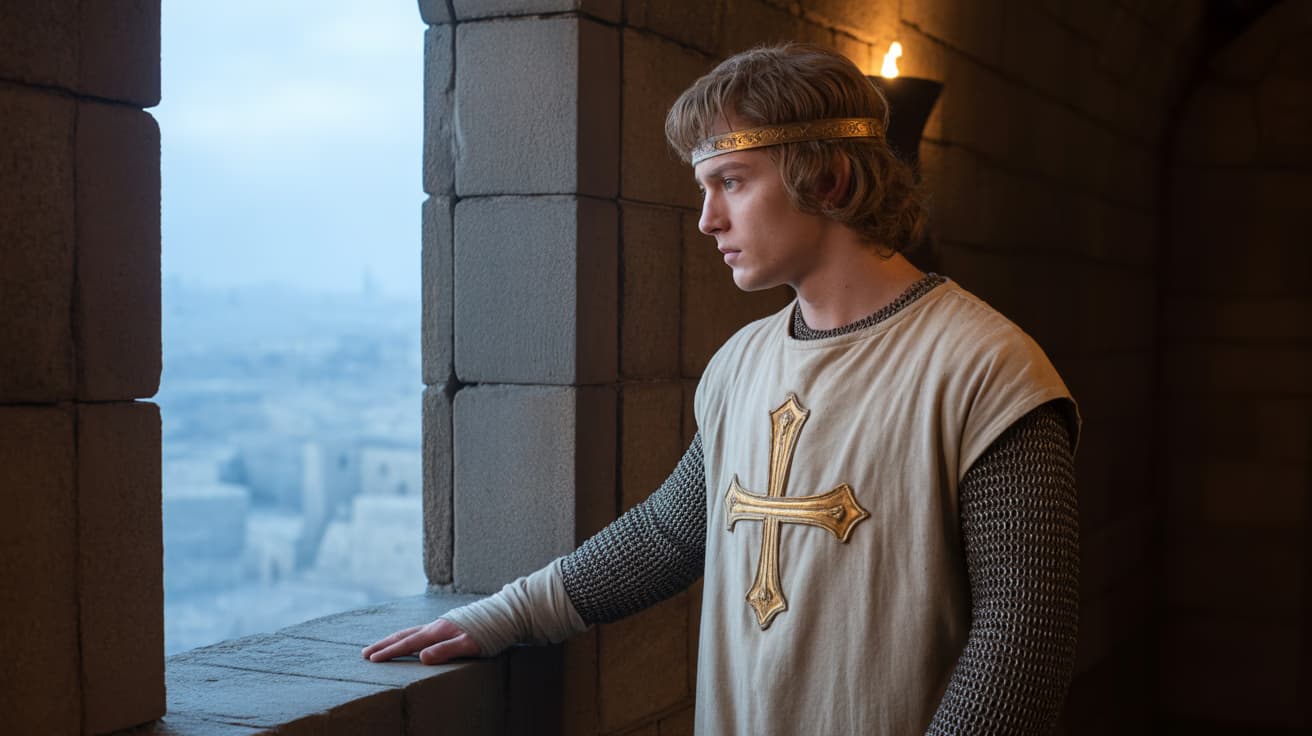
And Baldwin, watching from the walls of Ascalon, sent a messenger racing to Gaza.
The Zealot and the Prisoner
The Knights Templar had been left to guard Gaza, led by their Grand Master, Odo de St Amand--a zealot even by Templar standards. Eighty knights. That's all he had. When Baldwin's message arrived, Odo didn't hesitate. He abandoned Gaza and force-marched south.
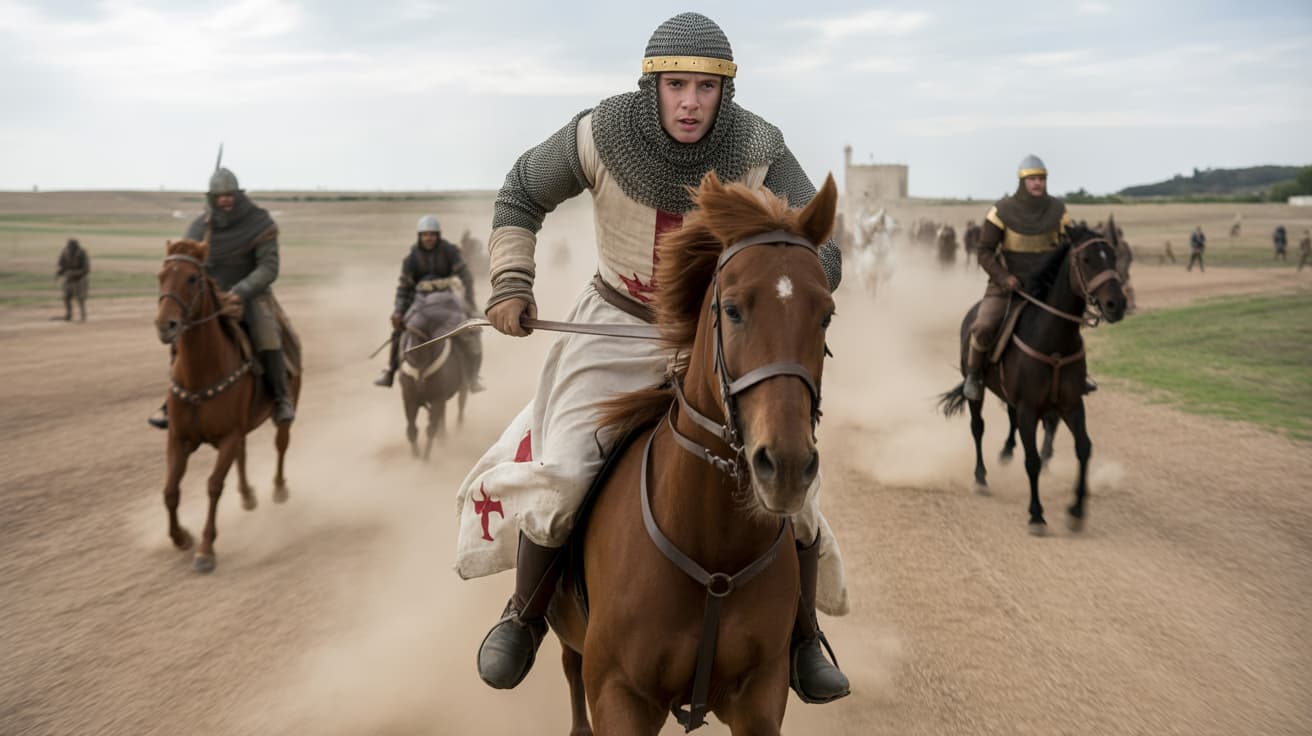
Inside Ascalon, Baldwin was planning something insane.
Beside him stood Raynald of Châtillon, a man who had spent the last sixteen years rotting in a Muslim prison in Aleppo. He'd been released just the year before. He had scores to settle with every Saracen breathing, and he had a reputation for violence that made even other Crusaders uncomfortable.
But Raynald knew how to fight. And he knew that Saladin had just made a catastrophic mistake.
Baldwin knew something else--something that had nothing to do with tactics.
He had been dying since he was nine years old. Seven years of watching his own body betray him, piece by piece. Seven years of knowing exactly how the story ended. Other men feared death because it was unknown to them, a shadow they'd never faced. Baldwin had been formally introduced. He'd spent years learning its face, its pace, its patience.
And sitting in Ascalon, watching Saladin's army march toward Jerusalem, he realized something that changed everything: he wasn't afraid. The worst thing that could happen to him was already happening. It had been happening since childhood. What was one more battle to a boy whose body was already a war he was losing?
The fear that paralyzed other men--the fear of dying--had no grip on him. He was already dead. He just hadn't stopped moving yet.
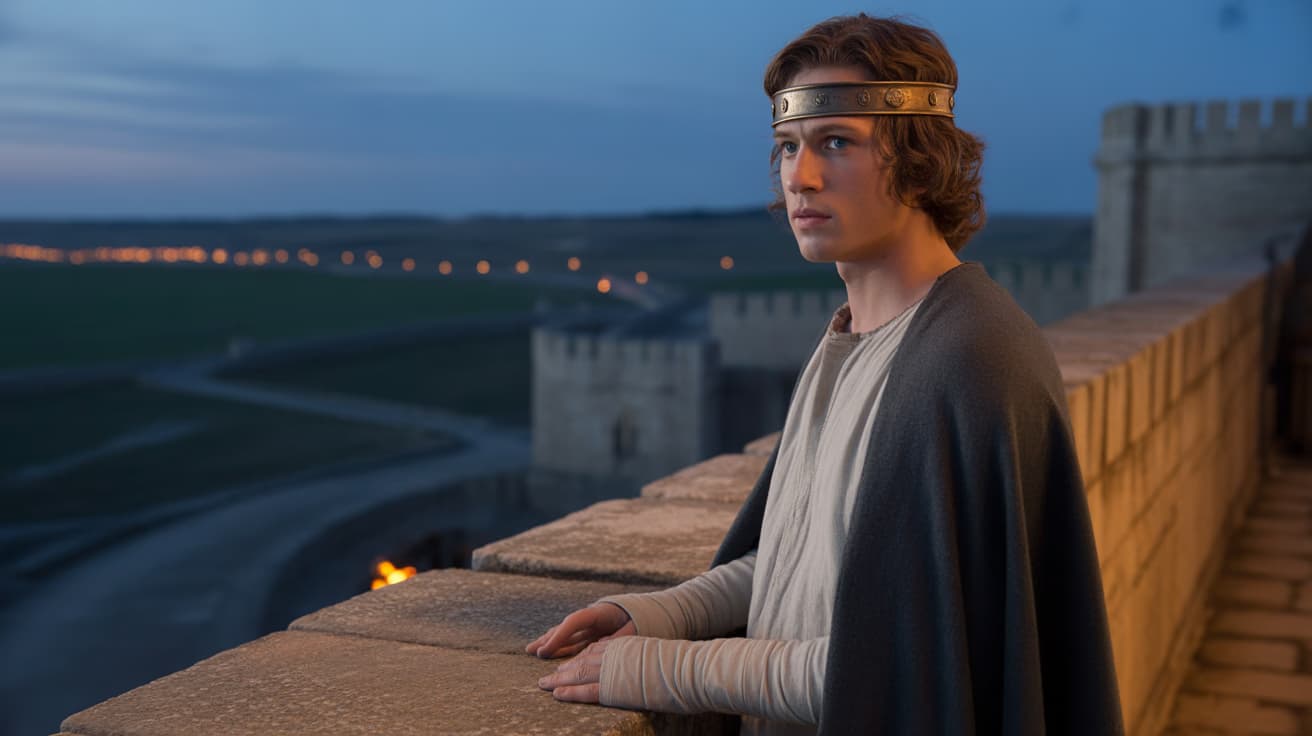
The sultan's army was spread across miles of open country. Some troops were stuck with the baggage train. Others were scattered in raiding parties. His cavalry hadn't rested since leaving Egypt. And he had no idea what was happening behind him.
On November 25th, Raynald laid it out one final time. Four hundred fifty knights against twenty-six thousand. The odds of survival, let alone victory, were so small that no rational commander would take them.
Baldwin listened. Then he gave his answer.
"If we stay here, Jerusalem falls. If we ride out, we probably die. But 'probably' is not 'certainly.' And I would rather die on a horse than watch from these walls while everything we've bled for burns."
He broke out of Ascalon with every knight he had, linked up with the Templars, and raced north along the coast.
Saladin's first warning came when Crusader cavalry appeared on the horizon.
The Mud and the Cross
The battle happened near a white rocky hill called Tell es-Safi--the Arabs called it al-Safiya. The Crusaders had built a castle on top, Blanchegarde, and below it lay marshy lowlands where a small stream had turned November fields into a quagmire.
Saladin's baggage train was stuck in the mud.
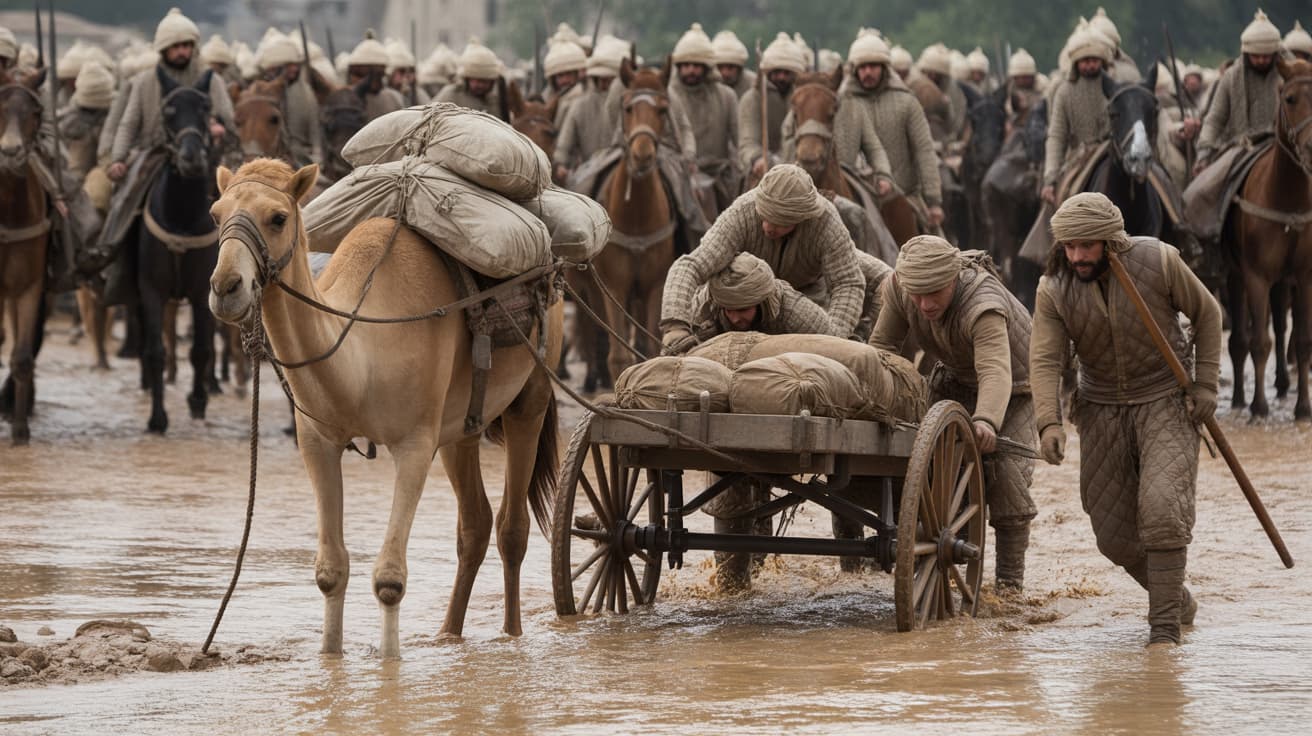
His soldiers were everywhere and nowhere--some wrestling supply carts out of the mire, others still miles away with foraging parties, others stumbling back from raids with their arms full of loot. The sultan tried to form battle lines, but his cavalry was exhausted, his horses blown, and his men hadn't expected to fight.
Baldwin saw all of this. And he saw something else: an opportunity that would last exactly as long as it took Saladin to get his army together.
The king ordered the Bishop of Bethlehem forward. The bishop raised a wooden reliquary containing what the Crusaders believed was a fragment of the True Cross--the actual wood on which Christ had been crucified.
Baldwin dismounted.
He was sixteen years old. His hands were wrapped in bloody bandages. His right arm hung at his side like dead weight. And in front of his army, in front of his enemies, in front of God, he dropped to his knees in the mud and pressed his forehead to the earth.
The prayer took seconds.
Then he stood, remounted, and gave the order to charge.
The Slaughter
What happened next became a slaughter.
Four hundred and fifty-five heavy cavalry--knights in chain mail on armored horses--crashed into an army that wasn't ready for them. The Crusaders hit Saladin's center line while his wings were still trying to form. The Templars drove straight through.
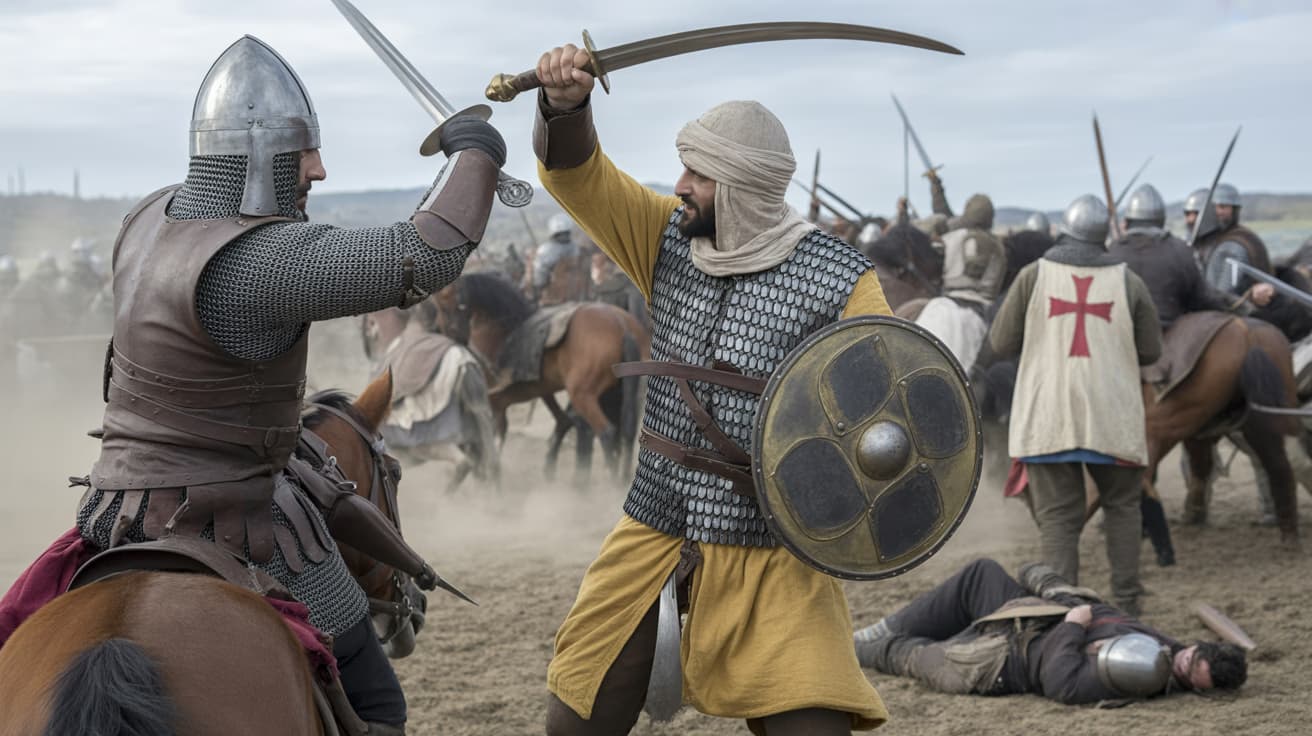
Baldwin was in the thick of it, his bandaged hands somehow keeping grip on his reins, somehow swinging a sword.
Here's where the sources disagree--and the disagreement tells you something.
The Muslim chroniclers who survived would later credit Raynald of Châtillon with command of the battle. They had reasons for this. Admitting that the great Saladin had been routed by a sixteen-year-old leper was harder to swallow than losing to a seasoned warrior with a reputation for brutality. Raynald made sense. Baldwin didn't.
But every Crusader account puts the leper king at the point of the lance. They had their own reasons--a sick boy leading a holy charge made for better sermons, better legends, better proof that God was on their side.
The truth is probably somewhere in the middle. What we know for certain is this: Baldwin was there, he was fighting, and when the line broke, it broke completely.
Saladin's army shattered.
The rout spread faster than word could travel. Men who'd been pushing carts out of the mud heard the screaming and started running. Foraging parties returned to find their comrades dead or fleeing. The sultan's personal bodyguard--the elite Mamluks--threw themselves in front of the Christian advance and died almost to a man, buying their lord seconds.
Saladin didn't hesitate. He stripped off his chain mail, climbed onto a racing camel--the witnesses are specific about this detail--and fled.
Behind him, his army died.
The Long Road to Cairo
The pursuit lasted twelve miles. The Crusaders ran down everyone they could catch. By the time darkness fell, the fields around Montgisard were carpeted with corpses.
But the dying wasn't over.
The survivors faced a four-hundred-mile desert crossing back to Egypt with no supplies, no organization, and no protection. Bedouin tribes descended on the retreating columns like vultures. Any soldier who stopped in a village to beg for food or water was killed or handed over to the Crusaders as a hostage.
Saladin reached Cairo on December 8th.
He'd left Egypt with twenty-six thousand men. He returned with perhaps two thousand. The rest were dead, captured, or scattered across the Sinai.
Muslim historians would later describe the defeat at Montgisard as so catastrophic that it was "only redeemed by the famous battle of Hattin."
But that was a decade away. In November 1177, the most powerful sultan in the Muslim world had been humiliated by a dying teenager.
What the Numbers Miss
Baldwin IV built a monastery on the battlefield, dedicated to Saint Catherine of Alexandria, whose feast day fell on November 25th. He would rule for another seven years, each one harder than the last as his body consumed itself.
He would face Saladin many more times--winning some, losing others--but never again with odds this impossible.
The sultan learned from Montgisard. He never again allowed overconfidence to scatter his forces. He never again ignored a trapped enemy. And he spent the next decade carefully, methodically building the force that would eventually destroy the Kingdom of Jerusalem.
But there's something the strategic analysis misses.
What made Montgisard work wasn't just surprise, or terrain, or the mud trapping Saladin's baggage train. It was the sight of a sixteen-year-old leper--hands wrapped, body failing, kingdom outnumbered fifty to one--kneeling in the mud before a wooden cross, then climbing back onto his horse and leading the charge himself.
Three nights earlier, that same boy had nearly surrendered. He'd sat in a council room in Ascalon while grown men explained why fighting was pointless, and for one long moment, he'd almost believed them. The distance between that boy and the king who charged at Montgisard was seventy-two hours and a single decision.
Saladin's men broke because they couldn't process what they were seeing. Their scouts had told them the boy-king was sick, weak, hiding in a fortress. And now here he was, bandaged hands gripping a sword, riding straight at them like death had already rejected him.
The victory at Montgisard didn't save the Kingdom of Jerusalem. Nothing could have saved it. Baldwin would die at twenty-three, his sister's son at nine, and within three years of that, Saladin would take Jerusalem back.
But for one afternoon in November 1177, a dying boy showed an empire what it looks like when someone refuses to calculate the odds.
The snakes would come for other kings in other stories. This one rode a racing camel back to Cairo and spent ten years remembering the day a leper taught him fear.