The Gold Nugget on the Map
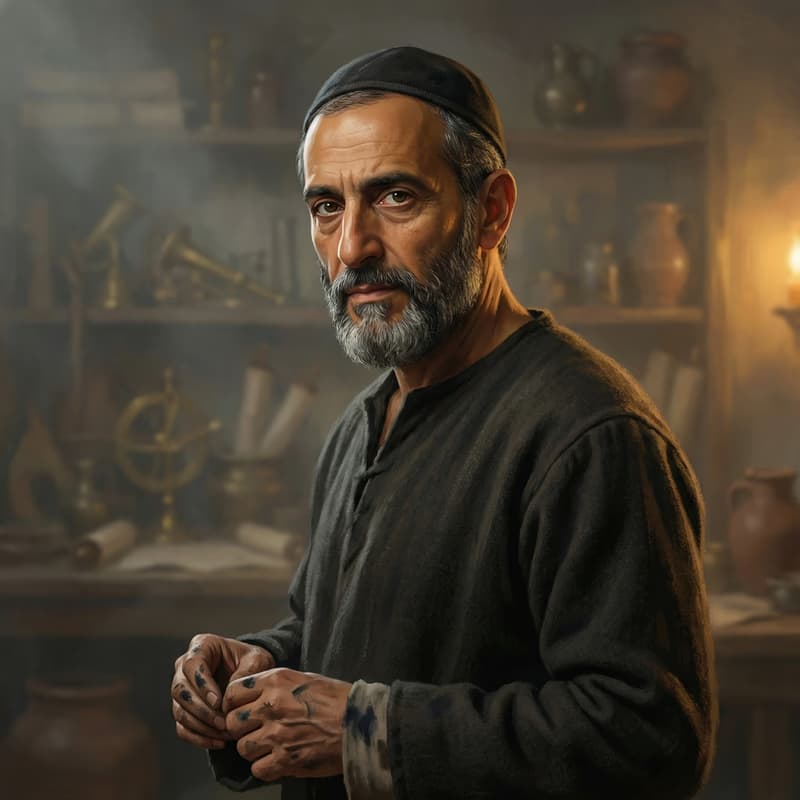
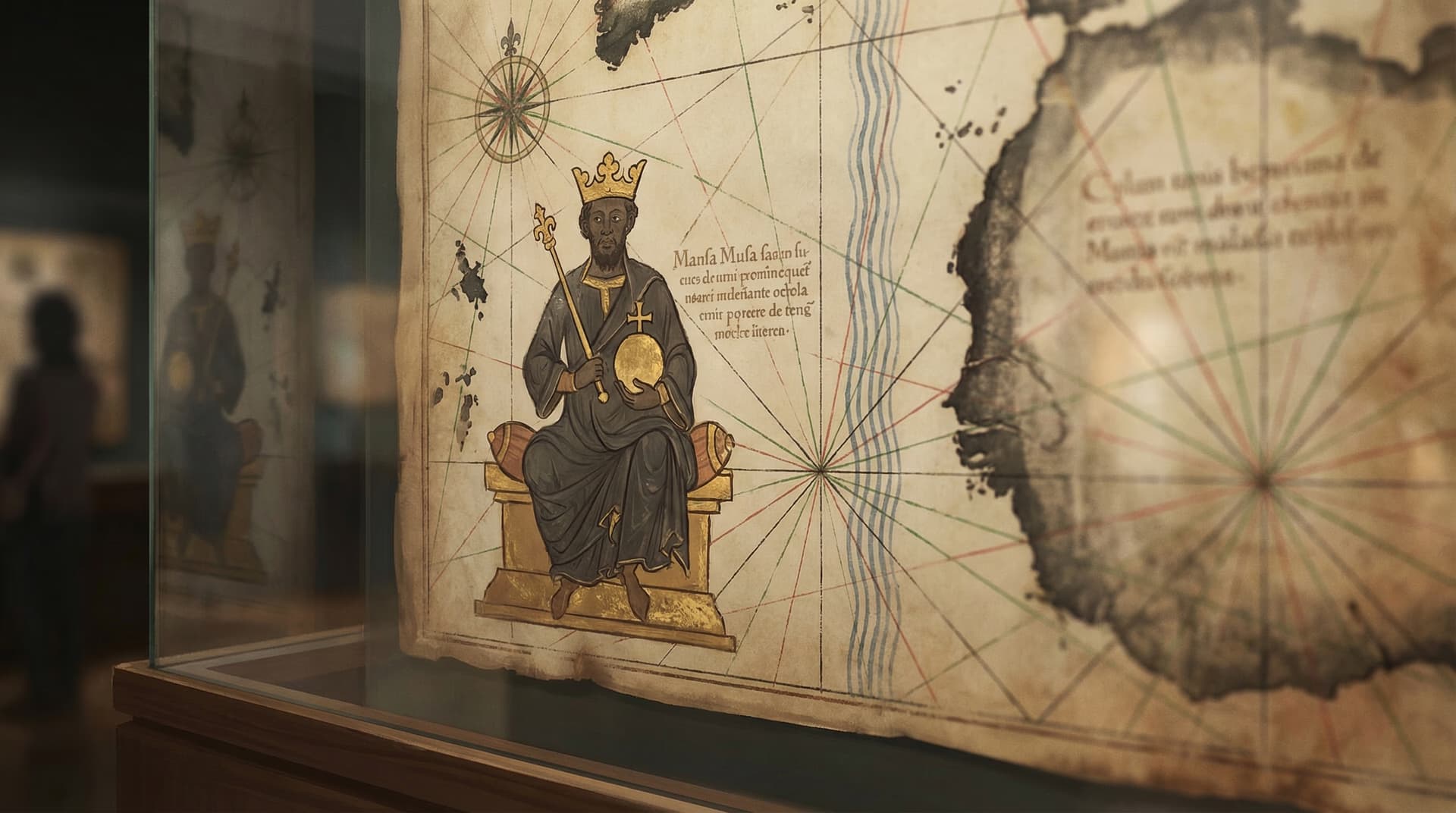
Somewhere on the island of Majorca, in a workshop that smells of dried ink and sea air, a man dips his brush into gold leaf. He is painting a king he has never seen, in a country he will never visit, on a continent he will never touch. Abraham Cresques -- Jewish illuminator, master of compasses, fluent in three languages -- is building the most ambitious map the medieval world has ever attempted. And somewhere in the lower panels, below the compass roses and the trade winds, he is about to do something no European cartographer has ever done: paint a Black African ruler on a throne, holding a nugget of gold the size of a fist.
It is roughly 1375. Mansa Musa has been dead for nearly four decades. But Cresques knows his name. He knows it because Majorca sits at the hinge of the Mediterranean, where Catalan merchants rub shoulders with Berber traders, where Arabic astronomical texts are copied alongside Hebrew prayer books, where news from Cairo still arrives by ship. And the news from Cairo, even half a century later, is still about the same thing: the king from the south who gave away so much gold that he broke Egypt's economy for a decade.
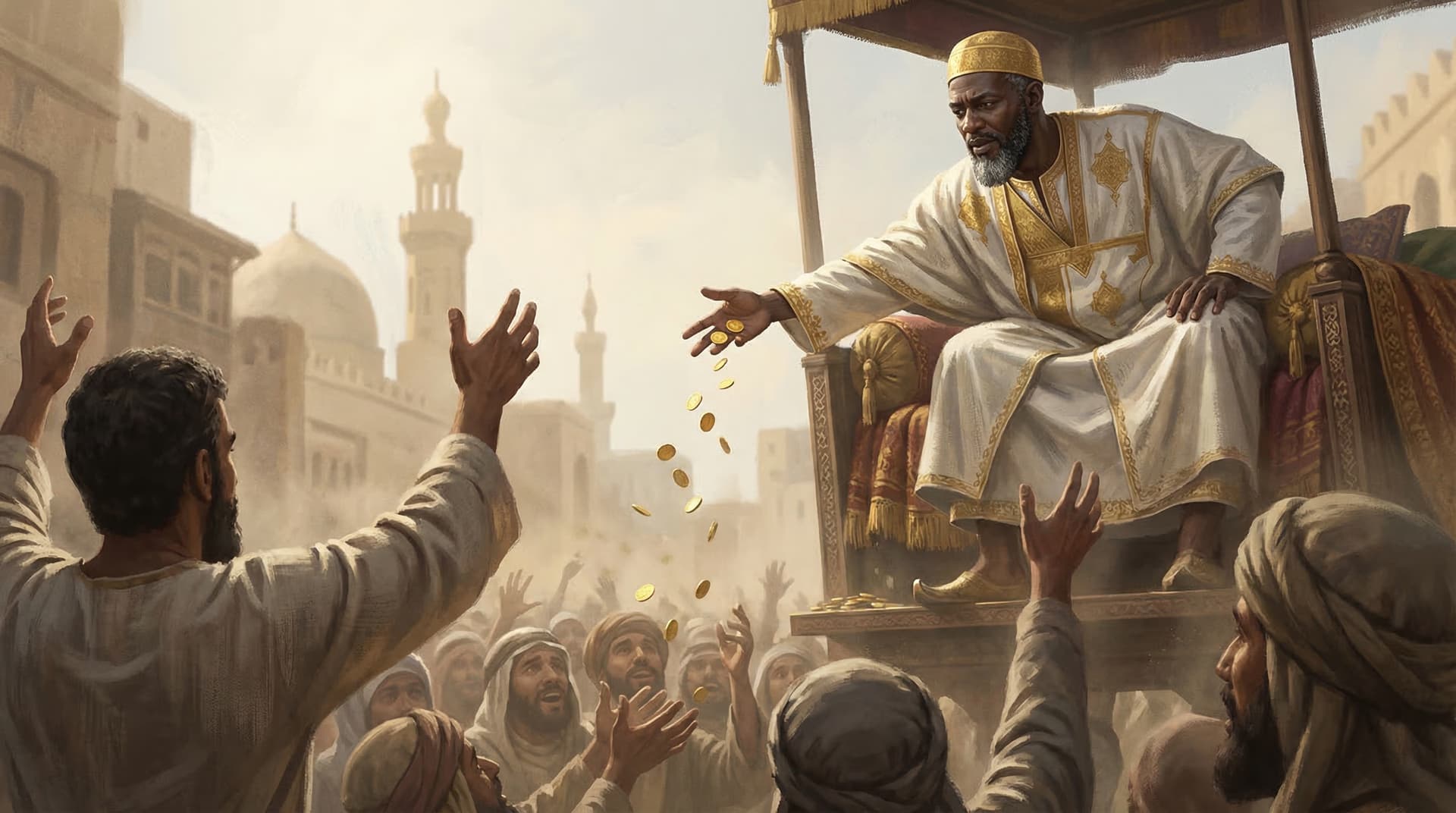
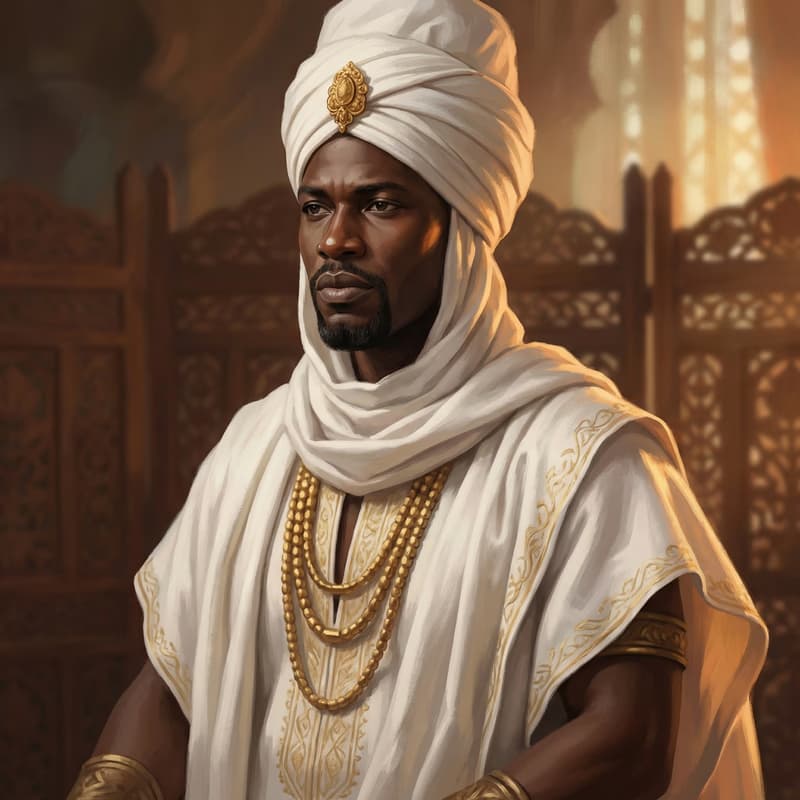
Cresques paints Musa seated cross-legged on a cushioned golden throne. He gives him a European-style crown, an orb, a scepter -- the visual vocabulary of power that his royal patrons will understand. Beside the figure he letters a caption in Catalan: "This king is the richest and noblest of all these lands due to the abundance of gold that is extracted from his lands." It is not a biography. It is not a history. It is a single sentence on a map -- and it will outlast every building Musa ever erected.
The Catalan Atlas will be delivered to King Charles V of France. It will be studied, copied, admired. And embedded in its panels is a paradox that will take centuries to resolve: Europe saw the gold. Europe wanted the gold. But Europe lost the civilization that produced it.
Subscribe to Nightfall History on YouTube
Join our community on YouTube for more historical deep dives and visual storytelling
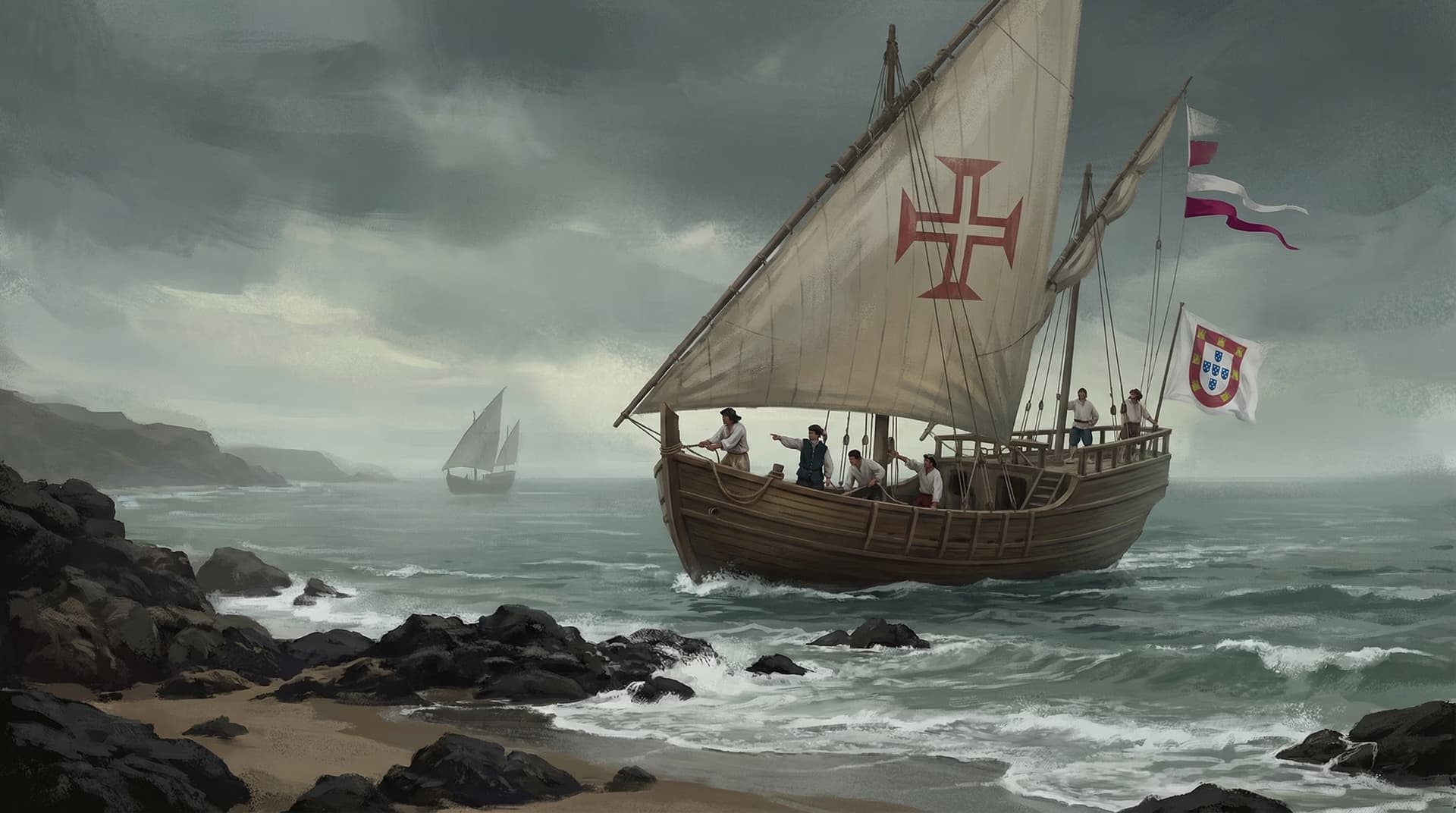
Within a century of Cresques finishing his atlas, Portuguese ships will round the West African coast, driven specifically by the legend of Mali's gold. They will build Elmina Castle in 1482 -- a fortress designed to divert the gold trade away from the Saharan caravans and into European hulls. They will succeed. But in succeeding, they will sever the trade routes that connected Timbuktu to the wider world. The trans-Saharan highways that carried scholars, books, and ideas alongside salt and gold will slowly empty. The city that Musa built into one of the medieval world's great centers of learning will begin its long slide from history into myth. What happens to a city when the world forgets it was ever real -- that is a question that will take six hundred years to answer.
A Synonym for Nowhere
By the nineteenth century, Timbuktu had become a punchline. European explorers spoke of it as a mirage -- a golden city that probably never existed, shimmering at the edge of the Sahara like a fever dream. The fact that it appeared on the Catalan Atlas, clearly labeled, with a king on a throne -- that had been forgotten. The fact that it had once housed hundreds of thousands of manuscripts on astronomy, medicine, mathematics, philosophy, even calculus -- that was simply not believed.
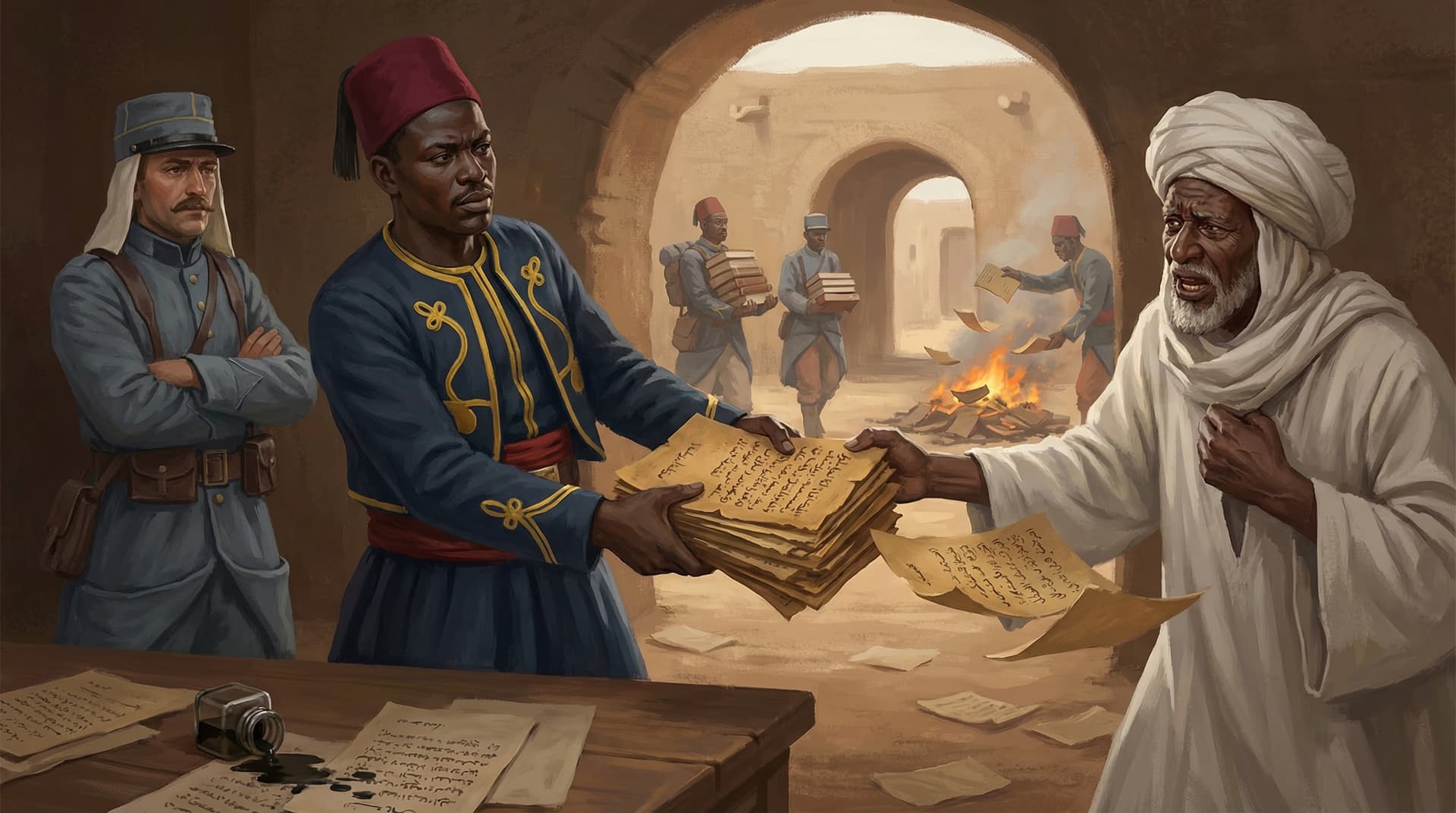
The French arrived in 1894. What they found was not a city of gold. It was a desert town, diminished, battered by centuries of conquest and shifting trade. And what they did next was systematic. Manuscripts were seized. Some were burned. Arabic education -- the lifeblood of Timbuktu's scholarly tradition -- was suppressed. A city that had once translated Plato and Hippocrates into Arabic, that had produced original works on geometry and jurisprudence, was treated as though it had nothing worth saving.
A 2006 survey found that thirty-four percent of young Britons did not believe Timbuktu existed at all. The rest considered it a mythical place. The erasure was nearly complete. Musa's name survived on the map. But the world he built -- the libraries, the scholars, the intellectual tradition -- had been buried. Not lost. Buried. There is a difference, and it matters.
The Trunks in the Sand
The manuscripts did not disappear. They went underground -- sometimes literally. Families across Timbuktu hid them in rusting metal trunks, in musty storage rooms, in mountain caves, in holes dug into the Saharan sand. They hid them from the French. They hid them from successive waves of conquerors. They hid them from the dry rot of time itself.
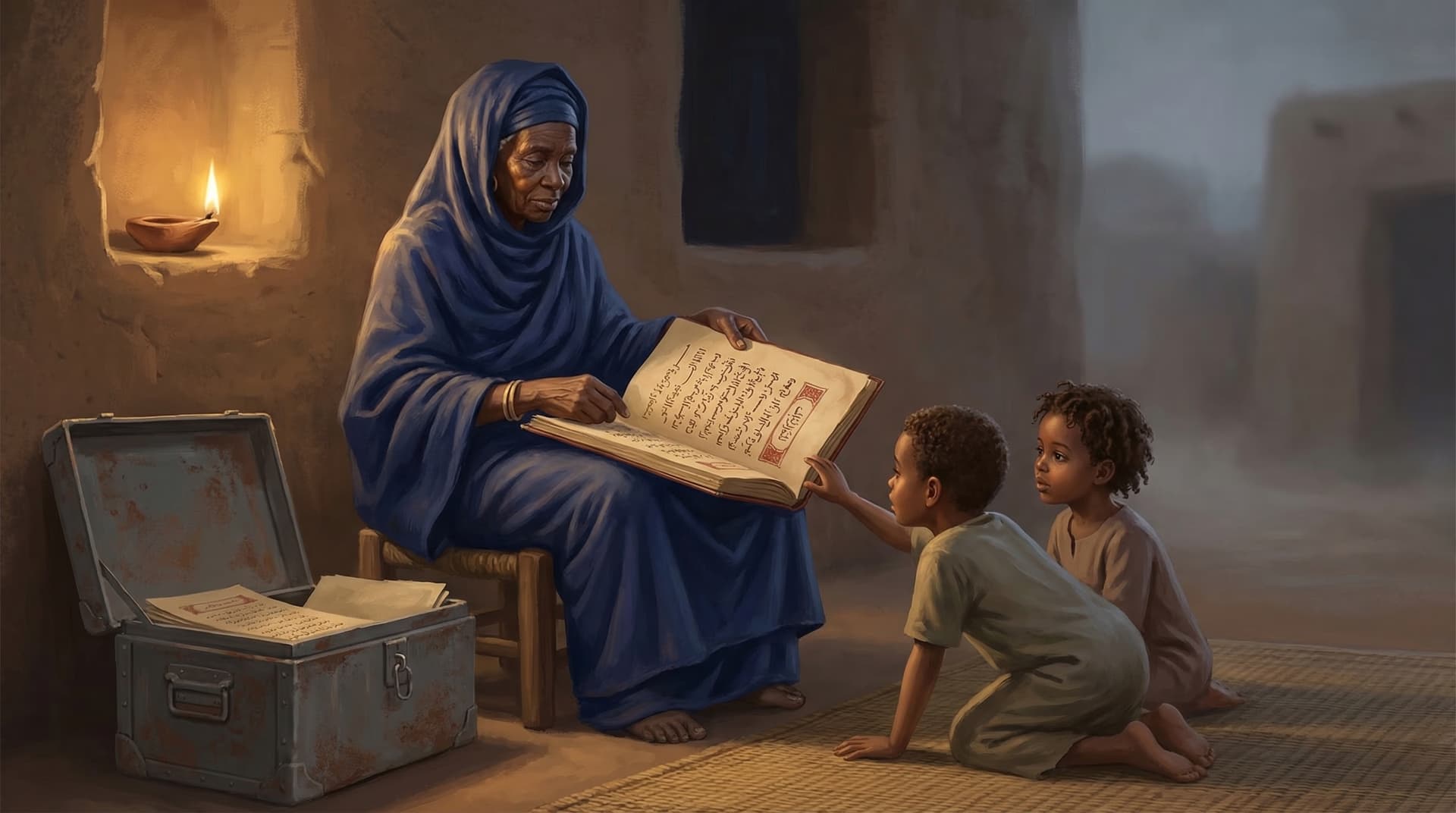
For generations, this was private work. Quiet. Unglamorous. A family would inherit a trunk of crumbling pages and simply keep it. Not because they understood every word -- many of the manuscripts were in classical Arabic that few could still read -- but because they understood that these pages were proof. Proof that their ancestors had been scholars, not savages. That their city had been a university, not a punchline.
Stay in the Loop
Get notified when new articles and videos drop. Unsubscribe anytime.
Then a man named Abdel Kader Haidara began knocking on doors. Born into a family of scholars and librarians in Timbuktu, Haidara had inherited a vast collection from his father. But he knew there were hundreds of thousands more hidden across the region. Through the 1980s and 1990s, he traveled from village to village, convincing families to let him catalogue and preserve what they had kept hidden for centuries. By the early 2000s, his organization, SAVAMA-DCI, had identified collections scattered across forty-five different libraries in and around Timbuktu. The manuscripts numbered in the hundreds of thousands -- a civilization's intellectual output, preserved by sheer stubbornness.
The Ahmed Baba Institute, founded in 1973 and later expanded with South African funding into a modern research center, began the work of digitization. Scholars started reading what had been hidden. They found medical treatises describing the therapeutic properties of desert plants. They found astronomical charts tracking stellar movements across seasons. They found legal opinions, philosophical arguments, poetry. Seven hundred thousand pages of evidence that sub-Saharan Africa had produced a written intellectual tradition as sophisticated as anything in medieval Europe. The world Musa built had not died. It had been waiting.
The Librarian and the Checkpoints
In late March 2012, Abdel Kader Haidara was traveling in Burkina Faso when he received the news: Islamist and Tuareg rebels had seized Timbuktu. He returned home within hours, arriving just after the city fell. He knew immediately what was at stake. The manuscripts -- seven centuries of accumulated knowledge -- were now in the hands of men who considered much of that knowledge heretical. The jihadists had already begun enforcing their own interpretation of Islam. Music was banned. Women were ordered indoors. Ancient Sufi shrines -- sacred tombs that had stood for centuries -- were demolished with pickaxes while cameras rolled. It was only a matter of time before they turned their attention to the libraries. Haidara had spent decades collecting what families had hidden for generations. Now he faced the possibility that it could all be destroyed in a single afternoon.
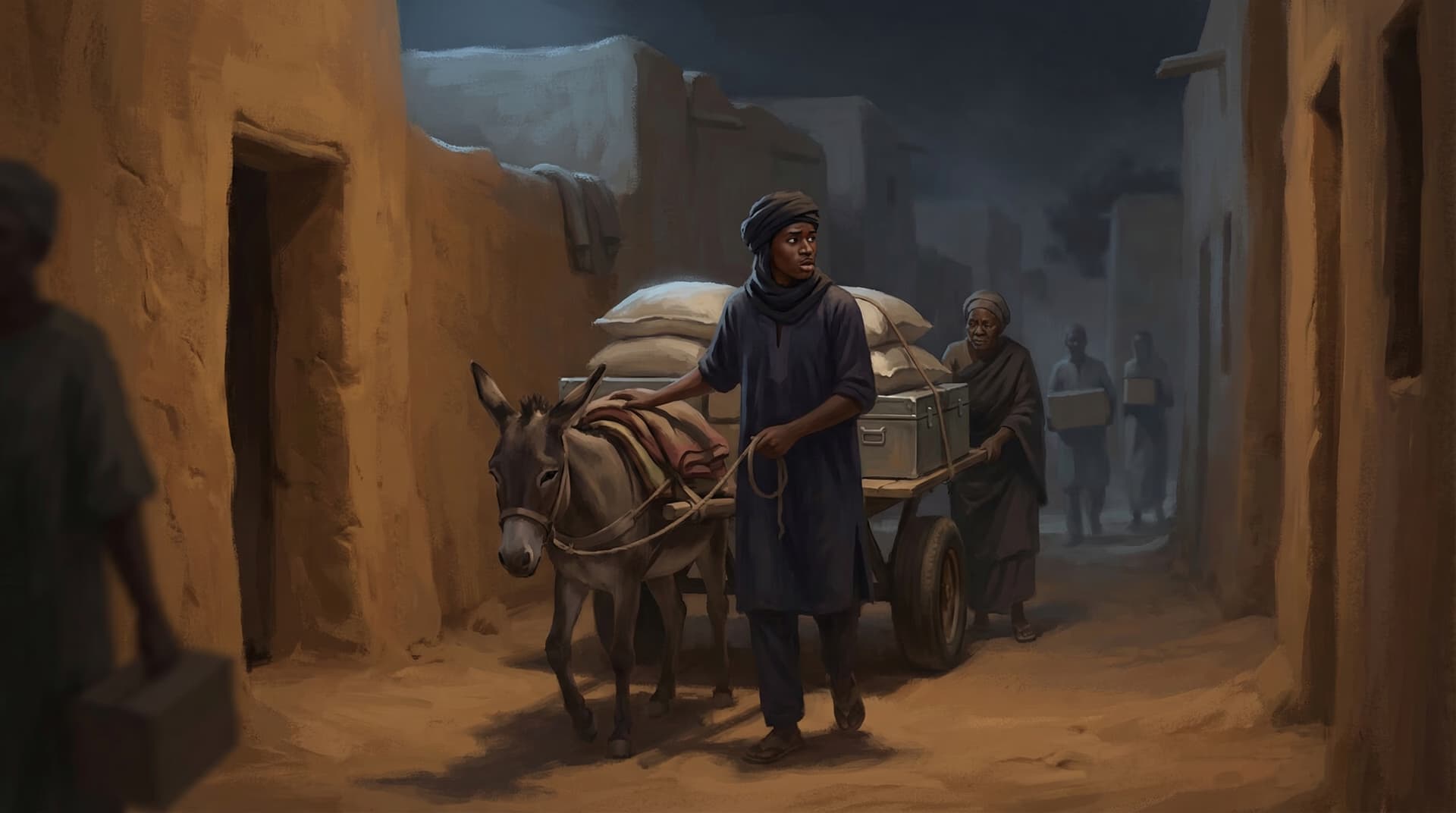
What followed was one of the most remarkable rescue operations in the history of cultural preservation. Night after night, Haidara's team packed ancient works into metal chests and spirited them out of libraries in mule carts and four-wheel drives. They worked in darkness, moving through streets where any light could attract a patrol. Hundreds of volunteers joined -- ordinary people carrying boxes loaded on donkeys through the alleys of an occupied city. Teachers. Merchants. Students. People who could not read a word of what they were saving but who understood that it mattered. They moved manuscripts from one safe house to another, past jihadist checkpoints where soldiers searched for weapons, past Malian army checkpoints where soldiers did the same. Every trunk looked suspicious. Every journey could end in discovery, and discovery could mean death.
For eight months, the operation continued. Three hundred and fifty thousand manuscripts traveled six hundred miles from Timbuktu to Bamako, Mali's capital, where Haidara distributed them across twenty-seven private homes. Some traveled by river in flat-bottomed boats. Some by road in rattling trucks. Some on the backs of donkeys along paths that only herders knew. During the final phase, in January 2013, a French military helicopter nearly fired missiles at a boat carrying manuscripts down the Niger River -- the pilots had mistaken Haidara's assistants for gun smugglers. The books that had survived conquests, colonialism, and centuries of desert heat came within a trigger-pull of being destroyed by their would-be rescuers.
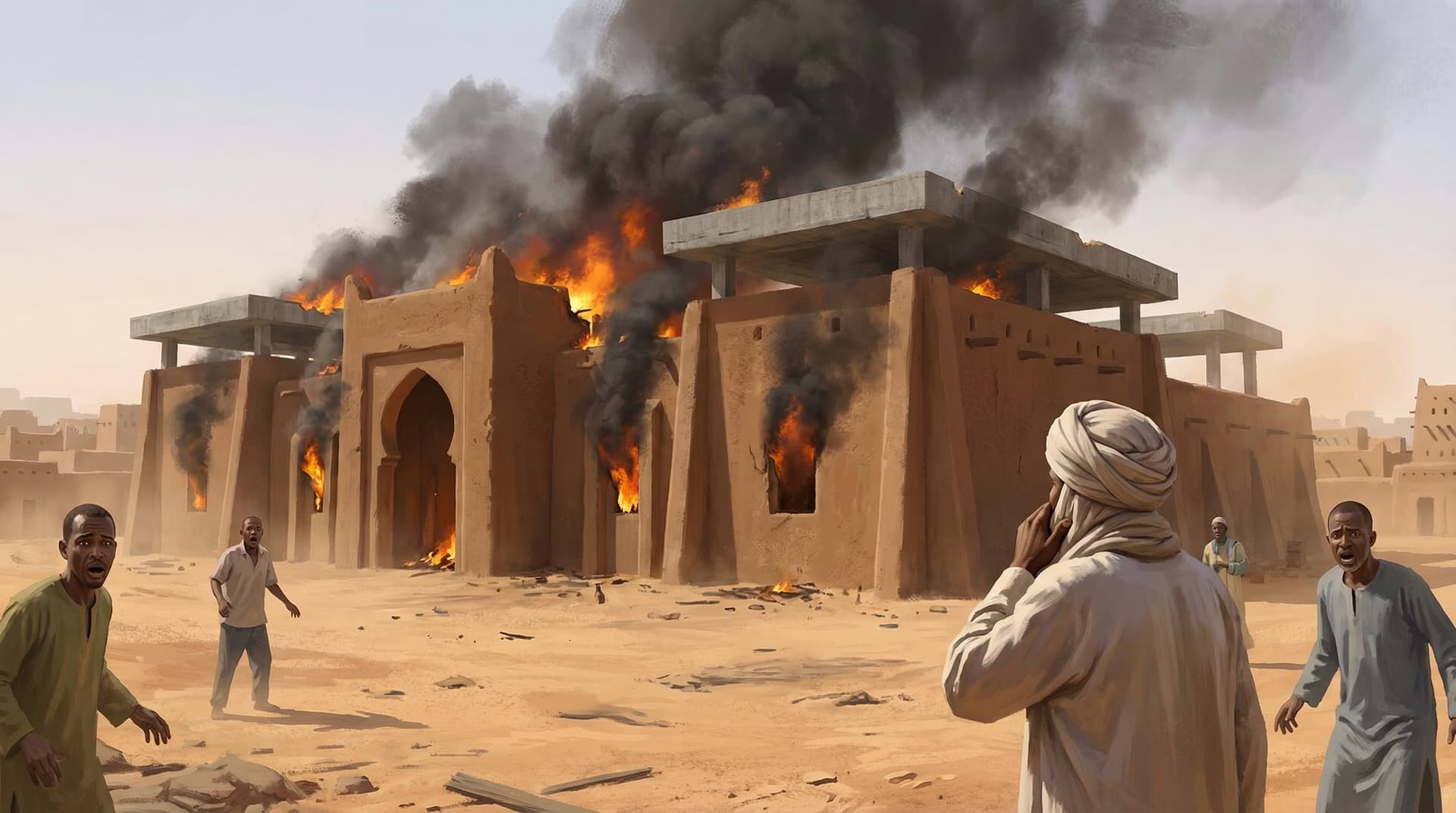
On January 28, 2013, as French-led troops retook Timbuktu's airport, fleeing jihadists set fire to the Ahmed Baba Institute. Four thousand manuscripts burned. But three hundred and fifty thousand did not. They survived because one man, from a family of librarians, understood something that conquerors and colonizers and jihadists never did: the most dangerous thing in Timbuktu was never the gold. It was the ink.
The Richest Man Who Ever Lived
Here is the final irony of Mansa Musa's legacy. The man who crashed Egypt's gold market, who built Sankore University, who transformed Timbuktu into a city of scholars -- he became famous again in 2012. Not because of the manuscripts. Not because of Haidara's desperate rescue. Because of a website called CelebrityNetWorth.
That year, the site published an estimate: Mansa Musa's adjusted wealth was approximately four hundred billion dollars. The article went viral. Within months, Musa was everywhere -- listicles, infographics, TikTok explainers. The richest man who ever lived. Richer than Bezos. Richer than Musk. The internet had rediscovered Mansa Musa, and it had done so in the most predictable way possible: by reducing him to a number.
Historian Hadrien Collet has pointed out that Musa's wealth is "impossible to calculate accurately" -- that comparing a medieval West African emperor to a modern billionaire is an exercise in absurdity. But the number spread anyway, because numbers are easy and history is hard. The same internet that made Musa famous again also flattened him. He became a meme. A fun fact. The gold, again, was all anyone saw.
But somewhere in Bamako, in twenty-seven private houses, three hundred and fifty thousand manuscripts sat in the tropical humidity -- pages written, copied, debated, and hidden for seven hundred years. Pages about the movement of stars, the properties of plants, the nature of justice. In 2025, the manuscripts finally began returning to Timbuktu. Conservators had photographed more than a hundred and fifty thousand of them, preserving in pixels what families had preserved in sand.
Remember that workshop in Majorca -- the man with the gold-leaf brush, painting a king he had never met onto a map that would outlast empires. Cresques saw the gold. That is what the world always sees first. But the thing that actually lasted -- the thing worth smuggling through checkpoints on the backs of donkeys, worth burying in the desert, worth risking your life for -- was never the gold.
It was always the books.
Mansa Musa's empire fell. His name faded for centuries. A website brought it back with a number that may not even be real. But the manuscripts -- the proof that a civilization flourished in the place the world calls nowhere -- those are still being read. Still being translated.
And if seven hundred thousand pages could hide in plain sight for six hundred years in a single city, you have to wonder: what else is out there? What other histories are folded into trunks, buried under sand, locked in languages the conquerors never bothered to learn? Musa's story survived because a few families refused to let it die. How many stories didn't have that luck?
That is not a question with an answer. That is a question worth sitting with.