- Known for
- Traveling 75,000 miles across the Islamic world and writing the Rihla, the most detailed account of 14th-century civilization
- Fatal flaw
- A restlessness so consuming that he could not stay anywhere long enough to build anything lasting, and a vanity that sometimes bent the truth to serve the story
The Story
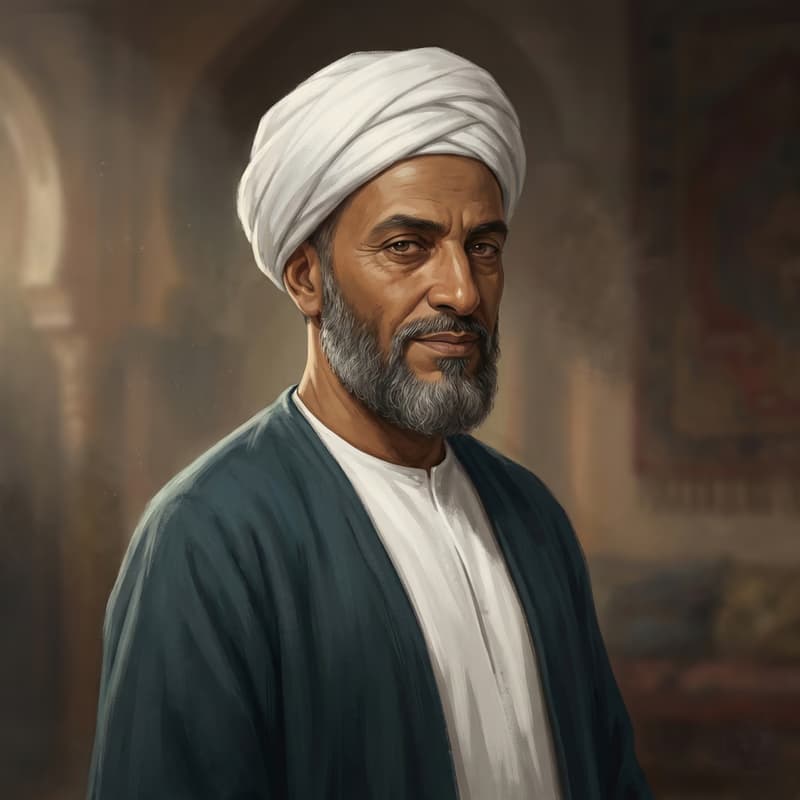
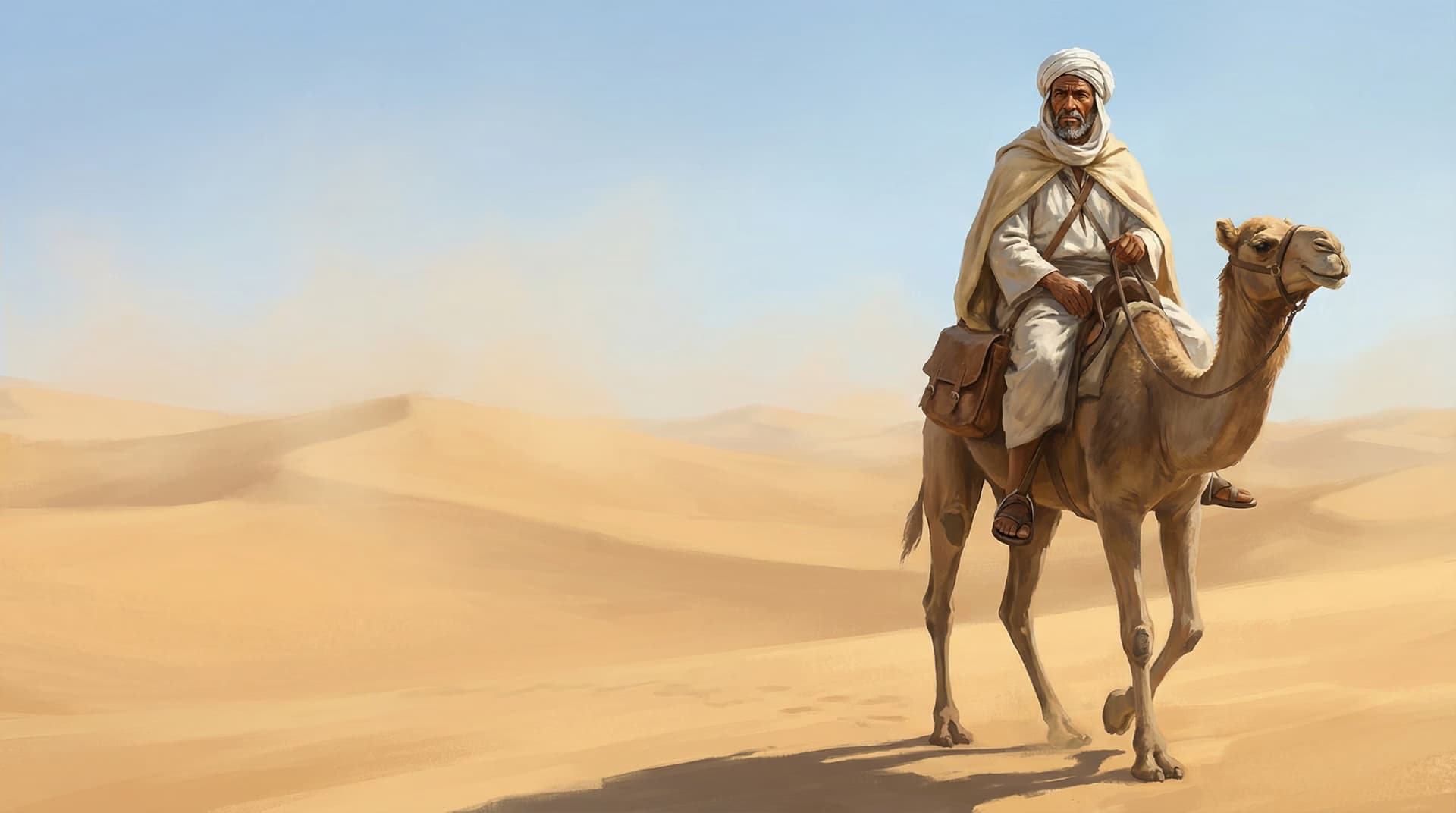
In June 1325, a twenty-one-year-old legal scholar named Abu Abdullah Muhammad Ibn Battuta left his home city of Tangier to make the hajj to Mecca. He did not return for twenty-four years. When he finally came home, he stayed briefly, then left again. He would travel for nearly three decades, covering approximately 75,000 miles across North Africa, the Middle East, Central Asia, India, Southeast Asia, China, Spain, and West Africa. He visited forty countries, met over sixty sultans, and recorded a world that no single person before him had seen in such breadth.
He was born in Tangier in 1304 into a family of Muslim legal scholars during the Marinid dynasty. He was trained as a qadi, a judge who ruled on matters both religious and civil. The hajj was supposed to be a pilgrimage, not a career. But somewhere between Tangier and Mecca, something shifted. The young scholar discovered that the Islamic world was vast, interconnected, and eager to host a learned man with good manners and a talent for conversation. He could travel indefinitely, supported by the hospitality of sultans and the professional network of Islamic jurisprudence.
His travels took him everywhere the Arabic language and Islamic faith had reached. He served as a judge in the Maldives. He claimed to have met the Byzantine emperor in Constantinople. He visited the Delhi Sultanate, where he served Sultan Muhammad bin Tughluq for eight years. He traveled through Southeast Asia and, he claimed, to China. He crossed the Sahara Desert to visit the Mali Empire in 1352, where he spent seven months at the court of Mansa Sulayman, Mansa Musa's brother.
His account of Mali is the most detailed firsthand description of the empire at its height. It is also characteristically opinionated, mixing genuine admiration for Malian justice and security with irritation at Sulayman's stinginess and disgust at customs he considered un-Islamic. Ibn Battuta did not merely observe. He judged, praised, and complained, and his judgments have shaped how the world understands the medieval Islamic world for seven centuries.
Personality & Motivations
Ibn Battuta was driven by an insatiable curiosity that he himself framed as a religious duty. He set a rule for himself early on: "never to travel any road a second time." This was not piety alone. It was the restless energy of a man who was fundamentally bored by staying in one place. He accepted judicial appointments, married multiple times across different countries, fathered children he left behind, and moved on whenever the horizon beckoned.
He was also a shrewd operator. His status as a trained qadi gave him automatic credibility in any Muslim court. Rulers needed judges, and a well-traveled, well-educated judge was a valuable commodity. Ibn Battuta exploited this to fund a lifetime of travel, accepting positions, gifts, and hospitality from every ruler he visited. He had a keen eye for detail and recorded customs, architecture, food, clothing, and politics with the precision of a trained legal mind.
But he was vain. His account, the Rihla, is as much about Ibn Battuta as it is about the places he visited. He records his own receptions, his conversations with rulers, his complaints about insufficient hospitality, and his opinions about everything from women's clothing to the quality of dates in different oases. When he arrived at Mansa Sulayman's court and received a modest welcome gift of bread, beef, and sour curds, he complained directly to the mansa. He expected to be treated as an important man, because he believed he was one.
What Most People Get Wrong
Ibn Battuta is often called "the Muslim Marco Polo," a comparison that irritates historians of the Islamic world. Polo's travels covered roughly 15,000 miles. Ibn Battuta's covered 75,000. Polo traveled along established Silk Road routes for a single extended journey. Ibn Battuta crisscrossed three continents over three decades, visiting places Polo never approached. The comparison exists only because Polo's account was published in Europe and became famous centuries before Ibn Battuta's Rihla was widely known outside the Arabic-speaking world.
More importantly, parts of the Rihla are almost certainly fabricated or borrowed. Scholars have noted that some of Ibn Battuta's descriptions of China closely match earlier accounts by other travelers, suggesting he may not have visited all the places he claimed. His account of Constantinople contains details that don't align with other sources. Whether these are embellishments, confusions, or outright fabrications remains debated. The Rihla is invaluable, but it is not always reliable.
Key Moments
Tangier, June 1325. Twenty-one-year-old Ibn Battuta leaves home for the hajj. He travels overland through North Africa, stopping in Tunis and Tripoli. In Egypt, he records, "an irresistible passion for travel was born in my soul." He decides to see as much of the world as possible and sets his rule of never traveling the same road twice.
Mecca, 1326. Ibn Battuta completes his first hajj. Rather than returning home, he continues eastward. Over the next two decades, he will visit Iraq, Persia, East Africa, the Arabian Peninsula, Central Asia, India, the Maldives, Southeast Asia, and possibly China. He meets rulers, accepts judicial appointments, marries, and moves on.
Delhi, c. 1334-1341. Ibn Battuta serves as a qadi under Sultan Muhammad bin Tughluq, one of the most unpredictable rulers in the Islamic world. The sultan is generous one moment and murderous the next. Ibn Battuta survives eight years at his court, accumulating wealth and narrowly avoiding the purges that claim other officials.
Mali, July 1352 - February 1353. Ibn Battuta crosses the Sahara and arrives at the court of Mansa Sulayman. He spends seven months observing Malian court life, recording elaborate ceremonies, the administration of justice, local customs, and the mansa's stinginess. He is impressed by the empire's security and justice but offended by Sulayman's frugality and certain local practices. His account becomes the most detailed firsthand description of the Mali Empire.
Fez, c. 1354-1355. Ibn Battuta returns to Morocco for good. The Marinid sultan Abu Inan, impressed by the traveler's stories, orders him to dictate his account. The scribe Ibn Juzayy records it over the following year. The result is the Rihla, full title: "A Gift to Those Who Contemplate the Wonders of Cities and the Marvels of Travelling."
The Detail History Forgot
Ibn Battuta's seven months in Mali were not entirely comfortable. Shortly after arriving, he became seriously ill after eating undercooked yams and remained sick for two months. His recovery coincided with the onset of the hot season, and he spent much of his time in Mali feeling physically miserable.
This matters because the Rihla's account of Mali was written by a man who was sick, hot, and disappointed by his reception gift. His famous criticism of Sulayman's stinginess, his complaints about local customs, and his generally grumpy tone should be read in this context. The most detailed firsthand account of the Mali Empire was dictated years later by a man who had been ill and irritated for most of his visit. The facts he records are invaluable. The mood, less so.
The Downfall
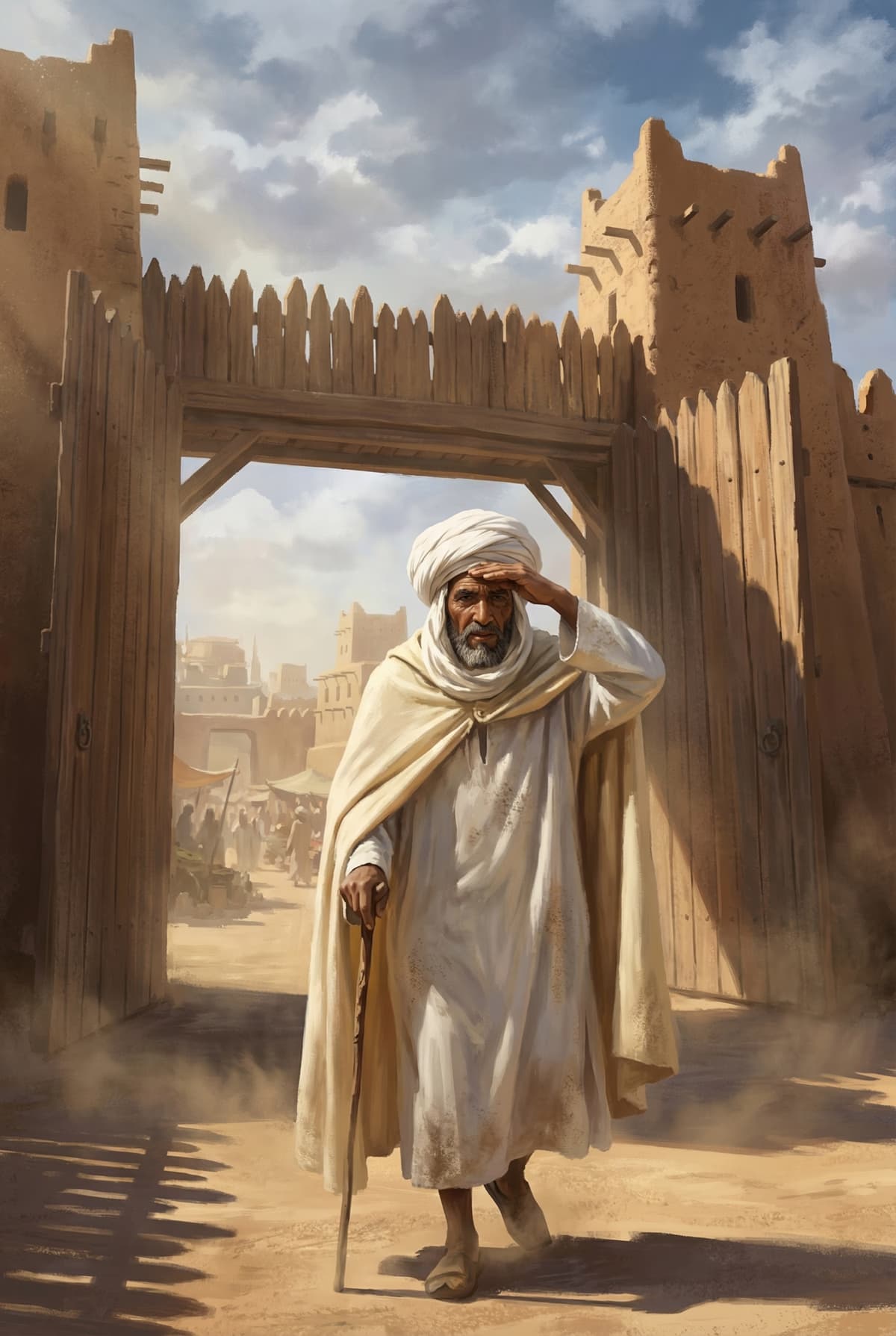
Ibn Battuta's story does not end with a dramatic downfall. He returned to Morocco, dictated his Rihla, was appointed a judge, and died around 1368 or 1369 in relative obscurity. He was buried in Tangier, his birthplace and the city he had spent thirty years trying to leave.
The Rihla itself was his monument, but it was not widely read for centuries after his death. Unlike Marco Polo's account, which was translated into multiple European languages and became a bestseller, the Rihla circulated primarily within the Arabic-speaking world and attracted limited scholarly attention until the 19th century, when European Orientalists rediscovered it. Ibn Battuta had seen more of the world than any person in recorded history, and the world mostly forgot about it.
The deeper irony is personal. Ibn Battuta traveled for thirty years, met dozens of rulers, married multiple wives, and fathered children across three continents. He records almost nothing about these families. His mother died while he was away, a fact he mentions without elaboration. He arrived home to find her grave. He had traded everything, home, family, stability, for the road, and the road eventually ended in a quiet judicial appointment and an unmarked grave. The greatest traveler of the medieval world could not escape the one destination no one avoids.
Frequently Asked Questions
Abu Abdullah Muhammad Ibn Battuta (1304-c. 1368) was a Moroccan legal scholar and explorer who traveled approximately 75,000 miles across three continents over nearly 30 years. His account of his travels, the Rihla, is one of the most important primary sources for 14th-century history, providing detailed descriptions of civilizations from North Africa to China.
Ibn Battuta traveled approximately 75,000 miles (120,000 km) between 1325 and 1354, visiting roughly 40 countries across Africa, the Middle East, Central Asia, India, Southeast Asia, and possibly China. This far exceeded the distances covered by Marco Polo or any other known medieval traveler.
Ibn Battuta spent seven months at the court of Mansa Sulayman in 1352-1353 and recorded elaborate court ceremonies, the administration of justice, trade practices, religious observance, and daily customs. He praised Mali's security and justice system but criticized Sulayman's stinginess and certain local practices he considered un-Islamic.
Ibn Battuta arrived at Sulayman's court expecting the legendary generosity associated with Mansa Musa's reign. His initial reception gift, three cakes of bread, fried beef, and sour curds, was far below his expectations. He complained directly to the mansa, who eventually provided better lodging and a gift of gold, but the traveler never forgave the initial slight.
The Rihla (full title: "A Gift to Those Who Contemplate the Wonders of Cities and the Marvels of Travelling") is Ibn Battuta's travel account, dictated to the scribe Ibn Juzayy in Fez around 1354-1355. It covers his journeys across the Islamic world and beyond, providing one of the most comprehensive firsthand accounts of 14th-century civilization.
Scholars have questioned some of Ibn Battuta's claims, particularly regarding China and Constantinople. Some descriptions closely match earlier accounts by other travelers, suggesting possible borrowing or fabrication. His accounts of the Islamic heartlands, India, and West Africa are generally considered more reliable than his descriptions of the periphery of his travels.
Ibn Battuta traveled roughly five times farther than Polo, visited more countries, and spent more years on the road. However, Polo's account was translated into European languages and became a bestseller, while the Rihla circulated primarily in the Arabic-speaking world and was not widely known in Europe until the 19th century. The comparison itself reflects European bias in how explorers are ranked.
Ibn Battuta died around 1368 or 1369 while serving as a judge in Morocco. He was buried in his birthplace, Tangier. Few details of his final years survive, and he died in relative obscurity. A museum in Tangier now honors his legacy.
Ibn Battuta never met Mansa Musa, who died around 1337, fifteen years before Ibn Battuta's 1352 visit to Mali. However, Musa's legendary reputation shaped Ibn Battuta's expectations of the Malian court, leading to his disappointment with Musa's brother Sulayman. His account of Mali provides crucial context for understanding the empire Musa built.
Ibn Battuta married multiple times across different countries during his travels and fathered children in several locations. He records almost nothing about these families in the Rihla. His mother died while he was traveling, and he returned to Tangier to find her already buried. The personal cost of his three decades of travel is one of the most poignant aspects of his story.