The Bridge
September 11th, 1297. Cold grey dawn breaks over the river, mist rising off the water as the first English knights urge their horses onto a narrow wooden bridge-- barely wide enough for two men at a time. The planks groan beneath the weight. Hooves echo across the valley.
On the far side, eight thousand Scots stand motionless on the high ground of Abbey Craig. They carry spears, not lances. They wear leather, not mail. To the English commander watching from the south bank, they look like what they are: farmers, tradesmen, men who should be tilling fields or shoeing horses. Men who have no business standing against the finest heavy cavalry in Europe.
In three hours, five thousand Englishmen will be dead. The treasurer who urged this crossing will be skinned alive, his flesh cut into strips and distributed across Scotland. And the tall man watching from the ridge--the one nobody had heard of six months ago--will become the most feared name in Britain.
But first, the English have to finish crossing the bridge.
The Second Son
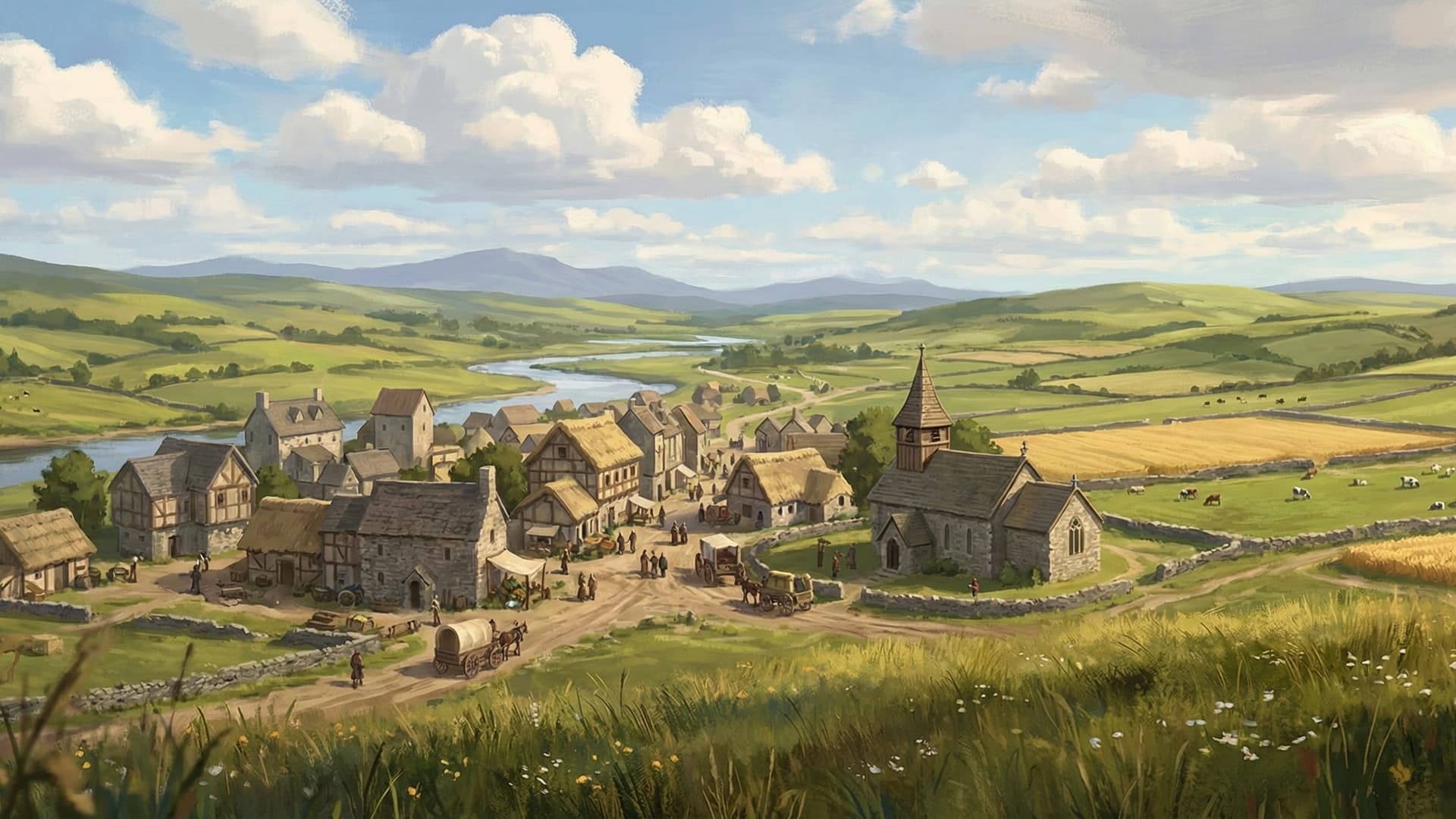
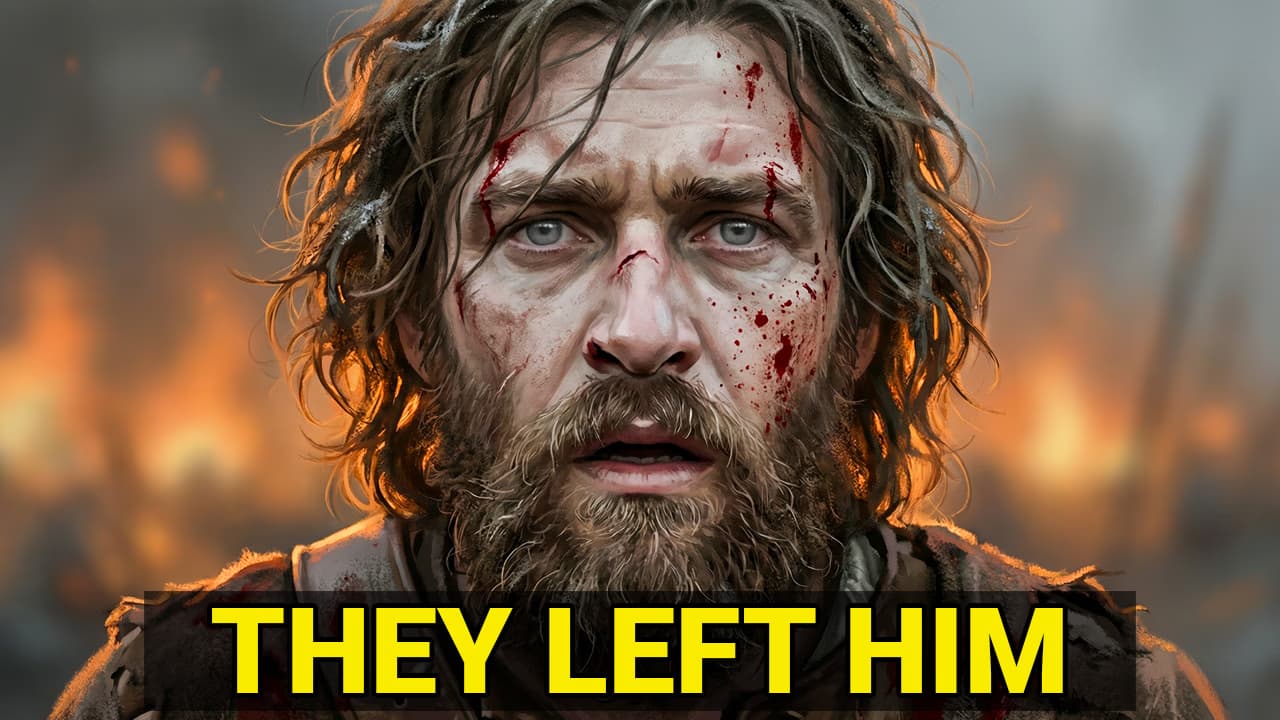
William Wallace was not supposed to matter.
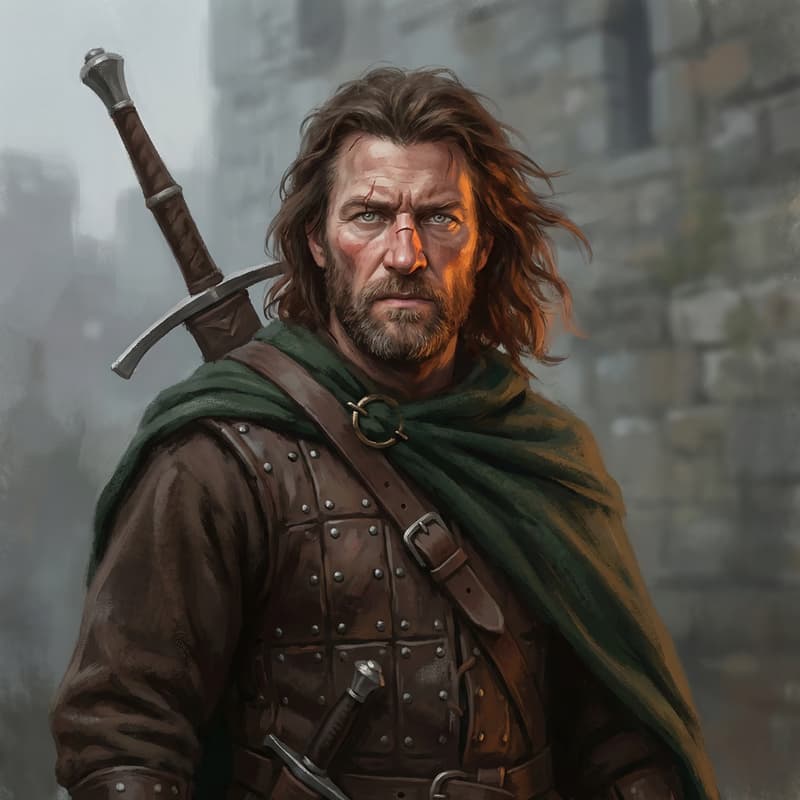
He stood a head taller than most men, with shoulders broad enough to swing the massive sword he carried. But in medieval Scotland, size meant nothing without title. Born around 1270 to Sir Malcolm Wallace of Elderslie, William was the second son of a minor knight--a man who owned some land, owed service to James Stewart, and commanded no one. The Wallaces occupied comfortable obscurity. Not poor. Not powerful. Simply there.
As the second son, William would inherit nothing. The land would pass to his older brother. His future held two paths: the church or the sword. He trained in both. A priest uncle taught him Latin and letters. His brother taught him to fight. Young William learned to read scripture and split skulls with equal facility.
The Scotland of his boyhood was peaceful. King Alexander III had ruled for nearly forty years. Trade flourished. The border with England stayed quiet. William practiced swordplay, studied rhetoric, and had no reason to imagine either skill would ever matter.
Then, on a dark night in 1286, Alexander's horse stumbled on a cliff path. The king fell. His neck broke.
And Scotland began to die.
The Hammer Falls
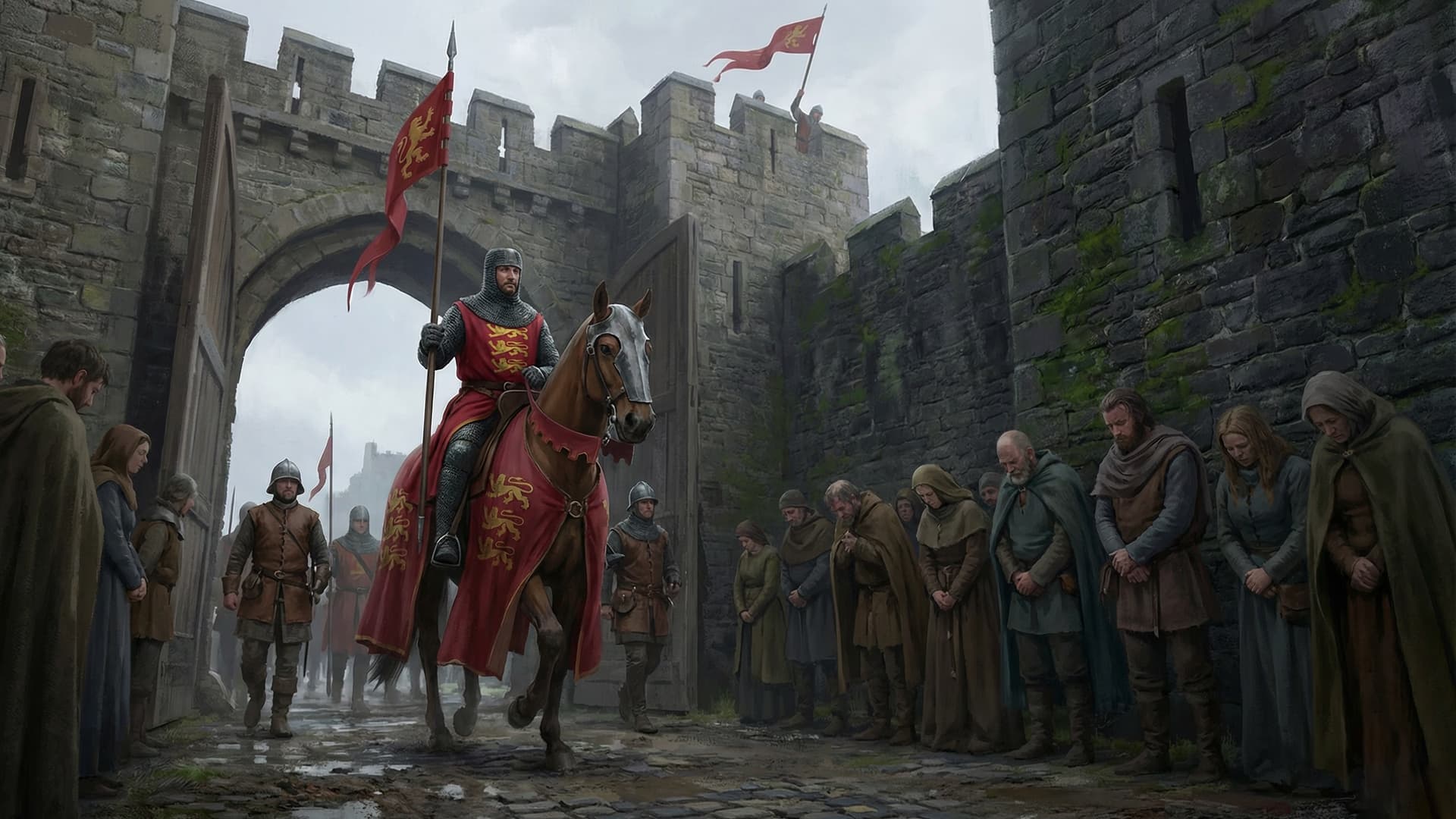
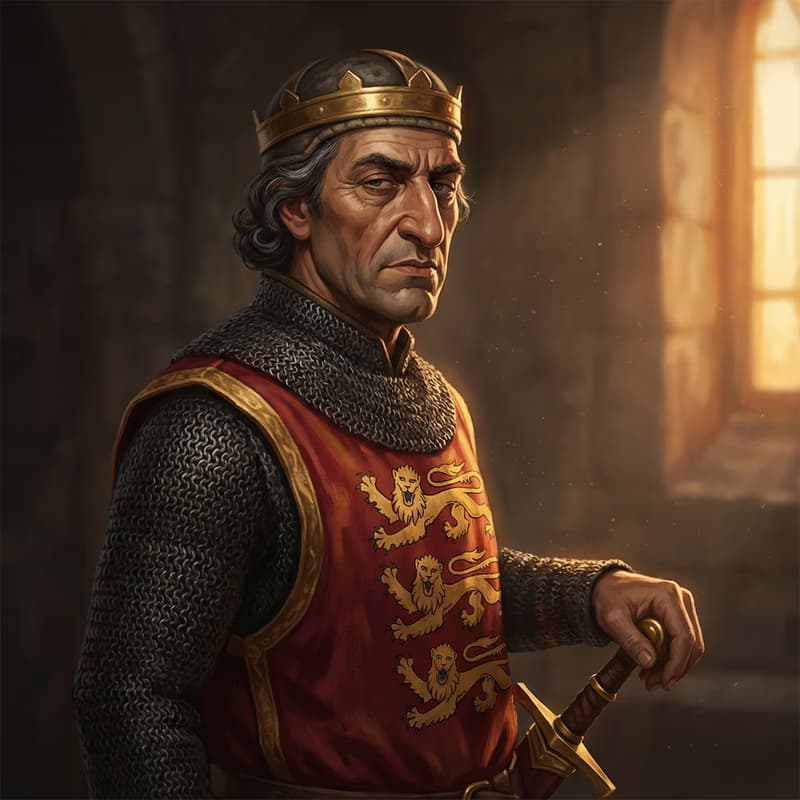
By 1296, Edward I of England--the man they called Longshanks, the Hammer of the Scots--had torn Scotland apart with his bare hands.
He had manipulated the succession crisis that followed Alexander's death, playing Scottish nobles against each other like chess pieces. He had chosen John Balliol as king, then humiliated him publicly until Balliol finally rebelled. He had invaded with the largest army Britain had seen in generations.
At Dunbar, English cavalry scattered the Scottish nobility like chaff before wind. Edward stripped Balliol of his crown in a ceremony designed to maximize shame, literally tearing the royal insignia from the man's clothing while courtiers watched. He hauled the Stone of Destiny--the ancient coronation stone that had made Scottish kings for centuries--south to Westminster, where it would sit beneath the English throne.
Scotland ceased to exist. English officials took over every castle. English soldiers garrisoned every town. English tax collectors squeezed every village. The nobles who survived Dunbar either fled or knelt before Edward and swore oaths of loyalty.
Wallace watched all of this from the shadows. Twenty-six years old. No land. No title. No army. Sworn to a king who no longer existed, in a kingdom that had been erased from the map.
He might have stayed in the shadows forever.
Then the English made it personal.
Subscribe to Nightfall History on YouTube
Join our community on YouTube for more historical deep dives and visual storytelling
The Sheriff of Lanark
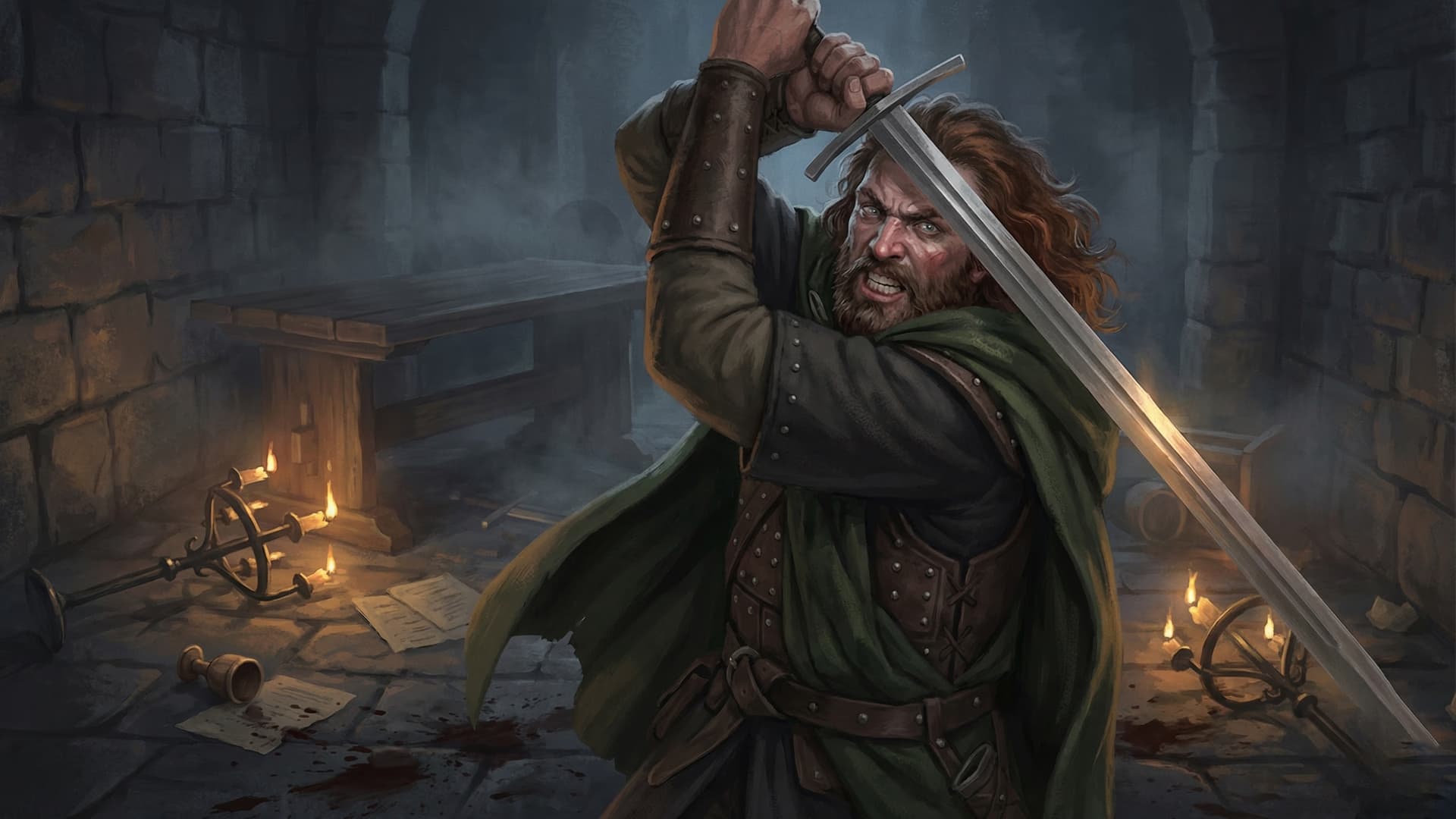
What happened in Lanark in May 1297 comes down to us wrapped in legend. The facts are few. The grief is certain.
William Heselrig, the English Sheriff of Lanark, had made himself hated. He dispensed English justice with English brutality, and the Scots who came before his court learned that their lives were worth less than an Englishman's horse.
The later stories say Heselrig killed someone Wallace loved--a woman named Marion, perhaps a wife, perhaps a lover. The chronicles are vague. But something broke inside Wallace that spring. Something that had been holding him back snapped clean.
He did not simply kill the sheriff. He hacked Heselrig into pieces. He painted the walls of Lanark with English blood. And when it was done, when the rage had burned through him and left only cold resolve, he did not run.
He gathered thirty men and started hunting.
The Rebellion Burns
All through the summer of 1297, Wallace moved like a fire that refused to die.
He struck Scone--the ancient seat of Scottish kings, now occupied by the English justiciar William de Ormesby. Ormesby fled before Wallace arrived, abandoning his baggage, his dignity, and any pretense that England controlled the countryside. Wallace burned what he could and melted back into the forests.
He attacked garrisons between the Forth and Tay. He used the vast Selkirk Forest as a base, emerging to strike and vanishing before the English could respond. His band grew. Thirty men became fifty. Fifty became two hundred. Men who had nothing left to lose heard that someone was fighting back, and they came.
In the north, another fire burned. Andrew Moray--a young nobleman who had escaped from English captivity by climbing down the walls of Chester Castle--had raised his banner near Inverness. One by one, English garrisons in the Highlands fell to his raids. Castles that had flown Edward's colors for a year went up in flames.
Two rebellions. Two leaders. Neither commanding anything like an army. But neither submitting, either.
The Nobles Kneel
In July, everything nearly ended.
The great nobles of Scotland--the earls, the magnates, the men who commanded real armies--gathered at Irvine to face the English threat. Wallace expected them to fight. He expected the men with titles and cavalry and generations of military tradition to finally stand up.
They knelt instead.
One by one, the lords of Scotland calculated the odds and chose survival. They swore oaths to Edward. They handed over their sons as hostages. They agreed to disband whatever forces they had gathered. The Capitulation of Irvine, men would call it later--a polite name for surrender.
Wallace was not invited to kneel. He was too insignificant to negotiate with. Too lowborn to matter.
The nobles who might have supported him chose peace. The rebellion should have collapsed.
The Men Who Stayed
It did not collapse.
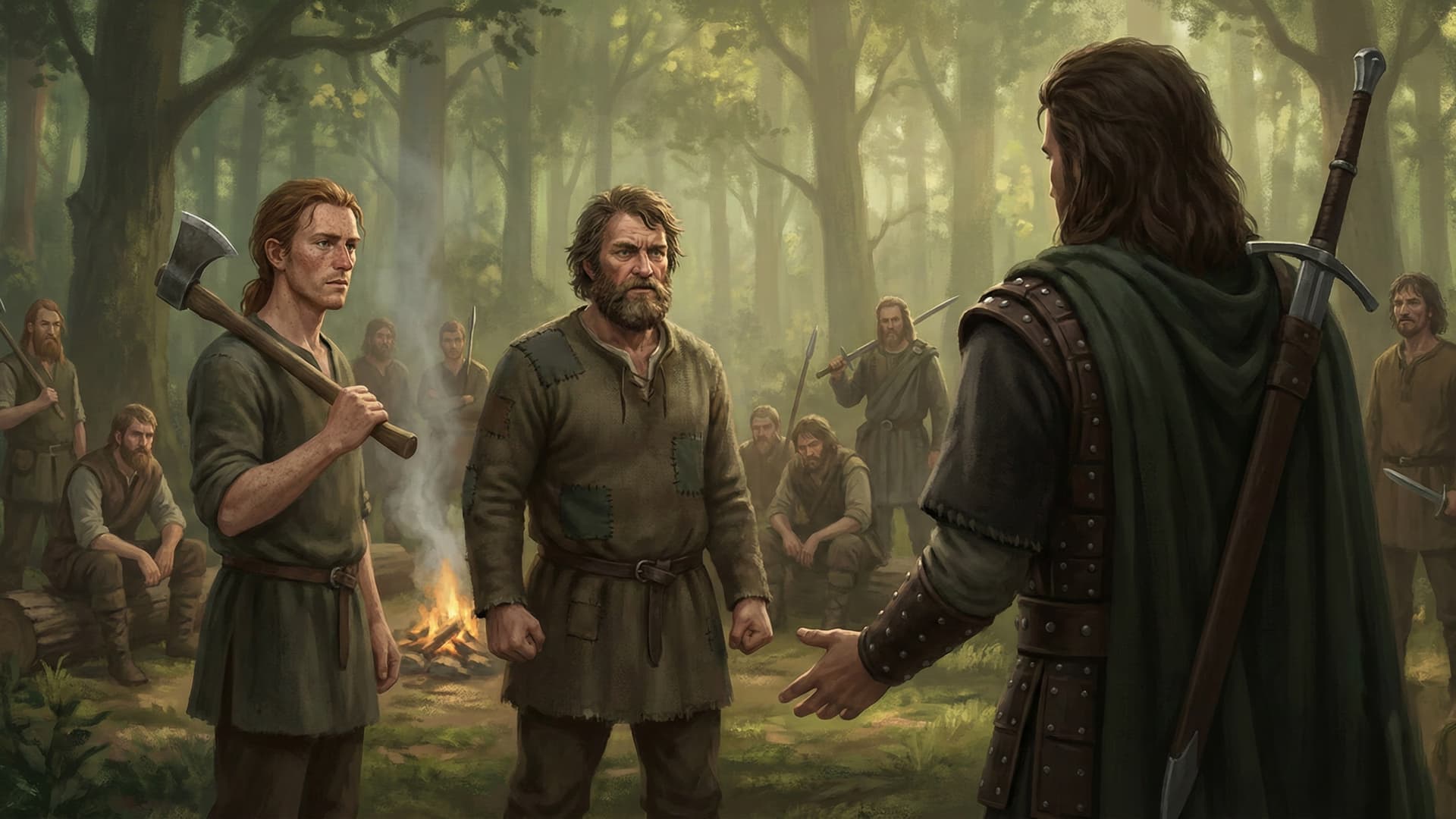
In the weeks after Irvine, something happened that no one expected. Men who had no business fighting--farmers whose crops the English had seized, tradesmen whose shops the English had taxed into ruin, the younger sons of minor houses who had watched their betters kneel--began making their way to Selkirk Forest.
They came because the nobles had failed them. They came because Wallace was still fighting. They came because there was no one else.
"What do you have?" Wallace asked each man who arrived.
"A spear," most answered. Some had axes. Some had nothing but rage and callused hands.
"That's enough," Wallace told them.
By August, he had moved north to besiege Dundee. There he met Andrew Moray for the first time. The two men had led separate rebellions with separate methods, but they recognized what each one brought. Moray had noble connections and experience with siege warfare. Wallace had an army of common men who fought because they had nothing left to lose.
They joined forces. And on September 11th, they brought their combined army to the fields below Stirling Bridge.
Stay in the Loop
Get notified when new articles and videos drop. Unsubscribe anytime.
The Crossing
John de Warenne, Earl of Surrey, looked at the Scottish position and saw nothing to fear.
He had crushed the Scottish army at Dunbar. He had watched their nobility crumble at Irvine. The men on Abbey Craig were not knights. They were peasants with pointed sticks.
His treasurer, Hugh Cressingham--a fat man who sweated even in the September chill--was growing impatient. "My lord, every day we delay costs the King money. Let us cross and do our duty."
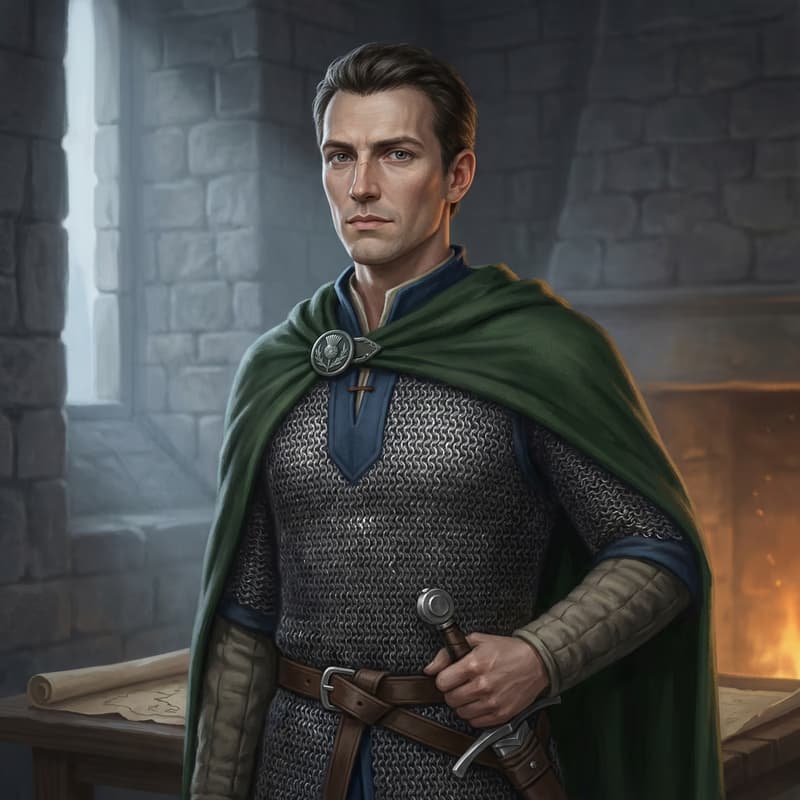
Sir Richard Lundie, a Scottish knight who had chosen the English side, urged his horse forward. "My lord, there's a ford two miles upstream. Sixty men can cross at a time. Give me the cavalry and I'll take them in the flank while they watch the bridge."
Surrey barely glanced at him. "We don't need tricks against peasants. Cross the bridge."
The vanguard started across. Two men at a time. The bridge was narrow, the planks slick with morning dew. On the far side, the ground was soft, marshy, cut through with loops of the river. Perfect terrain for heavy cavalry--if you wanted your horses to sink to their knees.
Wallace watched from the ridge. And waited.
The Trap
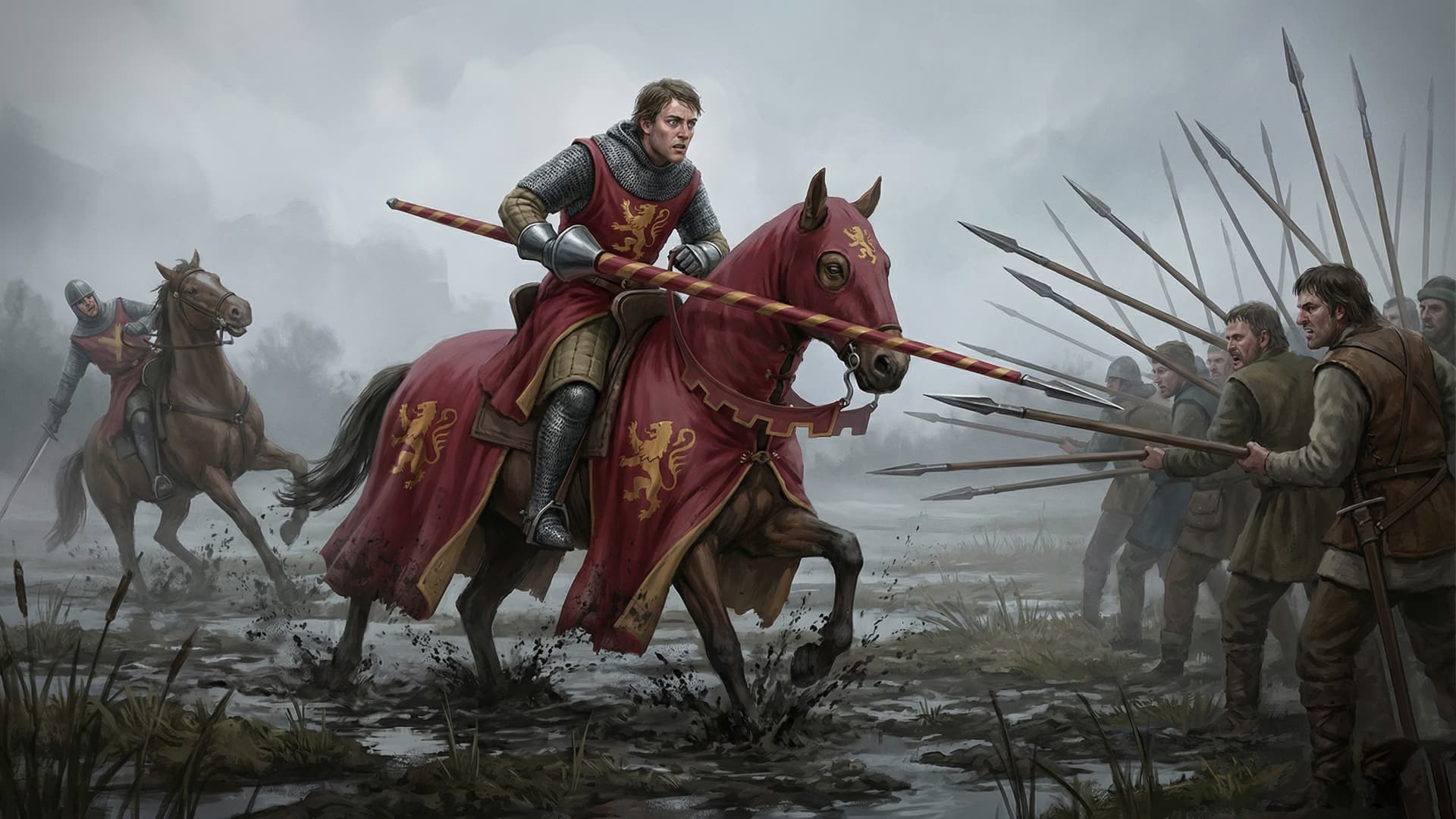
Hundreds crossed. Then a thousand. Then two thousand. The north bank filled with English soldiers, milling about, waiting for orders, watching the Scots on the high ground with the contempt of professionals observing amateurs.
Wallace counted. Half the English army was across now. Enough to seem dangerous. Not enough to be overwhelming. And all of them funneled through a bridge two men wide, with nowhere to retreat except back across that same narrow chokepoint.
He raised his hand.
The Scots came down from Abbey Craig in formation--the schiltron, a dense mass of spearmen with weapons bristling outward like a hedgehog's spines. They did not charge. They walked. Steady. Implacable. A wall of iron points moving toward the bridge.
The English knights tried to form up for a charge. Their horses' hooves sank into the boggy ground. There was no room to build speed, no space to maneuver. Lances that should have punched through the Scottish lines couldn't reach past the wall of spears.
The schiltrons hit the north end of the bridge. The English who had crossed were now cut off from any reinforcement. Any retreat.
What followed was not a battle. It was butchery.
The Slaughter
The killing lasted for hours.
English infantry, packed so tightly they couldn't swing their swords, died on Scottish spears. The sound was like nothing Wallace had heard before--thousands of men screaming, horses shrieking, steel on steel and steel on flesh, all of it echoing off the water.
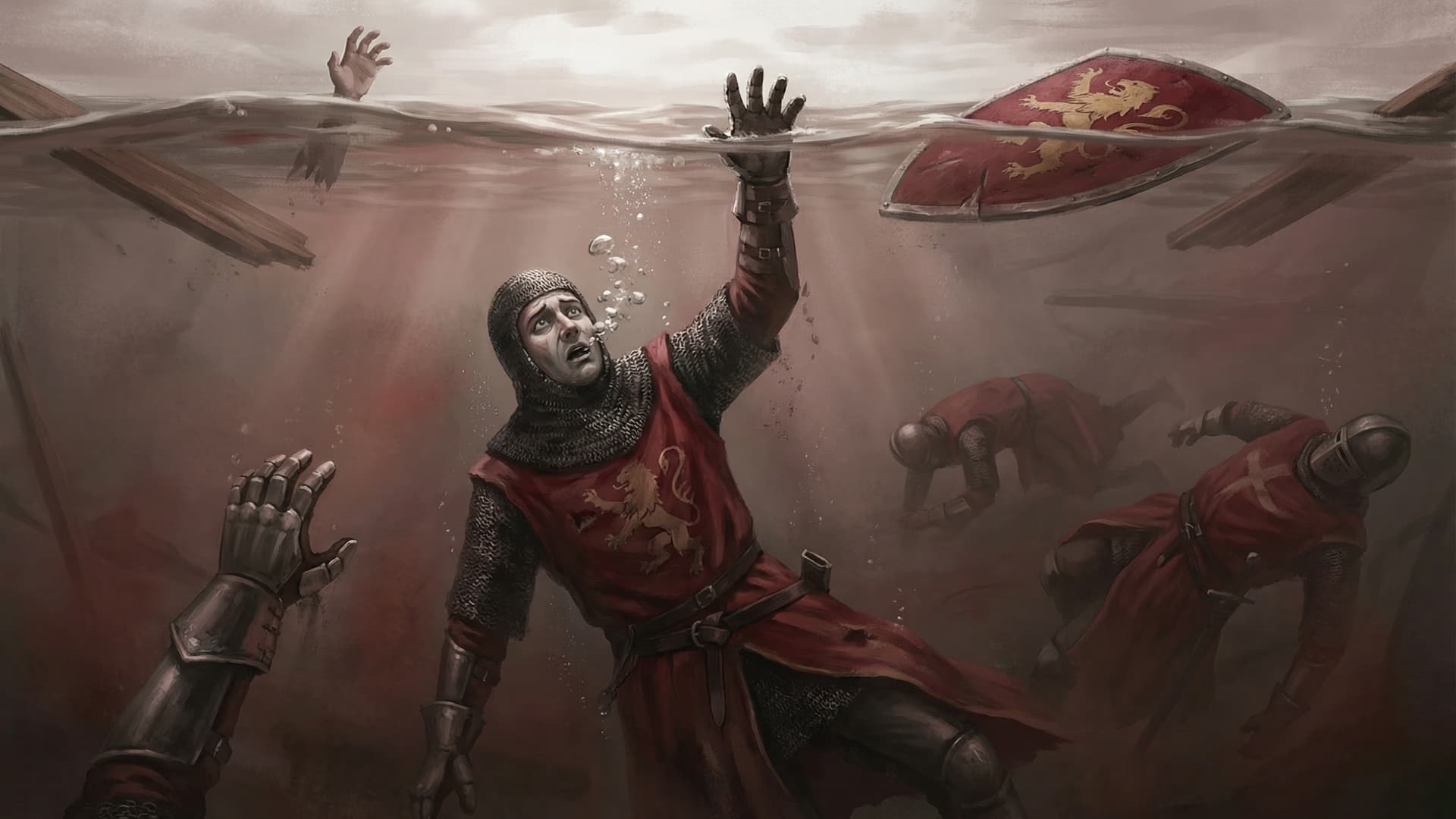
Knights tried to fight their way back to the bridge and found it clogged with bodies. Men fleeing north collided with men trying to cross south. The wooden structure groaned, then cracked, then collapsed into the Forth, dumping armored men into water too deep to stand in. They sank like stones, clawing at buckles they couldn't reach, drowning in sixty pounds of mail.
Some tried to swim. The river ran red, then brown with churned mud, then choked with corpses. On the south bank, Surrey watched his army die. He could do nothing. The bridge was gone. By the time anyone could reach the ford two miles upstream, everyone on the north bank would be dead.
Hugh Cressingham died in the carnage. The Scots found his body--the fat man who had urged the crossing, who had worried about the King's money. They stripped him naked. They flayed him, cutting the skin from his body in long strips.
Wallace, according to the Lanercost Chronicle, "caused a broad strip to be taken from the head to the heel, to make therewith a baldrick for his sword."
He would wear the treasurer's skin as a belt.
The Guardian
English losses: one hundred cavalry, five thousand infantry. Scottish losses: minimal--though among the wounded was Andrew Moray, who would die of his injuries within months.
Surrey fled to Berwick. He abandoned Stirling Castle. He abandoned any pretense that England controlled Scotland north of the Forth.
In the weeks that followed, someone knighted William Wallace. The chronicles don't record who held the ceremony or where. They record only the result: the second son who should have inherited nothing, the outlaw who had been killing Englishmen for barely five months, now bore the title Sir William Wallace, Guardian of the Kingdom of Scotland.
He ruled in the name of the deposed King John Balliol. He commanded an army that had proven heavy cavalry could die on common spears. He had shown all of Europe a crack in the foundation of medieval warfare.
For one perfect moment, Scotland was free.
The Reckoning
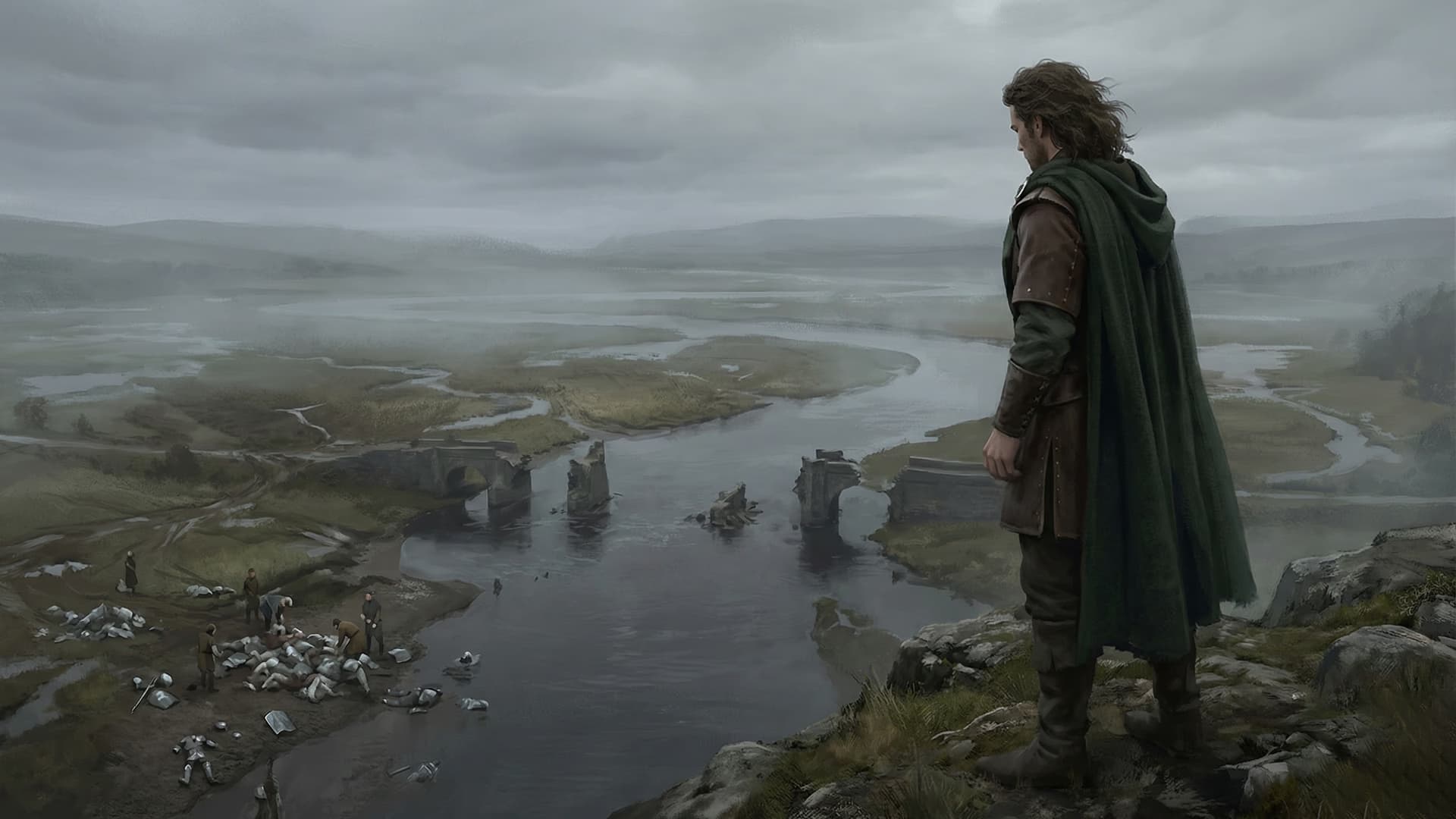
Wallace stood on Abbey Craig three days after the battle, looking down at the river that had swallowed five thousand Englishmen.
The bridge was gone. The English dead had been pulled from the Forth and stripped of their armor--mail that Wallace's men desperately needed, weapons that would arm farmers who had fought with sharpened farm tools. The water still ran dark.
He had done what no one thought possible. Not the nobles who knelt at Irvine. Not the English commanders who thought peasants with spears were a joke. Not even the men who followed him, who had believed only because there was nothing else left to believe in.
They believed now.
Scotland had a Guardian. An army. Proof that England could bleed.
But Wallace knew what the nobles still refused to see. Stirling Bridge had worked because Surrey was arrogant and Cressingham was impatient. It had worked because the bridge was narrow and the ground was soft and the English were stupid enough to divide their army in half.
It had worked because of mistakes Wallace could never count on again.
The Shadow
Somewhere in France, Edward Longshanks--the man they called the Hammer of the Scots--was already making plans.
He had conquered Wales. He had crushed rebellions that had lasted generations. He had built a reputation as the most dangerous military mind in Europe, and a commoner with a big sword had just humiliated his treasurer and scattered his army.
Edward would not make Surrey's mistakes.
When he came north--and he would come north--he would bring the largest army Scotland had ever faced. He would bring veterans of the Welsh wars who knew how to break mountain resistance. He would bring siege engines and supply trains and the cold, methodical brutality of a man who took conquest personally.
And he would bring the Welsh longbow.
Wallace had one year at the top of the world. One year to prepare for a king who never forgot an insult, who never forgave a defeat, who would not stop until Scotland was ground into dust or Edward himself was dead.
The victory at Stirling Bridge had bought Scotland time.
Whether it had bought enough time was a question that would be answered on a different field, against a different enemy, with stakes higher than Wallace could imagine.
For now, he stood on the ridge where he had watched an impossible victory unfold. The guardian of a kingdom that existed only because England had momentarily looked away.
The celebration would be brief. The reckoning was coming.