- Known for
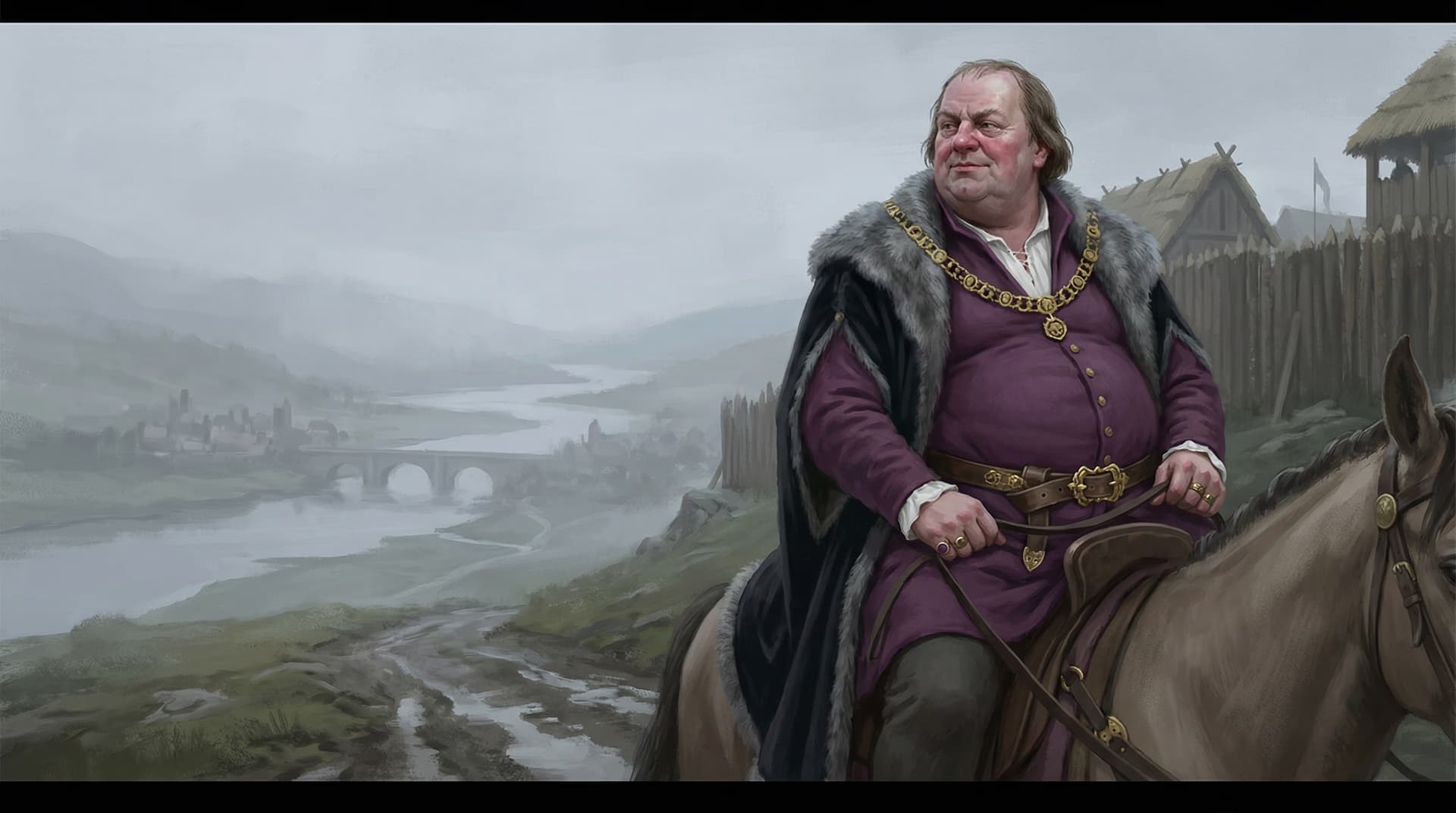
- Treasurer of English-occupied Scotland whose greed and impatience led to the disaster at Stirling Bridge, where the Scots flayed his corpse
- Fatal flaw
- Saw everything in terms of cost and never once calculated the price of being hated by everyone, including the men on his own side
The Story
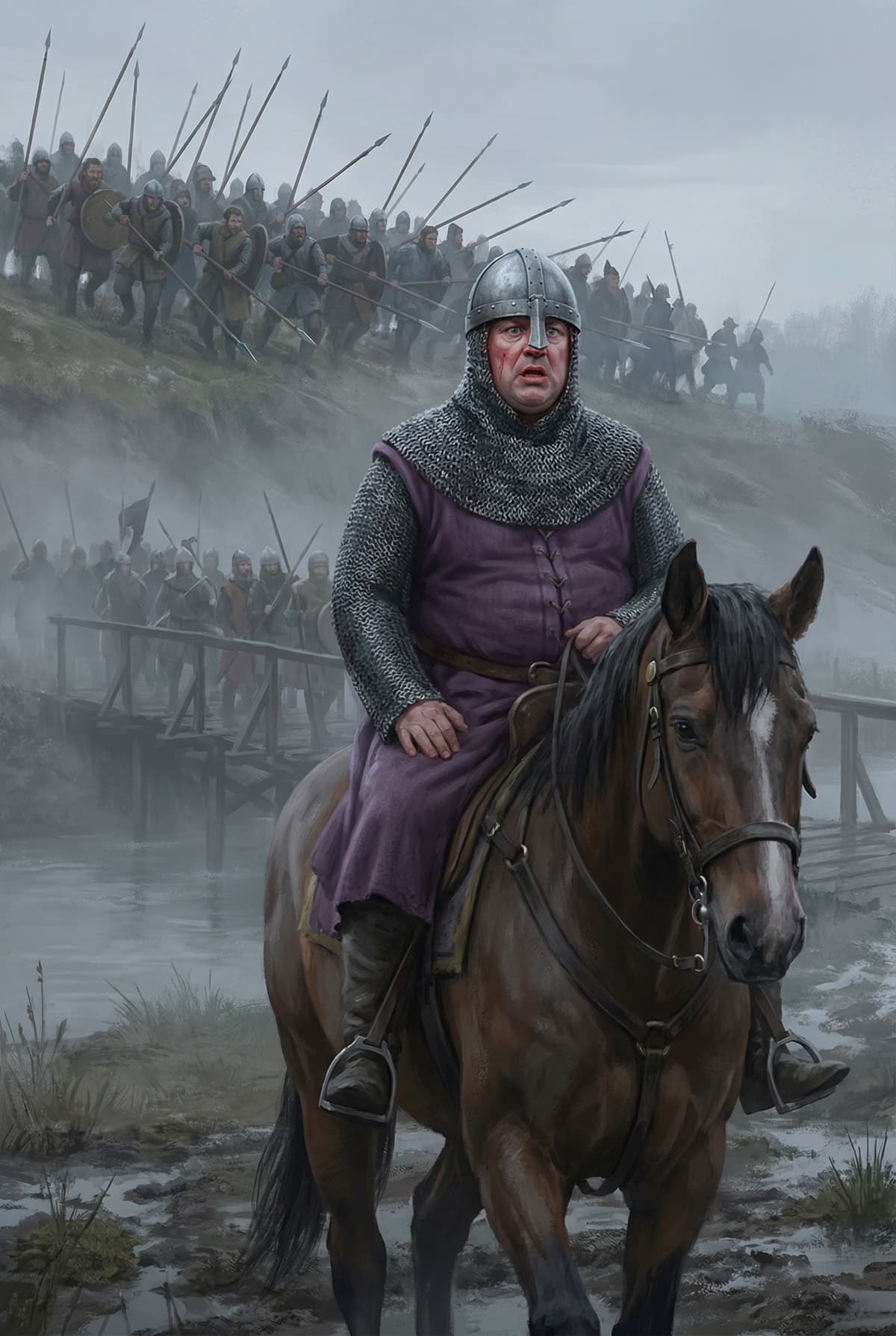
September 11th, 1297. A fat man in borrowed armor is dying on the north bank of the River Forth. He has never worn a helmet before today. He has never held a line. He is a clerk, a tax collector, a man whose weapons have always been ledgers and writs and the implicit threat of the king's displeasure. Now he is face down in Scottish mud with spear wounds in his chest, and the men he taxed are stripping the armor off his body before he has finished bleeding.
Hugh de Cressingham was not a soldier. He was an accountant. And accountants should not lead cavalry charges across narrow bridges into enemy territory. But Cressingham had spent seventeen months telling everyone in Scotland what to do, and on the morning of Stirling Bridge, he told the Earl of Surrey to stop wasting the king's money and cross. Surrey listened. Five thousand Englishmen died. And the Scots turned Cressingham's skin into souvenirs.
He was the most hated man in Scotland. Not Wallace, who killed Englishmen. Not Edward, who conquered nations. Cressingham, who counted pennies. The Scots hated him because he taxed them into starvation. The English hated him because he was pompous, overbearing, and spectacularly wrong about the one decision that mattered. He served Edward I with total devotion for fifteen years, climbed from minor exchequer clerk to treasurer of an occupied kingdom, and died in a battle he had no business fighting because he could not stop himself from telling a military commander how to do his job.
History remembers him as a footnote, the fat man Wallace skinned. But the story of how a cleric with no military experience ended up leading an army to its destruction reveals something darker about the English occupation of Scotland: it was run by men who understood money and understood nothing else.
Personality & Motivations
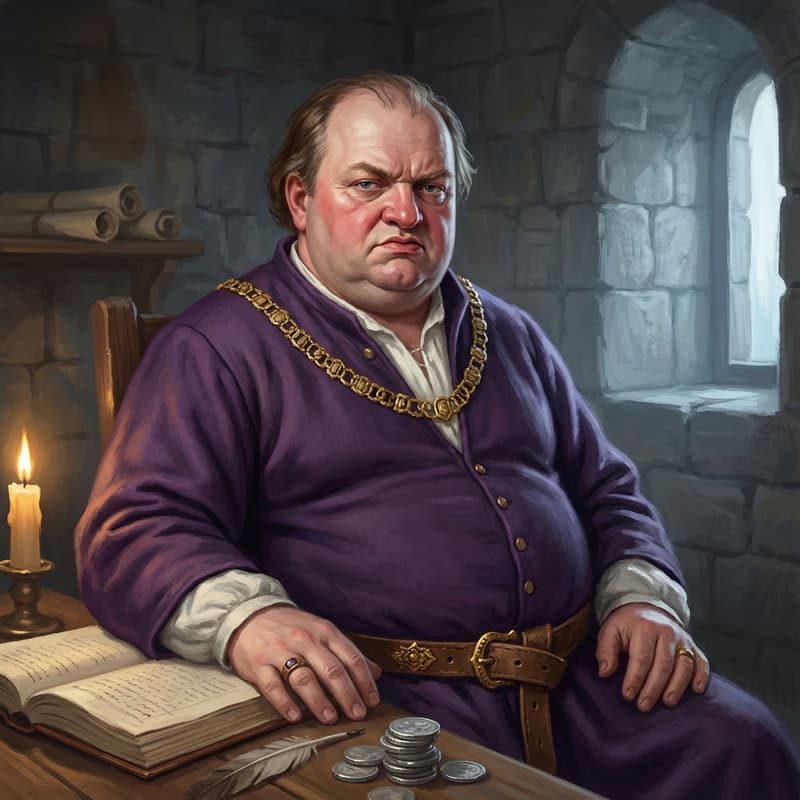
William Rishanger, the English chronicler, described Cressingham as "a solemn and lofty man" who "loved money exceedingly." This was not a compliment. Even by the standards of Edward I's administration, which valued ruthless efficiency, Cressingham stood out as a man whose devotion to the treasury bordered on obsession. He substituted timber for stone in Berwick's fortifications to save money, a decision that weakened the most important English garrison in Scotland. He confiscated all Scottish wool, the kingdom's primary export, and shipped it south. He imposed direct taxes on both lay and ecclesiastical lands with a thoroughness that collapsed revenue collection entirely, because people who have nothing left will not pay no matter how many writs you send them.
What drove Cressingham was not cruelty for its own sake. He was a bureaucrat who had internalized a single directive: make Scotland pay for its own conquest. Edward I had told him to spare no expense necessary for the complete reduction of the country, and Cressingham interpreted this as a mandate to squeeze every coin from every parish while spending as little as possible on the infrastructure that might have made the occupation bearable. He raised 5,188 pounds in subsidies by June 1297, a staggering sum from a country in the early stages of rebellion. By July, revenue had collapsed entirely. The rebellion he was funding the suppression of was being fueled by his own taxation.
He was not well liked by anyone. The Scots despised him as a thief. The English found him pompous and overbearing. John de Warenne, the Earl of Surrey and nominal commander of English forces in Scotland, left the country entirely and went back to his estates in England, leaving Cressingham to run the occupation alone. When Warenne finally returned in September 1297 to deal with the Wallace rebellion, Cressingham treated him less like a superior and more like an obstacle between himself and efficient governance.
What Most People Get Wrong
Most people assume Cressingham was a knight or a lord, some kind of military aristocrat who blundered into a battle through incompetence. He was nothing of the sort. Hugh de Cressingham was a cleric, a man of the church who held the parsonage of Chalk in Kent, the rectory of Doddington, the rectory of Rudby in Cleveland, and prebends in several other churches. His career was entirely in administration: exchequer clerk, auditor, justice itinerant, steward of Queen Eleanor's household. He had spent his life behind desks, in courtrooms, and in treasuries.
The fact that he donned armor at Stirling Bridge was remarkable enough that chroniclers noted it. He had reportedly never worn armor before that day. A lifetime bureaucrat strapping on a breastplate and riding into a battle he had personally insisted on, that is not the story of a soldier's misjudgment. It is the story of a man so convinced of his own authority that he believed his presence on the field would matter. It did. Just not in the way he intended.
Key Moments
Exchequer service, 1282. Cressingham first appears in the historical record as a minor clerk investigating irregularities affecting Ramsey Abbey. It was unglamorous work, the kind of assignment given to men who could count and had no connections worth mentioning. He would spend the next decade climbing through the bureaucracy, handling debts, auditing accounts, and proving himself useful enough to attract the attention of the crown. By 1291, he was an itinerant justice at Carlisle. By 1292, Edward I had him auditing debts owed to the late Henry III. The trajectory was steady, unremarkable, and entirely administrative. Nothing in it suggested a man who would one day ride into battle.
Appointment as Treasurer of Scotland, 1296. After the Battle of Dunbar destroyed Scottish resistance and John Balliol surrendered his crown, Edward I needed someone to run the financial machinery of his newest conquest. He chose Cressingham. The appointment came with explicit instructions: spare no expense necessary for the complete reduction of Scotland. Cressingham took the first part of that instruction, the spending, and inverted it. He became obsessed with cutting costs, substituting cheap materials for proper fortifications, confiscating Scottish exports, and imposing taxes that alienated every level of Scottish society. Within a year, he had made himself the most hated man in the kingdom.
The wool confiscation, 1296-1297. Wool was medieval Scotland's most valuable export, the backbone of its economy. Cressingham ordered all of it confiscated and shipped to England. For Scottish farmers, merchants, and monasteries, this was not merely taxation. It was the destruction of their livelihood. The confiscation did more to fuel the Scottish rebellion than any single act of military brutality. Men who might have tolerated English garrisons could not tolerate the theft of their ability to feed their families. By the spring of 1297, revolt was spreading across the country, and Cressingham's own revenue reports acknowledged that collection had become impossible.
The argument at Stirling, September 11th, 1297. The morning of the battle, John de Warenne hesitated. He had an army of perhaps ten thousand men. Across the river, Wallace and Andrew Moray held the high ground at Abbey Craig with a force of five to eight thousand. Between them was a narrow wooden bridge, wide enough for two horsemen abreast, leading onto soft, marshy ground cut by loops of the Forth. Sir Richard Lundie, a Scottish knight serving the English, proposed a flanking move: give him sixty cavalry and he would cross a ford two miles upstream, taking the Scots from behind while they watched the bridge. It was sound advice. Cressingham overruled it. "It is no use, sir earl, to delay further and waste the king's money. Let us cross the bridge." Warenne, who had been hesitating for days, gave in. The vanguard began to cross.
Death at Stirling Bridge, September 11th, 1297. When Wallace sprung the trap, Cressingham was on the north bank of the Forth with the English vanguard. The Scots drove down from Abbey Craig in schiltron formation, sealed the bridge, and cut the crossing force off from any retreat or reinforcement. In the slaughter that followed, over five thousand English soldiers died. Cressingham, the cleric in borrowed armor, was among them. He died as he had lived: in the wrong place, doing the wrong job, convinced he knew better than everyone around him.
The Detail History Forgot
After the battle, the Scots did not simply strip Cressingham's body. They flayed it. The Lanercost Chronicle records that Wallace "caused a broad strip to be taken from the head to the heel, to make therewith a baldrick for his sword." Other accounts claim the Scots dried and cured his skin, cutting it into smaller pieces that were distributed as trophies, fashioned into saddle girths and sword belts. Some sources say strips of Cressingham's hide were sent across Scotland as proof of the victory and reminders of the man they had destroyed.
Whether every detail of the flaying is literally true or partly embellished by chroniclers, the core fact is attested by multiple independent sources. The desecration of Cressingham's corpse was not random battlefield savagery. It was targeted, deliberate, and symbolic. Of all the English dead at Stirling Bridge, only Cressingham was singled out for this treatment. The Scots had killed plenty of English soldiers before. They skinned the one who had been stealing their wool.
The Downfall
Cressingham's fatal flaw was not greed, though he was greedy. It was the absolute certainty that he was the smartest man in every room, combined with the inability to recognize that some rooms require skills he did not possess. He was a superb administrator in a limited, mechanical sense. He could count money, extract revenue, and organize supply chains. What he could not do was read people, understand the consequences of humiliation, or accept that a military situation required military judgment.
His insistence on crossing the bridge at Stirling was the natural endpoint of a career spent overruling everyone. He had overruled Scottish landowners who told him the taxation was unsustainable. He had overruled English garrison commanders who told him the fortifications were inadequate. He had overruled the reality of a country sliding into rebellion by writing letters to Edward insisting everything was under control. When Richard Lundie offered a sound tactical alternative at Stirling, Cressingham overruled him too, because Lundie's plan would cost more money and take more time, and Cressingham could not accept either.
He died in borrowed armor on a muddy riverbank, killed by the men whose wool he had confiscated, whose taxes he had collected, whose country he had tried to run like a branch office of the English exchequer. The Scots made a belt from his skin. It was the most personal act of vengeance in the entire Scottish wars, directed not at a king or a general but at a tax collector. Edward I lost battles, armies, and eventually his war against Scotland. But he died in his bed. Cressingham, the man who counted Edward's coins, died in a ditch and was turned into leather. The lesson was clear, and Scotland made sure no one missed it: you can survive being conquered, but you cannot survive being despised.
Frequently Asked Questions
Yes. Hugh de Cressingham was a real English cleric and royal administrator who served as Treasurer of Scotland under Edward I from 1296 until his death at the Battle of Stirling Bridge on September 11th, 1297. His career, his role in the Scottish occupation, and his death are documented in multiple contemporary English and Scottish chronicles, including the Lanercost Chronicle, the Chronicle of Walter of Guisborough, and the writings of William Rishanger.
He was killed at the Battle of Stirling Bridge on September 11th, 1297. Cressingham was on the north bank of the River Forth when William Wallace and Andrew Moray's forces sealed the bridge and trapped the English vanguard. He died in the ensuing massacre along with approximately five thousand other English soldiers. After the battle, the Scots flayed his corpse and, according to the Lanercost Chronicle, William Wallace had a strip of his skin made into a sword belt.
The flaying is attested by multiple independent chroniclers, making it one of the better-documented atrocities of the Scottish wars. The Lanercost Chronicle specifically states that Wallace "caused a broad strip to be taken from the head to the heel, to make therewith a baldrick for his sword." Other accounts describe smaller strips of skin being distributed to Scottish soldiers as trophies. Some modern historians treat the most elaborate details as possible embellishment, but the core act of flaying is generally accepted as historical.
As Treasurer of Scotland, Cressingham imposed aggressive taxation on both lay and ecclesiastical lands, confiscated Scotland's entire wool export for shipment to England, and substituted cheap materials in fortification construction to save money. He was described by contemporaries as pompous, harsh, and overbearing. His policies stripped Scottish communities of their economic livelihood and funded the military occupation of their own country. The intensity of hatred directed at him, a bureaucrat rather than a military commander, reflects how deeply his financial exploitation was felt at every level of Scottish society.
No. He was a cleric and an administrator. Cressingham held multiple church livings, including the parsonage of Chalk in Kent, the rectory of Doddington, and the rectory of Rudby in Cleveland. His entire career was in the exchequer, the courts, and royal administration. Chronicles specifically noted that he had reportedly never worn armor before the Battle of Stirling Bridge. His decision to don a helmet and breastplate and ride into battle was remarkable precisely because nothing in his background prepared him for combat.
Cressingham was obsessed with reducing costs for the crown. The English army's delay in confronting the Scots was costing money every day in supplies and wages. When Sir Richard Lundie proposed a flanking maneuver across a ford upstream, Cressingham rejected it because it would take longer and cost more. He reportedly told the Earl of Surrey: "It is no use, sir earl, to delay further and waste the king's money. Let us cross the bridge." Surrey, who had been indecisive for days, gave in. The direct crossing turned into the worst English military disaster of the Scottish wars.
It was dysfunctional. John de Warenne, Earl of Surrey, was the nominal military commander of English forces in Scotland, but he spent much of 1296-1297 on his English estates, leaving Cressingham to run the occupation as de facto governor. When Warenne finally returned in September 1297 to deal with the Wallace rebellion, Cressingham treated him with the impatience of a man who had been doing the real work while his superior lounged at home. Their disagreement over the bridge crossing at Stirling, where Cressingham pressured the hesitant Warenne into a frontal assault, reflected a power dynamic in which the treasurer had assumed an authority far beyond his official role.
Yes. Cressingham was unpopular on both sides. English chronicler William Rishanger described him as a man who "loved money exceedingly." His cost-cutting measures, particularly substituting timber for stone in Berwick's fortifications, endangered English garrisons. His overbearing manner alienated the military commanders he was supposed to support. Even the Earl of Surrey, his superior, appears to have found him insufferable enough to leave the country rather than work alongside him. Cressingham achieved the rare distinction of being despised by the people he governed and the people he served.
The disaster at Stirling Bridge collapsed English control over Scotland north of the Forth. Surrey fled to Berwick and then to England. English garrisons were abandoned. Wallace was knighted and named Guardian of Scotland, ruling in the name of the deposed King John Balliol. Edward I, who was in Flanders at the time, was forced to abandon his French campaign and return to deal with Scotland personally. He invaded in 1298 with the largest army Scotland had ever faced and defeated Wallace at the Battle of Falkirk, but the reconquest took years and was never permanent.
Records show that Cressingham raised approximately 5,188 pounds in subsidies from Scotland by June 1297. This was a substantial sum extracted from a country under military occupation and in the early stages of rebellion. However, by July 1297, his own reports acknowledged that revenue collection had collapsed entirely due to the escalating revolt. The rebellion he was supposed to fund the suppression of had been accelerated by his own aggressive taxation, creating a self-defeating cycle that ended at Stirling Bridge.