
April 30, 1945. 8:00 AM.
Eva Braun's hand trembles slightly as she places it on the cold concrete wall. Behind her, thirty feet below the Reich Chancellery, the Fuhrerbunker hums with the constant whir of diesel generators. The air smells like machine oil and mold. She's lived in this damp tomb for weeks now, but this morning she's decided to see the sun one last time.
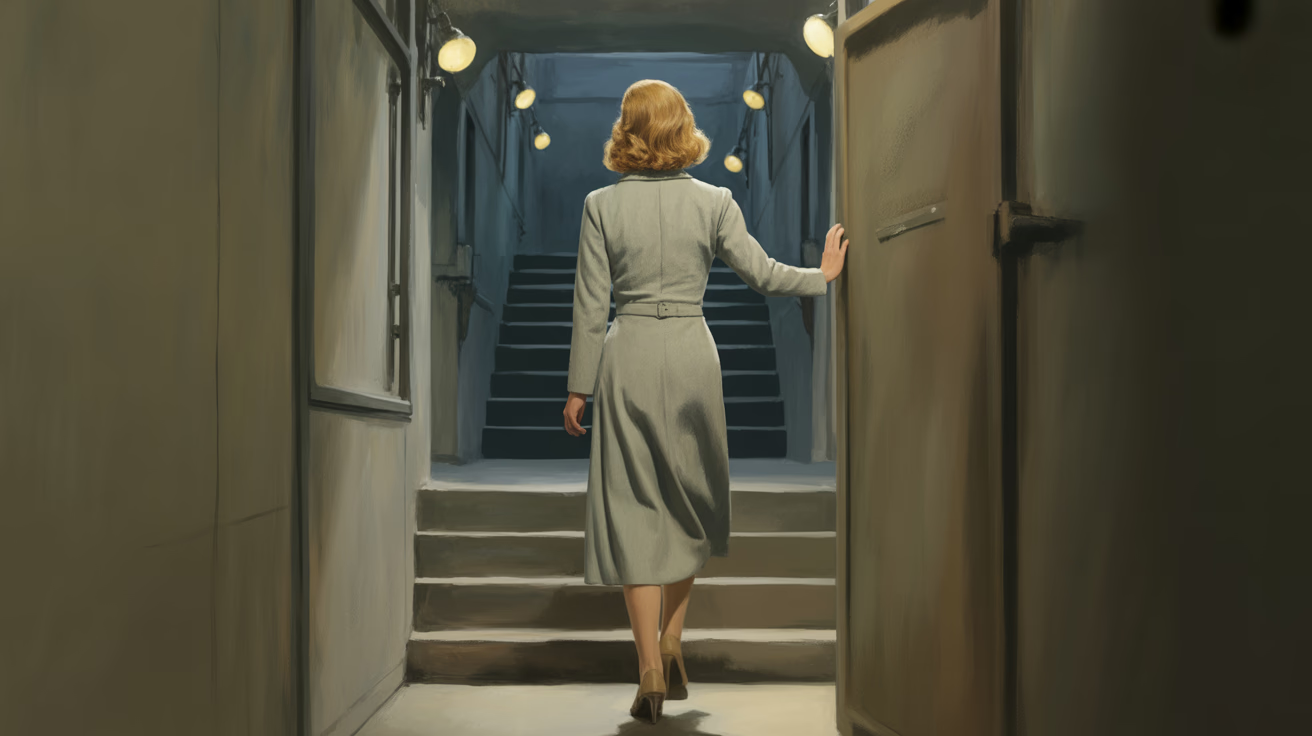
Her footsteps echo up the emergency stairwell. Each step takes her closer to daylight and further from the man sleeping in the room she just left--her husband of less than forty hours. Yesterday afternoon, in a brief civil ceremony in the map room, she'd become Eva Hitler. She'd practiced the signature multiple times: Eva Hitler, then crossed it out, trying again. Getting the loops just right seemed important, even though she knew no one would ever read it.
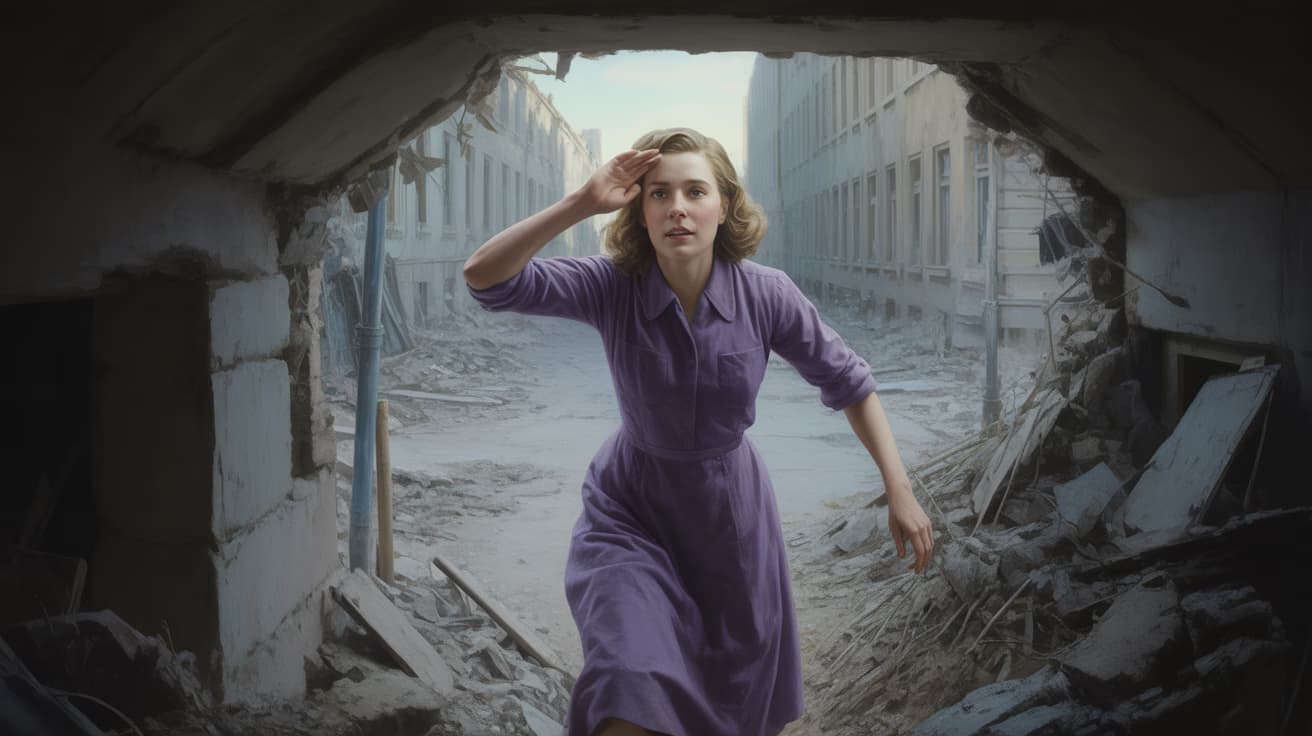
The steel door at the top of the stairs resists, then yields. Morning light floods in, and with it, the thunder of Soviet artillery. Eva steps into the Reich Chancellery Garden and stops.
The garden is unrecognizable. Shell craters have transformed manicured lawns into a moonscape of churned earth and shattered stone. The chancellery building itself stands gutted--walls blown out, smoke still rising from sections hit during the night. The air tastes like cordite and ash. Somewhere beyond the ruined buildings, perhaps 250 yards away, Soviet tanks are advancing. She can hear them: the grinding of treads, the sharp crack of tank guns, the distinctive whistle of incoming shells.
But there, breaking through the smoke and dust, is sunlight.
Eva lifts her face to it, closes her eyes, and breathes. She's always been the practical one, the woman who chose loyalty when everyone else chose survival. While other Nazi wives fled to the countryside or made deals with advancing Americans, Eva had insisted on staying. Hitler had given her multiple opportunities to leave Berlin. She'd refused them all.
"I'd rather die with you than live without you," she'd told him weeks ago, and she'd meant it.
Now, standing in this destroyed garden with the war's end literally minutes away, she feels strangely calm. The decision is made. The cyanide capsule rests in her pocket--a small glass vial no bigger than her thumb. Hitler had tested them yesterday on Blondi, his German Shepherd. The dog had dropped dead instantly. Eva had watched without flinching. At least they knew the poison worked.
She'd told him at lunch the day before that she wanted to take cyanide because she wanted to be "a beautiful corpse." Hitler had laughed--that strange, barking laugh he still produced sometimes despite everything falling apart. Then he'd given her and the secretaries each a capsule, apologizing that he couldn't offer them a better farewell gift.
A shell screams overhead and detonates somewhere in the garden, showering her with dirt. The war is here, immediate and inescapable. Eva takes one more breath of surface air, then turns and descends back into the bunker.
Subscribe to Nightfall History on YouTube
Join our community on YouTube for more historical deep dives and visual storytelling
Six Hours Earlier: 2:00 AM
Traudl Junge's fingers ache from typing. She's been taking dictation from Hitler for over an hour--his last will and testament, rambling and self-justifying even now. At twenty-five, she's young enough to be his granddaughter, but she's served as his secretary for three years. She knows his rhythms, his pauses, the way his voice rises when he's working himself into one of his speeches.
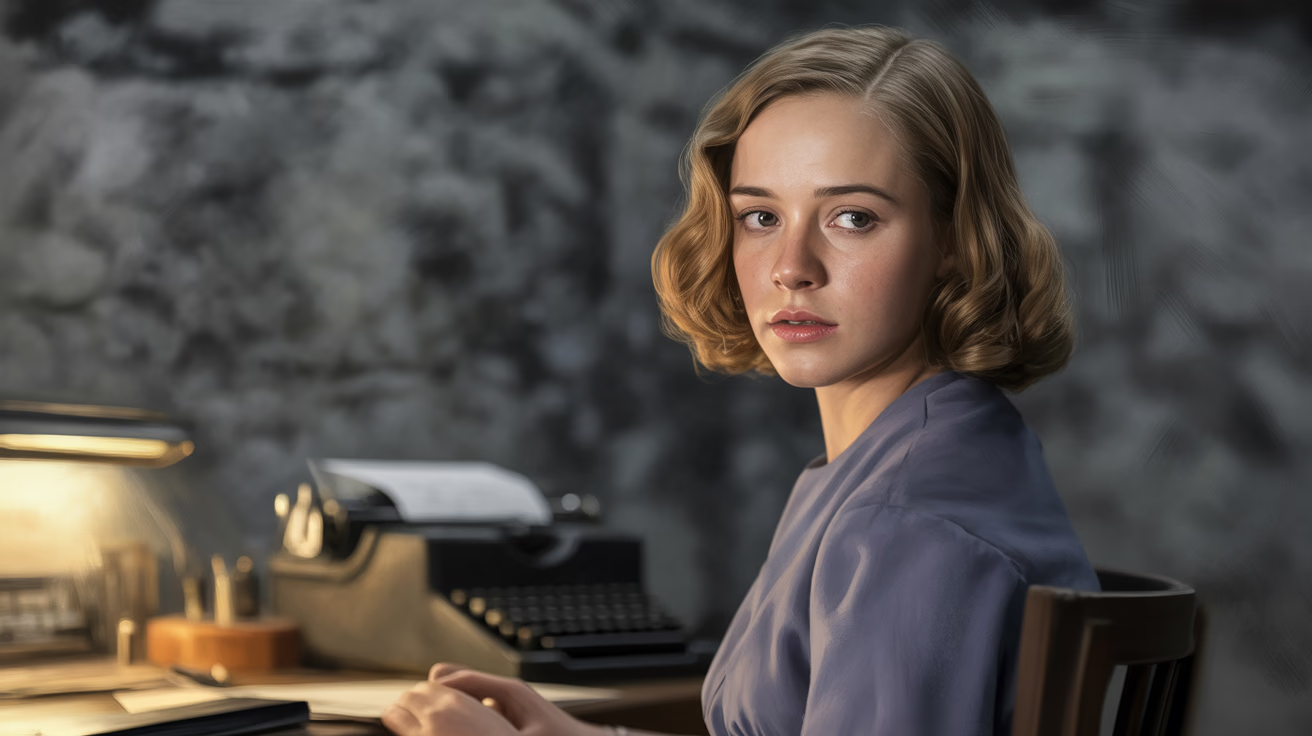
Tonight, though, something's different. His voice keeps drifting, as if he's talking to someone who isn't in the room. Dr. Schenck, who'd been summoned earlier to receive goodbye instructions, had described Hitler's eyes as looking like "wet gray porcelain"--filmy, like grape skins. Traudl understands what he meant now. Hitler is here but not here, already half-departed.
She types mechanically: Admiral Karl Donitz is appointed President of the Reich. Martin Bormann is appointed Party Minister. The Jews are to blame for this war. On and on, a dead man's fantasy of continuing relevance.
When it's finally done, Hitler signs it. Bormann witnesses. Goebbels witnesses. Then Hitler shuffles off to his private quarters, and Traudl is left alone with her typewriter and the knowledge that she's just documented the end of the world.
She thinks about the cyanide capsule in her pocket--the one Hitler gave her yesterday along with the other secretaries. "I'm sorry I can't give you a better farewell gift," he'd said. She'd thanked him. At the time, it had seemed like a kindness.
Now she's not sure what it is.
12 Hours Earlier: The Wedding
The map room is an odd place for a wedding. Cold metal table, harsh overhead lighting, an outdated map on the wall showing the Greater German Reich at its maximum extent--borders that no longer exist, territory lost, an empire that's now just a bunker complex and maybe a few square kilometers of Berlin.
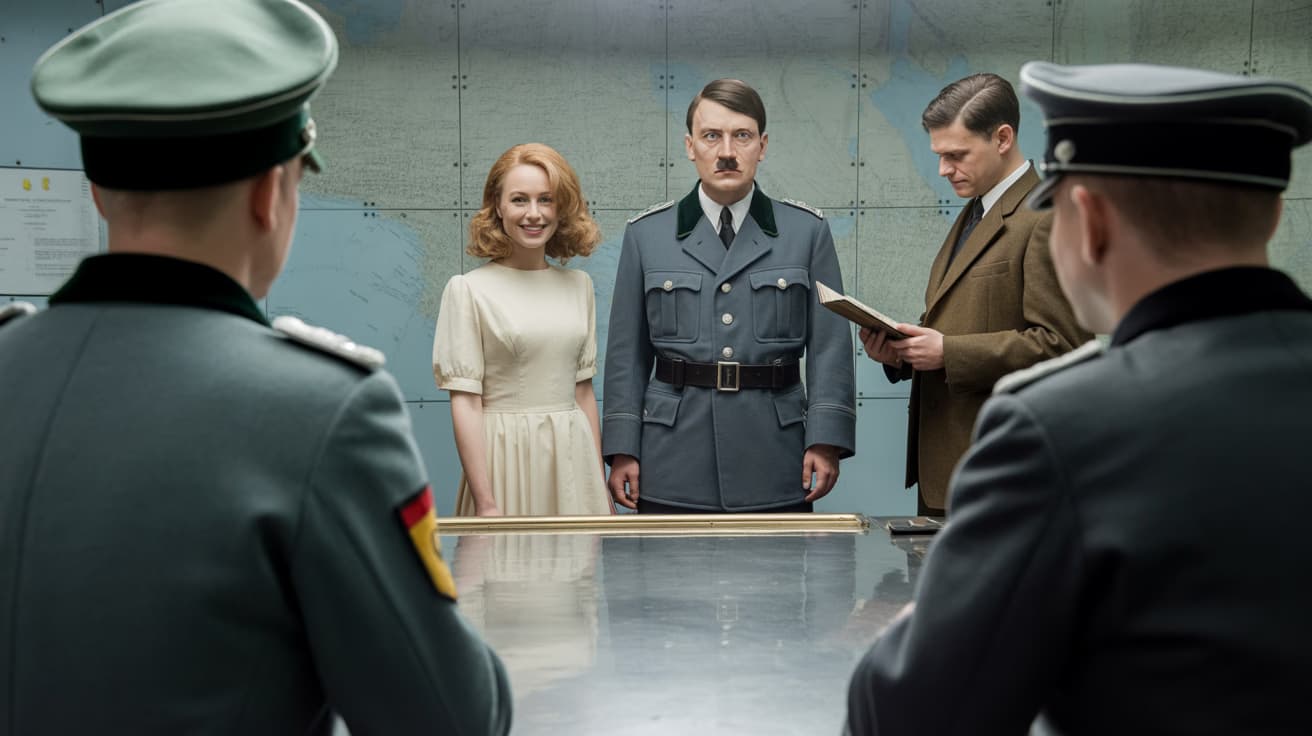
But Eva had wanted this. Needed it, actually. After years as Hitler's mistress, hidden away while he maintained his public image as married to Germany, she would die as his wife. It mattered to her in a way Traudl couldn't quite understand but respected nonetheless.
The civil officiant--hastily summoned from somewhere in the chancellery cellars--performs the briefest of ceremonies. Bormann serves as witness, along with Goebbels. Hitler seems distracted, barely present. Eva glows. She actually glows, as if this moment of official recognition compensates for everything she's about to lose.
When it's over, they return to their separate routines. Hitler to his military conferences. Eva to the small cluster of rooms she shares with the secretaries, where they'll drink champagne liberated from the chancellery wine cellars and pretend this is a celebration rather than a funeral.
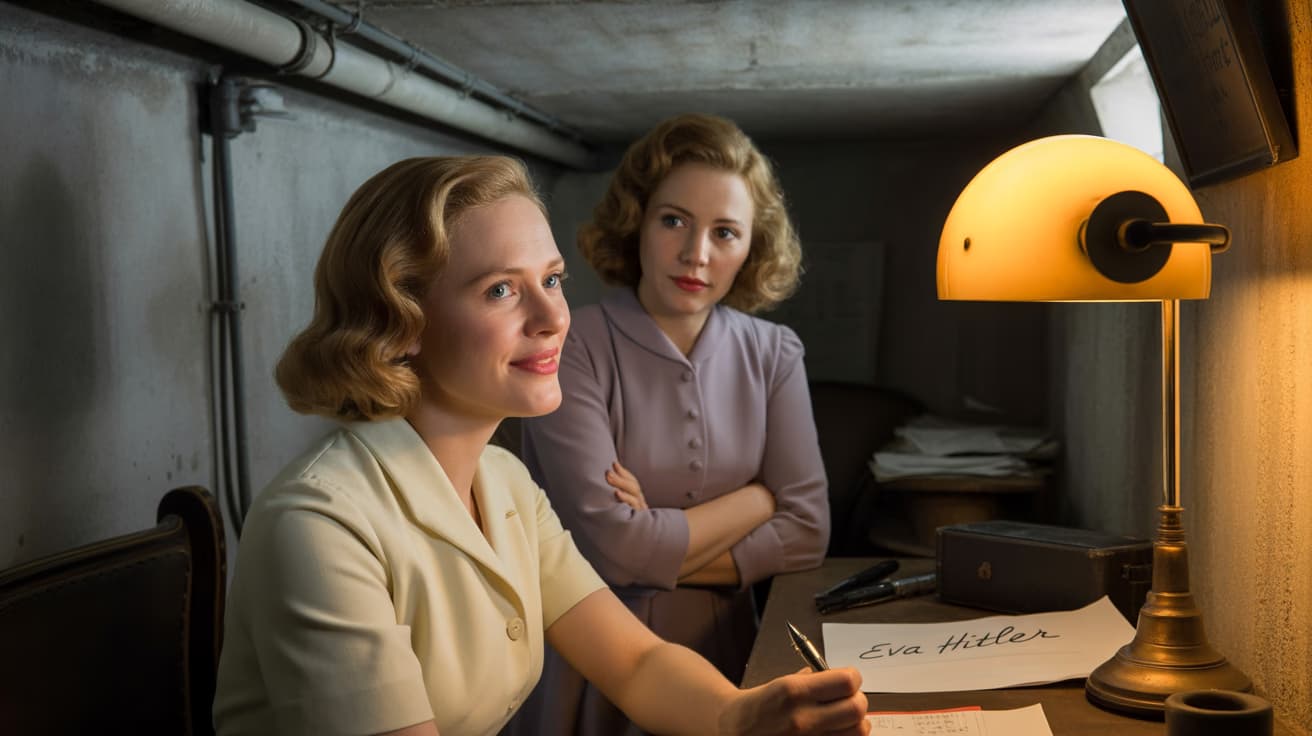
Traudl watches Eva practice her new signature later that evening: Eva Hitler. Cross out. Eva Hitler. Cross out. Eva Hitler. Finally satisfied, she smiles at Traudl.
"I always knew we'd end up here," Eva says quietly. "Not here exactly, but together at the end. He gave me chances to leave. Did you know that?"
Traudl nods. Everyone knows.
"I chose this," Eva continues. "That matters, doesn't it? That I chose?"
Stay in the Loop
Get notified when new articles and videos drop. Unsubscribe anytime.
April 30, 11:00 AM: The Goebbels Children
One floor above, in the Vorbunker, six children eat breakfast. The Goebbels children range from twelve-year-old Helga down to little Heide, who's only four. Between them are Hilde, Helmut, Holde, and Hedda--stair-step siblings eating bread with jam, their favorite. Their father, Joseph Goebbels, Germany's Propaganda Minister, is nowhere to be seen. Their mother, Magda, lies in bed in the adjacent room, her heart condition and general collapse making her a ghost in her own life.
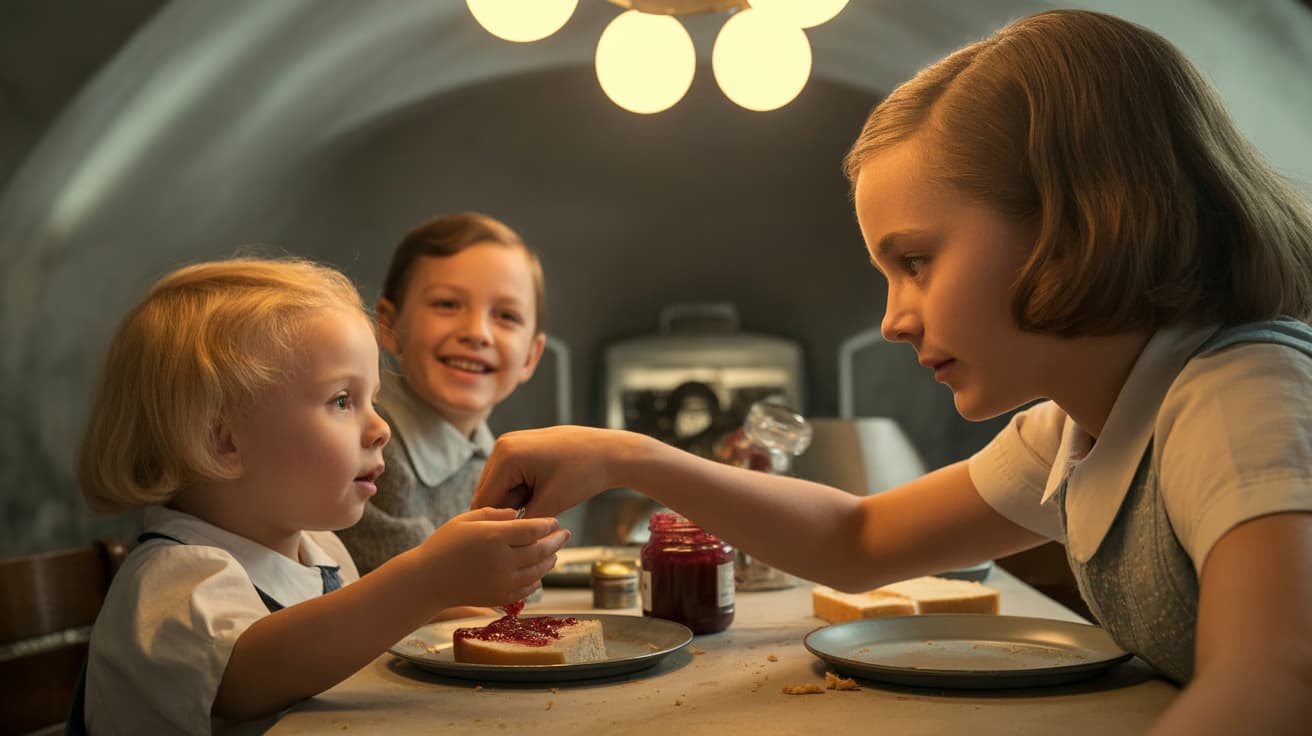
The children have been living in the bunker for weeks now. They've adapted with the remarkable resilience of youth. They sing Nazi songs for Hitler every afternoon at teatime. They play games in the corridors. They're excited because yesterday there was a children's party in the chancellery cellars--cake and singing and all the other children from the Hitler Youth.
Traudl passes through on an errand and stops to watch them for a moment. Helga, the oldest, looks up and meets her eyes. There's something in that look--a flicker of understanding, perhaps, or just the beginning of adolescent awareness that something is terribly wrong.
"Is Uncle Fuhrer feeling better today?" Helga asks.
Traudl forces a smile. "He's resting. You'll see him at teatime."
But they won't. By teatime, Hitler will be dead. And these children, still laughing over their breakfast jam, have less than twenty-four hours to live. Their mother has already decided. Dr. Stumpfegger--Hitler's physician--has reluctantly agreed to help. Tomorrow night, cyanide capsules will be crushed into their sleeping mouths. Helga will fight. The bruising on her face will tell that story later, when Soviet doctors perform autopsies. But the younger ones will go quietly, trusting the hands that poison them.
Traudl doesn't know this yet. When she finds out tomorrow, it will be the thing that haunts her most--more than Hitler's death, more than the suicides, more than any of it. The children eating bread with jam, singing songs, having no idea their parents had already decided their fate.
3:30 PM: The End
Eva enters Hitler's private quarters for the last time. The room is small, barely ten feet square, with a narrow bed, a table, two chairs, and a photograph of Hitler's mother on the wall. It smells perpetually damp. The carpet is red, threadbare in places. This is where the master of Europe spent his final months--in a moldy cell below the water table, listening to diesel generators and dreaming of victories that would never come.
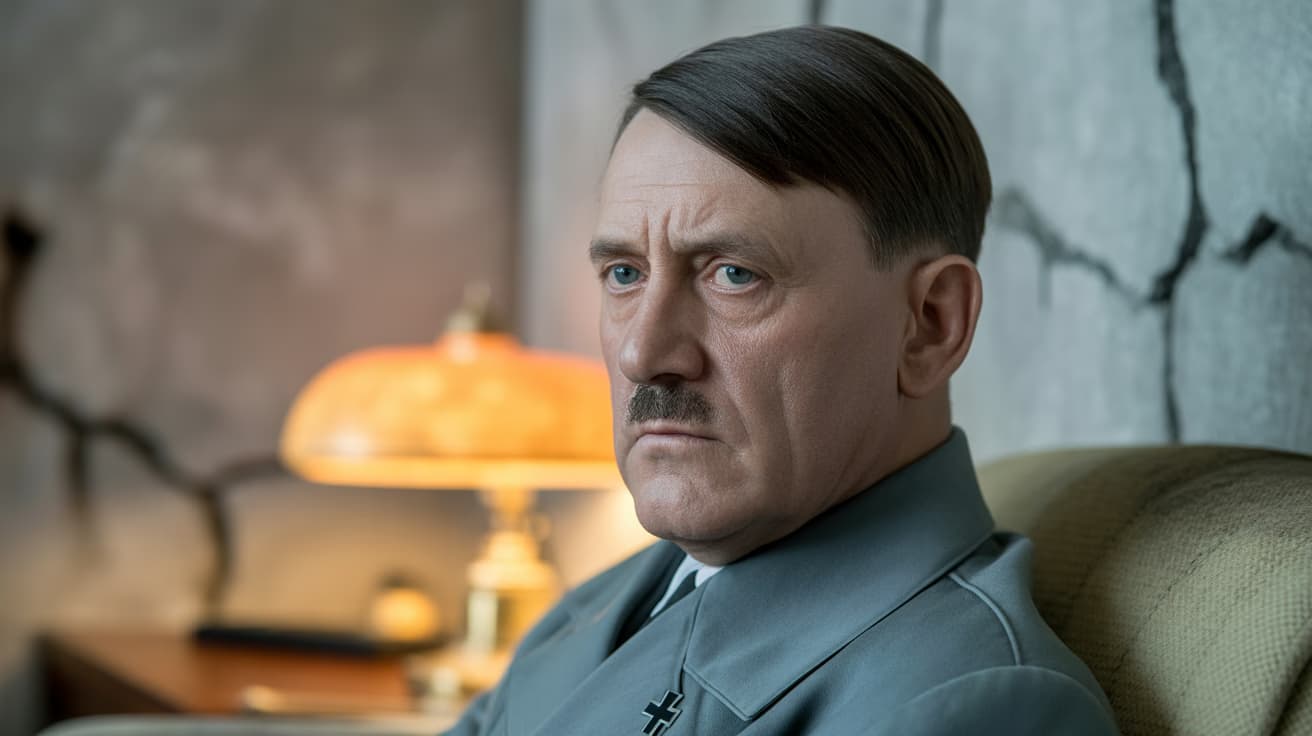
Hitler sits on the small sofa, his Walther pistol on the cushion beside him. He looks ancient--only fifty-six but aged decades by stress and medication. His hands shake slightly. The man who once held audiences of thousands transfixed now struggles to hold a teacup steady. Whatever delusions sustained him through the past weeks seem to have finally dissolved, leaving only this: a damp room thirty feet underground and a way out.
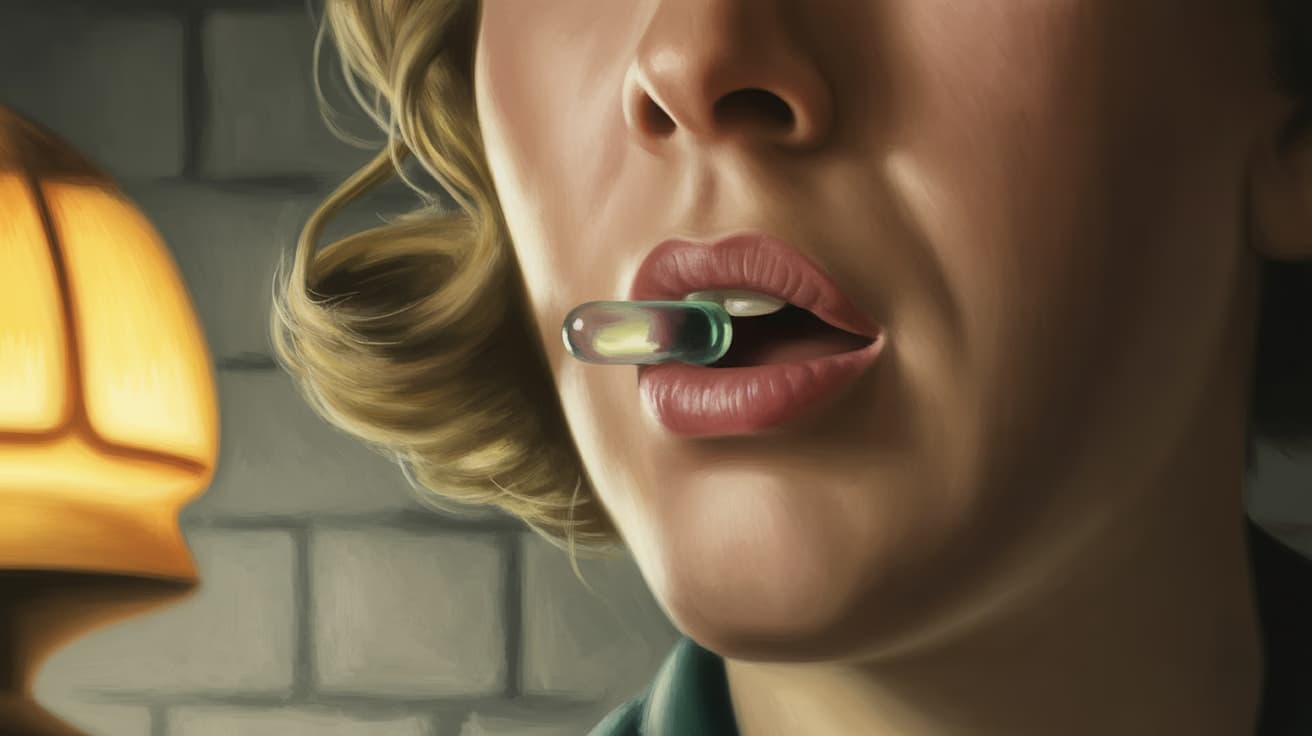
Eva sits beside him. She takes the cyanide capsule from her pocket and holds it up to the light. Such a small thing to contain death. Glass and poison, no bigger than a pearl.
"I wanted to see the sun this morning," she tells him. "It was beautiful. You should have come with me."
Hitler grunts. He'd tried, she knows. Got to the top of the stairs but couldn't open the door when the bombardment intensified. Too loud. Too real. After years of orchestrating death from a distance, he couldn't face it directly.
"It doesn't hurt?" Eva asks, though they both know it does. They'd watched Blondi die yesterday. The dog's body had convulsed for several seconds before going still.
"It's fast," Hitler says, which isn't the same thing.
They sit in silence for a moment. Outside the room, Heinz Linge, Hitler's valet, waits with Otto Gunsche and Martin Bormann. They know what's coming. Everyone knows.
Eva thinks about her family in Munich. Her sister Gretl, who'd married one of Hitler's generals. Her parents, who'd never quite approved of this relationship. She wonders if they'll understand why she made this choice--to die beside a man who'd brought nothing but destruction to the world. Probably not. She's not sure she understands it herself anymore.
But the choice is made. Has been made for weeks.
She places the capsule between her teeth. Beside her, Hitler raises his pistol to his temple. Their eyes meet one final time--this woman who chose loyalty above survival, this man who chose delusion above responsibility.
Eva bites down.
The glass breaks. The cyanide floods her mouth with a bitter almond taste. Her body seizes almost immediately--muscles contracting, lungs unable to draw breath, her vision tunneling to black. She feels herself falling sideways, legs drawing up involuntarily, and then--
Nothing.
The gunshot comes a second later, sharp and final in the small room. Then silence, broken only by the distant rumble of generators and the muffled thunder of Soviet artillery.
Ten Minutes Later
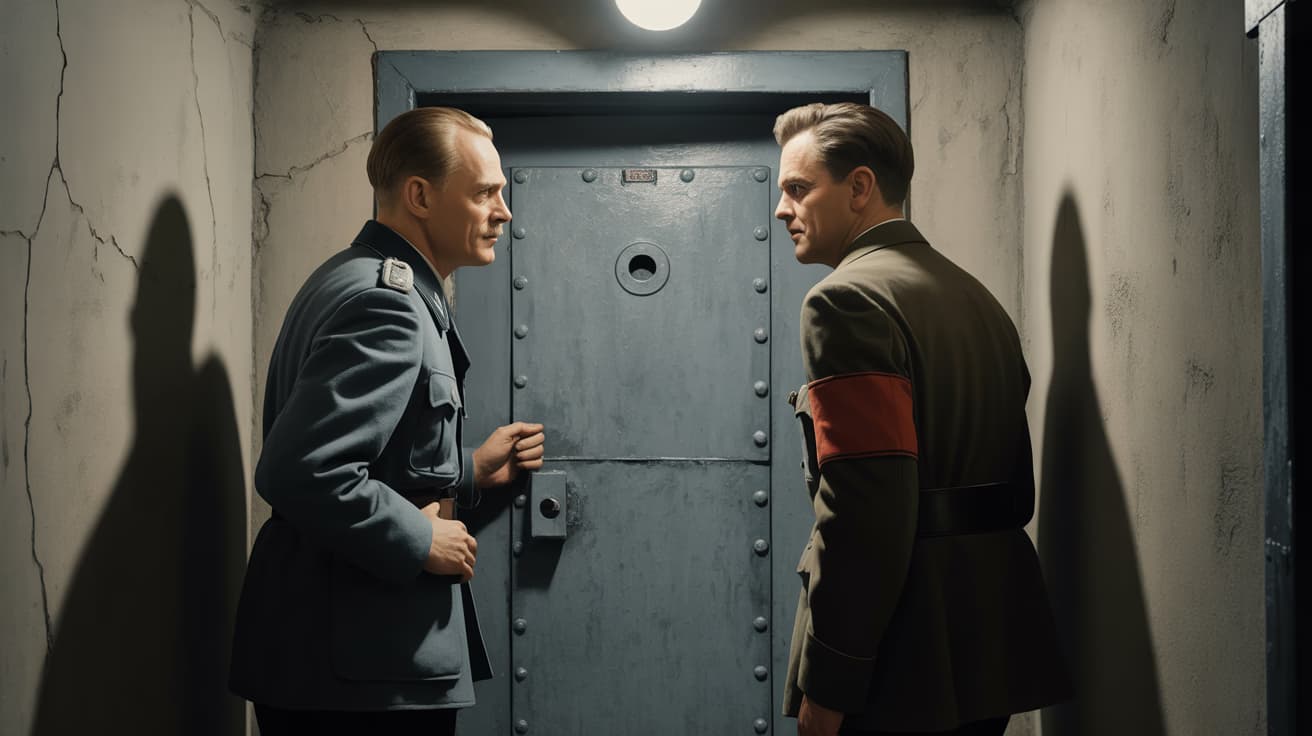
Linge knocks, waits, knocks again. No response. He and Bormann exchange glances, then force the door open.
The smell hits them first--gunpowder and something else, something biological. Hitler slumps against the sofa's right arm, blood pooling on the carpet beneath him, a gunshot wound to the right temple. Eva lies beside him, her legs drawn up, her lips purple from the cyanide. She looks almost peaceful, which seems wrong given everything.
Linge spreads blankets, wraps the bodies with practiced efficiency. Bormann lifts Eva--she's light, barely there--and carries her toward the emergency exit. Linge takes Hitler, the man who'd reshaped Europe through violence, now just weight in a gray blanket.
They carry the bodies up the emergency stairs and into the garden Eva had visited that morning. They place them in a shell crater and douse them with gasoline siphoned from abandoned cars--resources so scarce they can't even properly cremate the dictator. The wind makes ignition difficult. Linge has to go back inside, make a torch from signal papers, return to finally get the fire started.
Standing at the bunker entrance, the last witnesses raise their arms in a final Hitler salute. Smoke rises into the Berlin afternoon, mixing with the artillery haze and the smell of a dying empire.
Within hours, most of the bunker's population will attempt to flee. Traudl Junge will escape successfully, carrying the memory of breakfast-eating children and a dictator's filmy eyes. She'll spend fifteen years telling herself she wasn't to blame--she was only twenty-five, how could she have known?--until the day she walks past a memorial to Sophie Scholl, a resistance fighter born the same year. That day, Traudl will realize that youth isn't an excuse, that people did know what was happening was wrong, that she could have known.
She'll spend the next forty years bearing witness, documenting not innocence but culpability, warning future generations about the cost of chosen ignorance.
But that's tomorrow's story. Today, as smoke rises from a shell crater in a Berlin garden, Eva Braun gets her wish. She dies beside the man she loved, loyal to the end. Whether that loyalty was admirable or tragic or simply incomprehensible remains an open question--one without easy answers in the rubble of history's darkest chapter.
