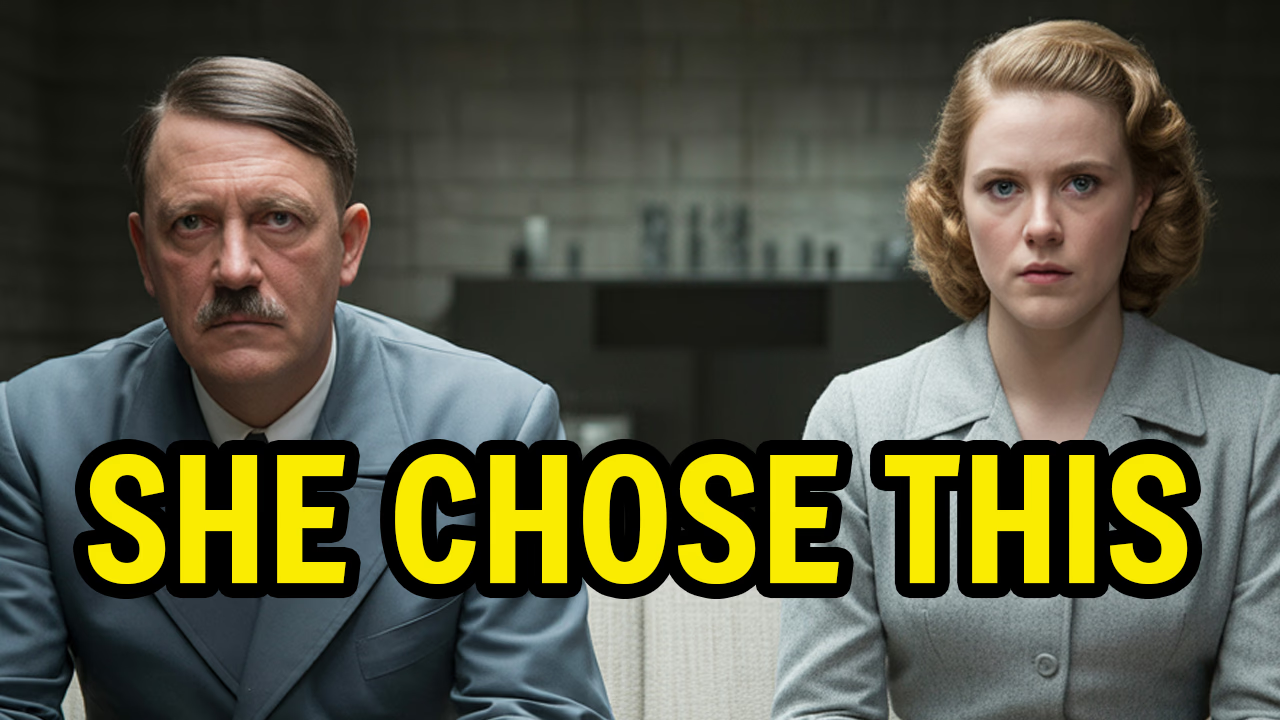
The Deputy Fuhrer's Trembling Hands
Augsburg, Germany. May 10th, 1941.
Rudolf Hess's hands wouldn't stop shaking as he climbed into the Messerschmitt cockpit. For months he'd practiced these same flight patterns with Wilhelm Stor, always requesting the same aircraft. He'd told no one the real reason.
Tonight's gamble was unthinkable: fly a thousand miles to Scotland, negotiate peace with Britain, return a hero. It was madness--but in Hess's mind, madness still served the Reich.
He wasn't some unknown pilot. He was a war veteran... Hitler's early disciple... the man who once typed Mein Kampf by hand in a prison cell. For years, Germans had called him "the Deputy Fuhrer," Hitler's official second. But by 1941, his power was a shadow of its former self. Bormann, Speer, Himmler--young men with sharper elbows--had pushed him aside. The Fuhrer barely noticed him anymore.
So tonight's flight was something desperate. A final act of devotion--or delusion.
Using only handwritten charts, Hess took off into gathering dusk. Five hours later, running out of fuel near Dungavel House, he bailed out. The parachute snapped open in the night air. He hit the ground hard, twisting his ankle on landing.
A Scottish ploughman named David McLean found him tangled in silk. Pitchfork in hand, McLean marched the stranger back to his cottage, where his mother poured tea.
"I am Captain Alfred Horn," Hess lied. "I have an important message for the Duke of Hamilton."
Back in Germany, Hitler's rage echoed through concrete walls. Aides had never seen him like this. The farewell letter made it worse--Germany's so-called second-in-command had stolen a plane and flown to the enemy.
Joseph Goebbels, the propaganda minister barely five feet tall, faced an impossible task: explain how the Deputy Fuhrer had gone insane without admitting the regime itself was built on insanity.
In his diary he tried to make sense of it. He mocked Hess as weak, but the truth unnerved him. "The German public," he wrote, "is rightly asking how such a fool could be second to the Fuhrer."
Goebbels spun a story of exhaustion, hallucinations, overwork. No one believed it. Inside the bunker of power, they all felt it--the first real fracture.
And in that fracture, the question whispered through the corridors of Berlin: who would crack next?
Subscribe to Nightfall History on YouTube
Join our community on YouTube for more historical deep dives and visual storytelling
The Frozen Letter Home
Stalingrad, January 1943. Otto Zechtig sat in a shattered basement trying to steady frozen fingers. Outside, forty below zero. Inside wasn't much warmer.
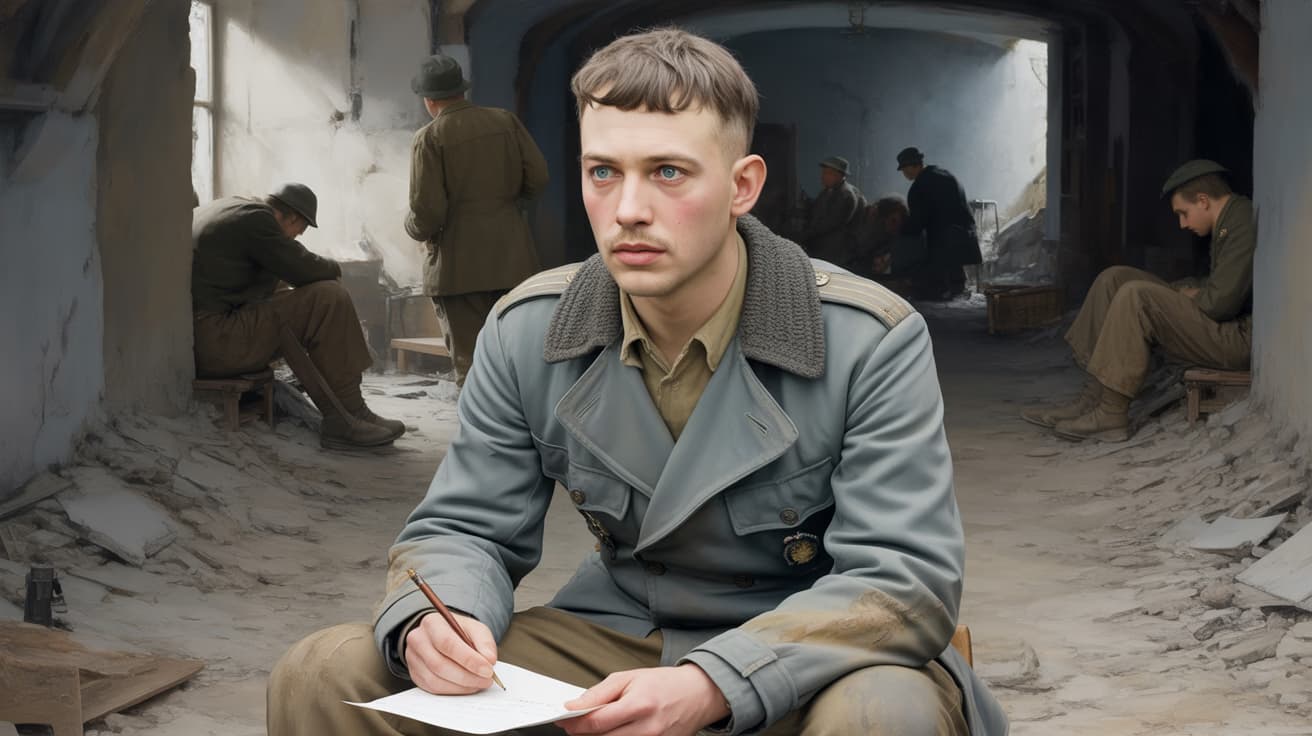
His unit had just finished preparing their meager ration--dog meat, the fourth time. Yesterday's vodka helped wash it down. His girlfriend Hetti needed to understand what that meant.
"Hetti," he wrote, "I have already cut up four dogs, yet my comrades can't eat their fill. One day I shot a magpie and cooked it."
This wasn't how it was supposed to go.
When they'd arrived in September, Otto's company numbered 140 men. Two weeks of street fighting reduced them to sixteen. Now they were trapped. The Soviets had closed the ring around nearly 300,000 German soldiers.
Field Gendarmerie Sergeant Helmut Megenburg wrote in his diary: "The weather is getting worse. Clothing freezes on our bodies. We haven't eaten or slept in three days."
Men talked about surrender. Defection. Anything to escape.
Private Walter Oppermann tried explaining it to his brother: "Stalingrad is hell on earth. We attack daily. If in the morning we advance 20 meters, in the evening the Russians throw us backward." They were dying for streets they couldn't hold.
Hermann Goring had promised to save them. The Reichsmarschall swore he could supply the pocket by air--800 tons daily. Food, ammunition, medicine, fuel.
Goring's Luftwaffe delivered maybe 100 tons on the best days. Usually less.
While his pilots died trying to reach Stalingrad, Goring sat 1,500 miles away in his country estate, examining a Renaissance painting lifted from France. His collection had reached 1,200 pieces. The morphine addiction from his 1923 gunshot wound had transformed him from war hero into bloated collector more interested in stolen art than frozen men.
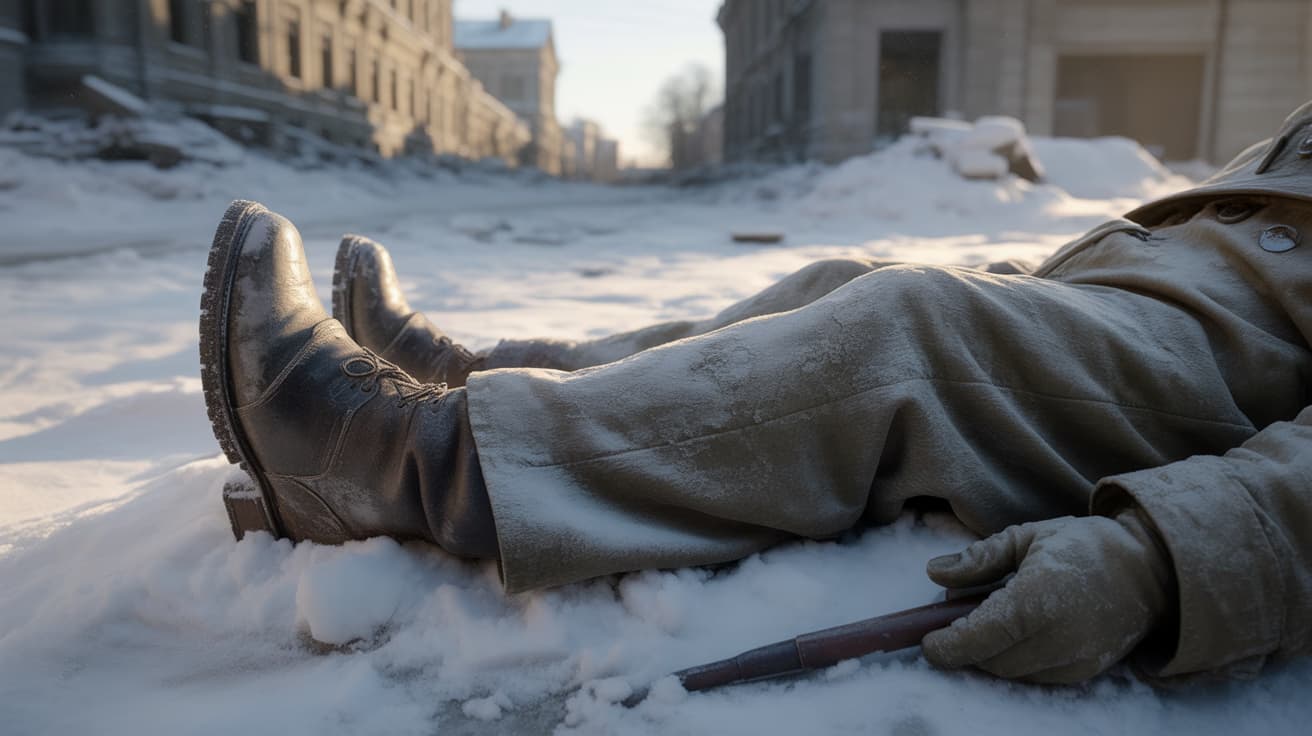
Stabswachtmeister Lindeman wrote his final letter: "When you receive this your son will be gone, I mean he won't be in this world anymore. We will continue the fight. For our Heimat, for my family and the Fuhrer."
When the commander finally surrendered in February, nearly 100,000 German soldiers marched into Soviet captivity past frozen corpses of those who'd died waiting for Goring's planes.
Of those prisoners, only 5,000 would see Germany again.
Otto's letter to Hetti was found in a Soviet post office, never delivered. The myth of German invincibility had frozen to death in those streets.
The Five-Foot Propaganda Genius
Berlin Sportpalast, February 18th, 1943. Joseph Goebbels stood backstage, listening to 14,000 voices rumbling through the walls. The banner read "Total War--Shortest War"--a slogan that would be laughable if 100,000 soldiers hadn't just surrendered at Stalingrad.
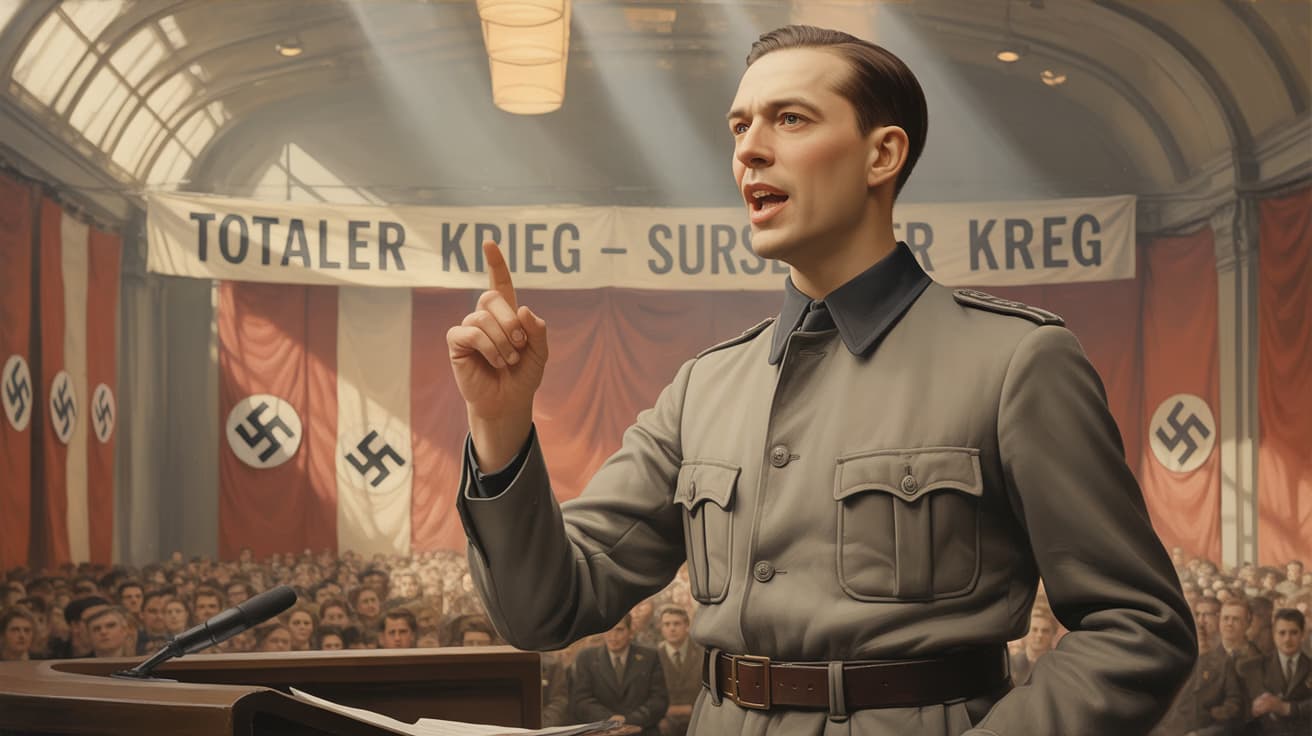
For two weeks he'd wrestled with an impossible problem: how do you spin total defeat? His diary revealed his process--delight at Goring's humiliation, concern about Hitler's mental state, frustration that Churchill kept surviving. But mostly one question: how do you make Germans accept that quick victory is never coming?
The answer: don't promise victory. Promise suffering. Make them want it.
He walked onto the stage. Barely five feet tall, clubfooted, physically unimposing. But when he spoke, words became weapons.
"Do you want total war?"
The roar nearly lifted the roof.
"Do you want war more radical and brutal than you can possibly imagine?"
Fourteen thousand people screamed, fists raised, surrendering to his vision. Goebbels felt power surge through him. This was his genius--transforming defeat into devotion.
But beneath the fervor, he'd planted terror: lose this war and Soviet armies will destroy your families, enslave your children, erase Germany. Fight or die.
That night, his diary noted the speech's success and what he'd actually done: sold Germans terror disguised as heroism.
Two hundred miles south, students Sophie and Hans Scholl spraypainted "Freedom" across Munich campus walls. Within three weeks, the Gestapo executed them both.
Goebbels noted their execution in his diary. Even his propaganda couldn't silence everyone. The cracks were spreading.
Stay in the Loop
Get notified when new articles and videos drop. Unsubscribe anytime.
The Fuhrer Who Stopped Appearing
Wolf's Lair, October 1943. Traudl Junge sat at dinner in excruciating silence. Hitler's staff spooned soup without speaking. The only sounds: silverware against bowls, occasional observations about weather.
"Rather cold tonight."
"Yes, quite cold."
This was dinner now. The Fuhrer who once held crowds spellbound for hours couldn't manage conversation.
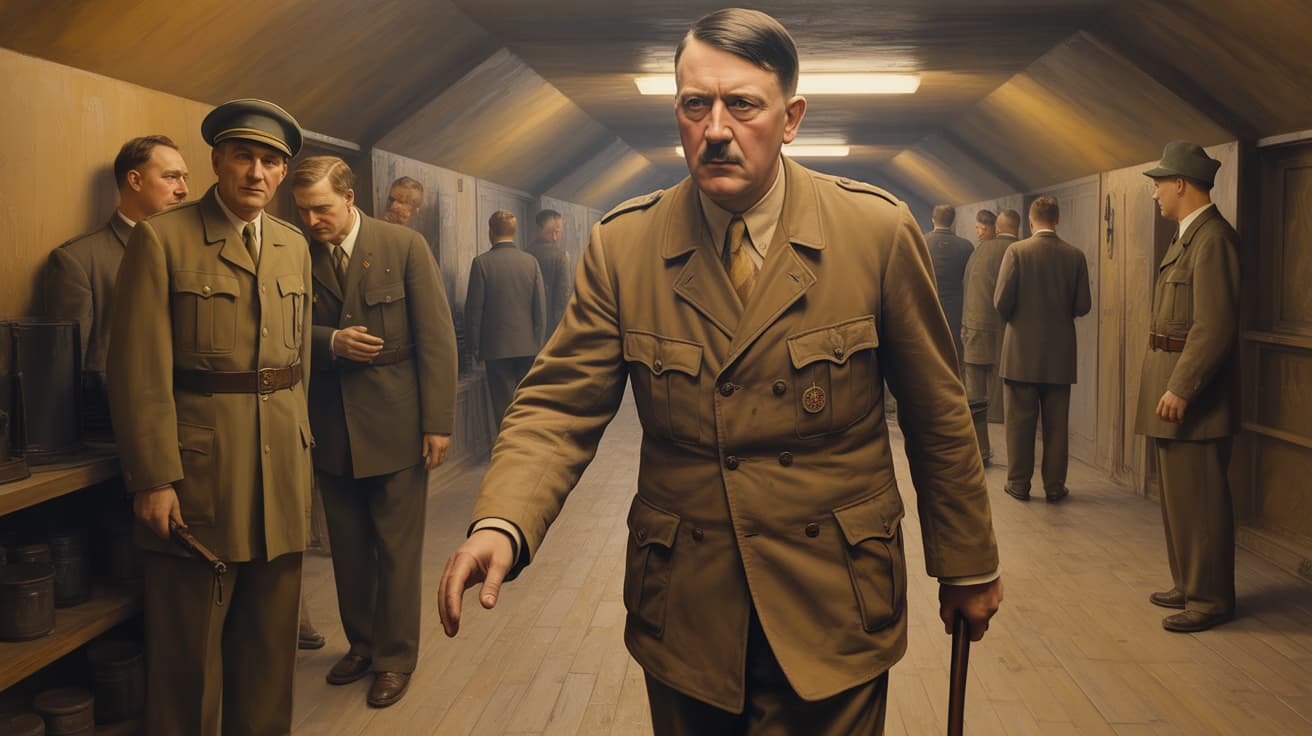
Traudl, 22, had been hired ten months earlier as his youngest secretary. "My child," he called her. The job meant total immersion--living wherever Hitler lived, existing in complete isolation. He never saw the bombed cities. His world had shrunk to concrete bunkers in East Prussian forests.
By autumn, the deterioration was impossible to ignore.
Hitler woke around 10 a.m., avoided generals with bad news. At 54 he moved like a man of 75--stooped, shuffling, left hand shaking.
After silent dinners came tea. Sometimes at 3 a.m. He'd hand them cake, then launch into rambling monologues. Grand theories about art. Obsessive anti-Semitic rants. Prophecies bearing no relation to reality.
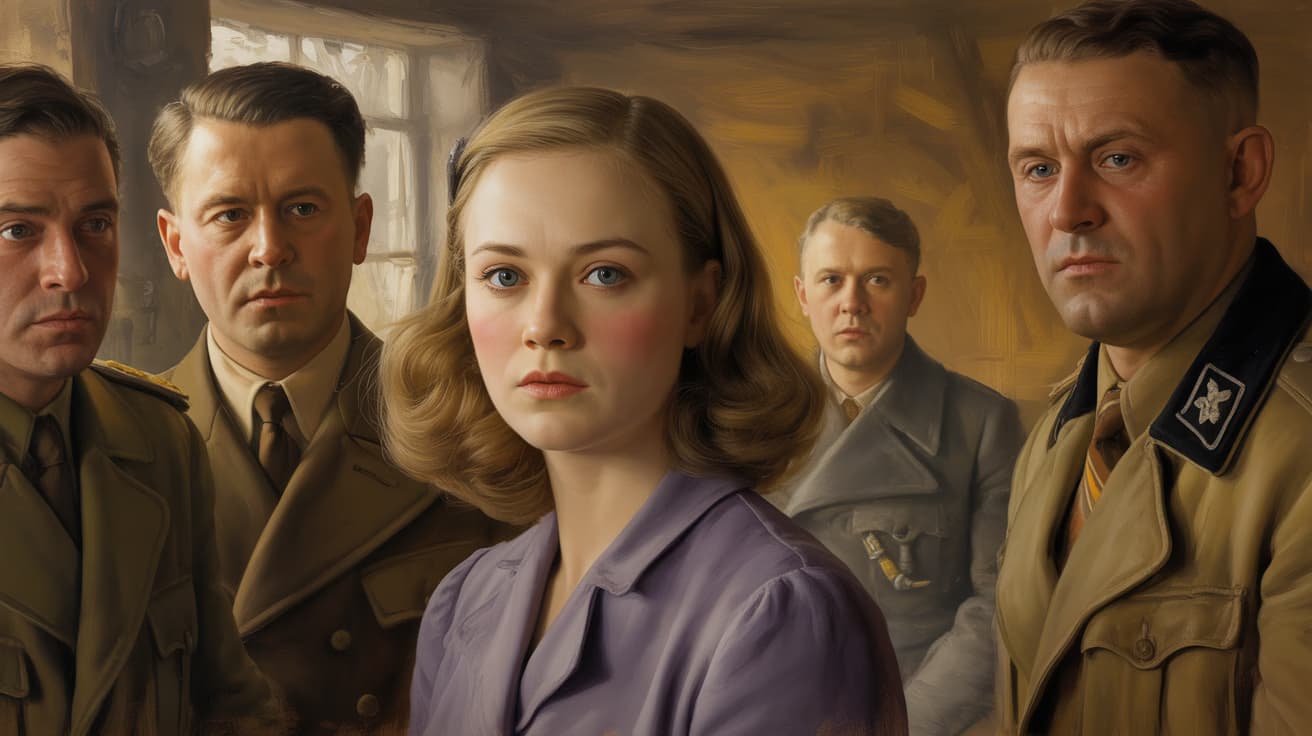
The secretaries sat bored, restless, frightened. But they laughed at his recycled jokes--the same stories fifty times--and pretended everything was normal.
When Hero's Day arrived in March--the annual memorial where Hitler always appeared--he didn't show. The public noticed immediately. Where was the Fuhrer who once electrified rallies?
He was with Dr. Morell, being injected multiple times daily. Sedatives, painkillers, stimulants, hormones. Morell had found a patient who'd accept any chemical promising power.
When Mussolini was overthrown in July, Hitler wept. An aide noted: whatever human feeling the Fuhrer still possessed seemed reserved for the Italian dictator. Germany itself had become an abstraction. Burning cities, dying soldiers, suffering families--all filtered through propaganda bearing no resemblance to reality.
The mosquito incident revealed how far he'd fallen. During a briefing, an insect landed on Hitler. The lieutenant colonel failed to swat it quickly enough. Hitler erupted and sent the man to the Eastern Front.
That's who he'd become--chemically dependent, trembling, paranoid, punishing officers for failing to kill insects.
The secretaries knew. The generals knew. But the German people had no idea their Fuhrer had become a ghost maintained by drugs and delusions, isolated from truth about to destroy them all.
The Reckoning
Berlin, late 1943. Anna Weber stood in what used to be her living room holding a telegram. Her son--one of the 140 men in Otto Zechtig's company--had been killed at Stalingrad. No body. No grave. Just "fallen in action."
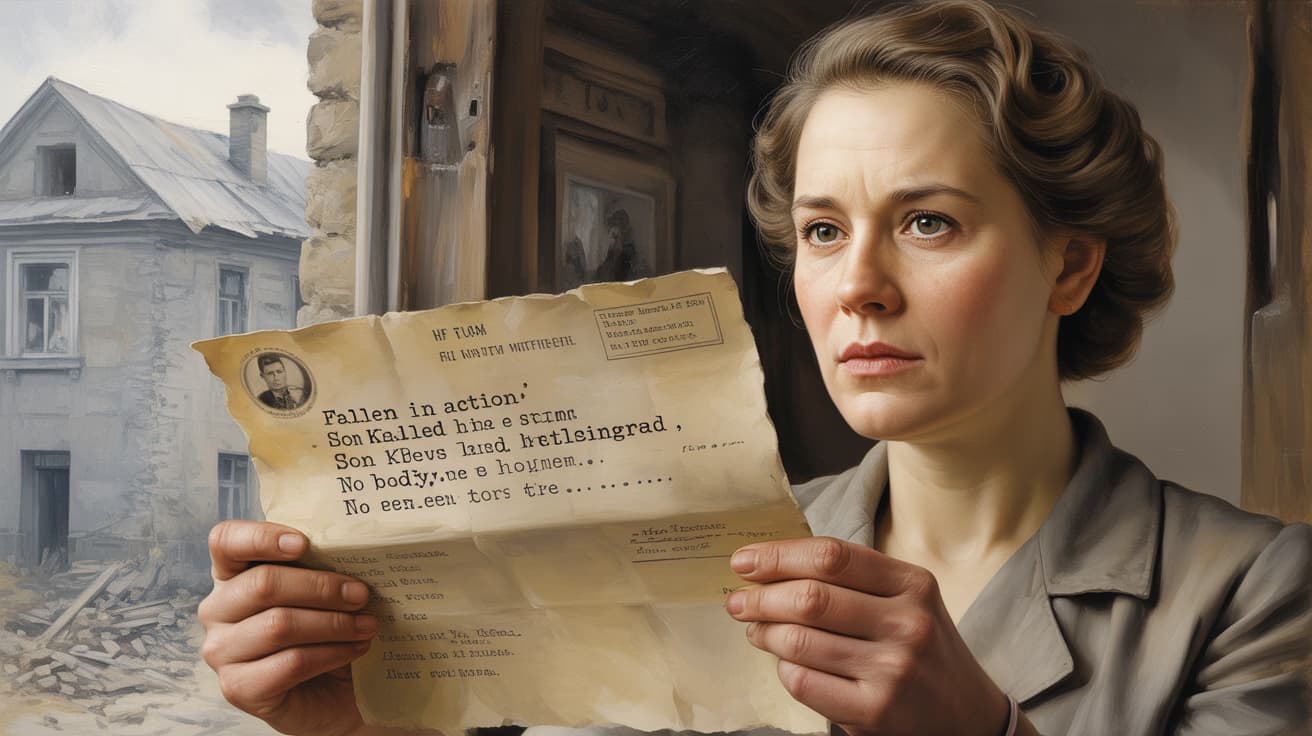
Across Germany, millions of mothers held identical telegrams. The letters from the front had stopped arriving in February. Weeks of silence, then Goebbels gave his "Total War" speech. Everyone understood: an entire army, gone.
The Fuhrer who promised a short, victorious war had delivered catastrophe.
Anna looked at that telegram and allowed herself the dangerous thought: We were lied to.
The quick victory that never came. The invincible army now retreating on all fronts. The brilliant Fuhrer who no longer appeared in public. The unified leadership that Hess's midnight flight had exposed as a snake pit of rivals. The promises of greatness that had become ashes and telegrams.
All across Germany, standing in bombed-out homes and emptied villages, people were having the same realization.
Hitler's biggest blunder wasn't invading Russia in summer uniforms. It wasn't declaring war on America. It wasn't even Stalingrad, though that crystallized everything. His catastrophic error was simpler and more complete: he was incapable of admitting any blunder at all.
When Hess cracked and fled, Hitler saw no warning about his leadership. When his army froze at Stalingrad, he refused to allow retreat. When promises of aerial supply failed, he blamed others. When his own body failed, requiring daily injections just to function, he simply took more drugs. He'd built a fantasy of German invincibility and his own genius, then surrounded himself with men too terrified or too ambitious to challenge it.
The fantasy continued even as reality destroyed it--one frozen soldier at a time, one burned city at a time, one telegram at a time.
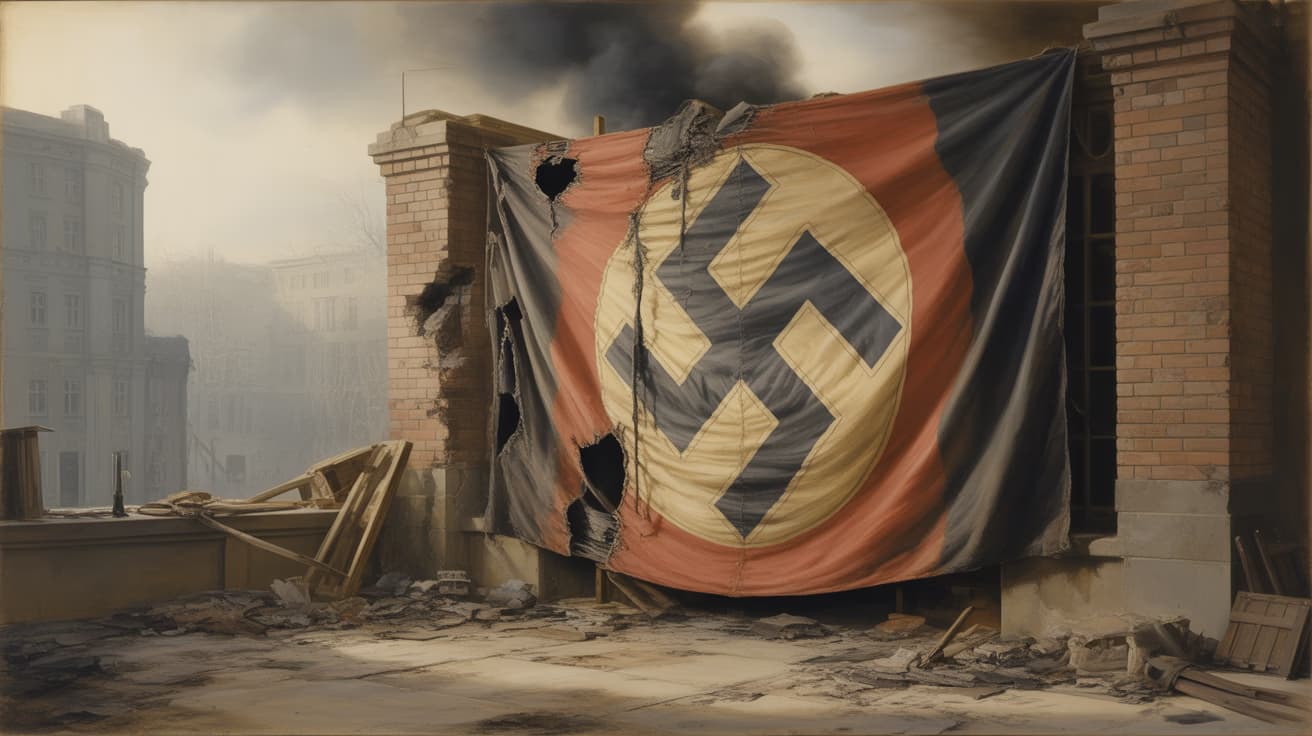
Anna Weber looked up from her son's death notice. Around her, the ruins of her home. Above her, open sky where a roof used to be. In her hands, paper telling her that her boy had died for lies.
The Fuhrer wasn't a genius. The victory wasn't coming. The promised Thousand Year Reich wouldn't last the decade.
The cracks that had started with Hess's trembling hands in that Messerschmitt cockpit had finally shattered everything. And millions of Germans, standing in the rubble, were beginning to see the truth at last.