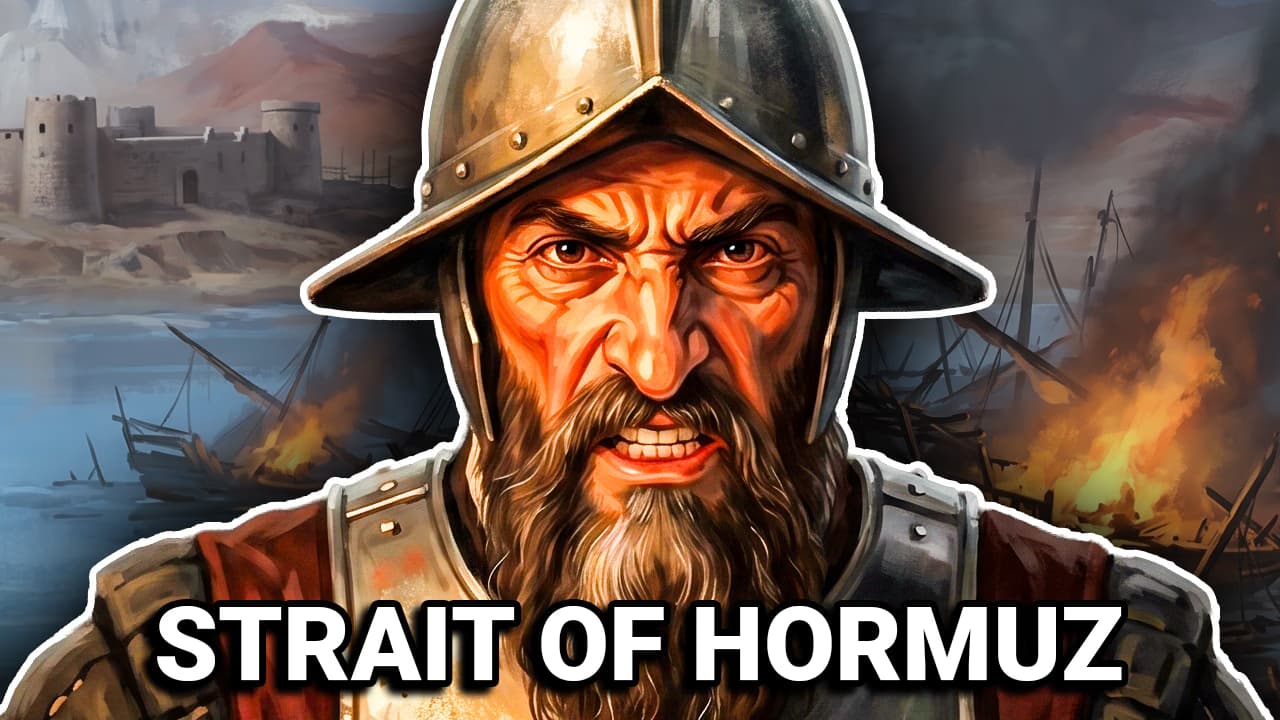
The Eagle's Nest
High in the mountains of what is now northern Iran, a man dressed as a schoolteacher climbs a narrow goat path up a two-thousand-meter cliff face. Below him, brilliant green rice paddies against red soil. Above him, the gates of a fortress that has never been taken by force.
In the autumn of 1090, he reaches the top. The garrison opens the gates. He has been converting them from the inside for two years.
He will never leave this fortress again.
His name is Hassan-i Sabbah. The fortress is Alamut -- the Eagle's Nest. And from one room, with no army, he is about to invent a weapon Iran is still using against the West nine hundred years later.
Not conventional war. Not mass armies. A small network of devoted men, trained to walk into the most guarded rooms in the world and kill the people no one thought could be killed. The Seljuks will learn the name first. Then the Crusaders. Then the Mongols. And centuries later, every general trying to fight Iran will learn it again.
The word we still use for it is Assassin.
The man who now holds Alamut has a death warrant on his head. Hassan-i Sabbah is a Persian scholar accused of heresy by Nizam al-Mulk -- the vizier who runs the Seljuk Empire from Baghdad, and the most powerful man in the Islamic world. For a decade the vizier has been hunting him. The fortress was the end of that chase. Hassan paid its former owner three thousand gold dinars -- a polite formality for a castle whose garrison already belonged to him -- and sealed himself inside.
For thirty-four years, he reportedly left his quarters only twice -- both times to go to the roof. A man fluent in mathematics, astronomy, medicine, and architecture, who could quote the texts of most Muslim sects from memory -- and none of it mattered to the empire that wanted him dead. From that single room, he studied, translated, prayed, fasted, and began building something the world had never seen.
Not an army. A scalpel.
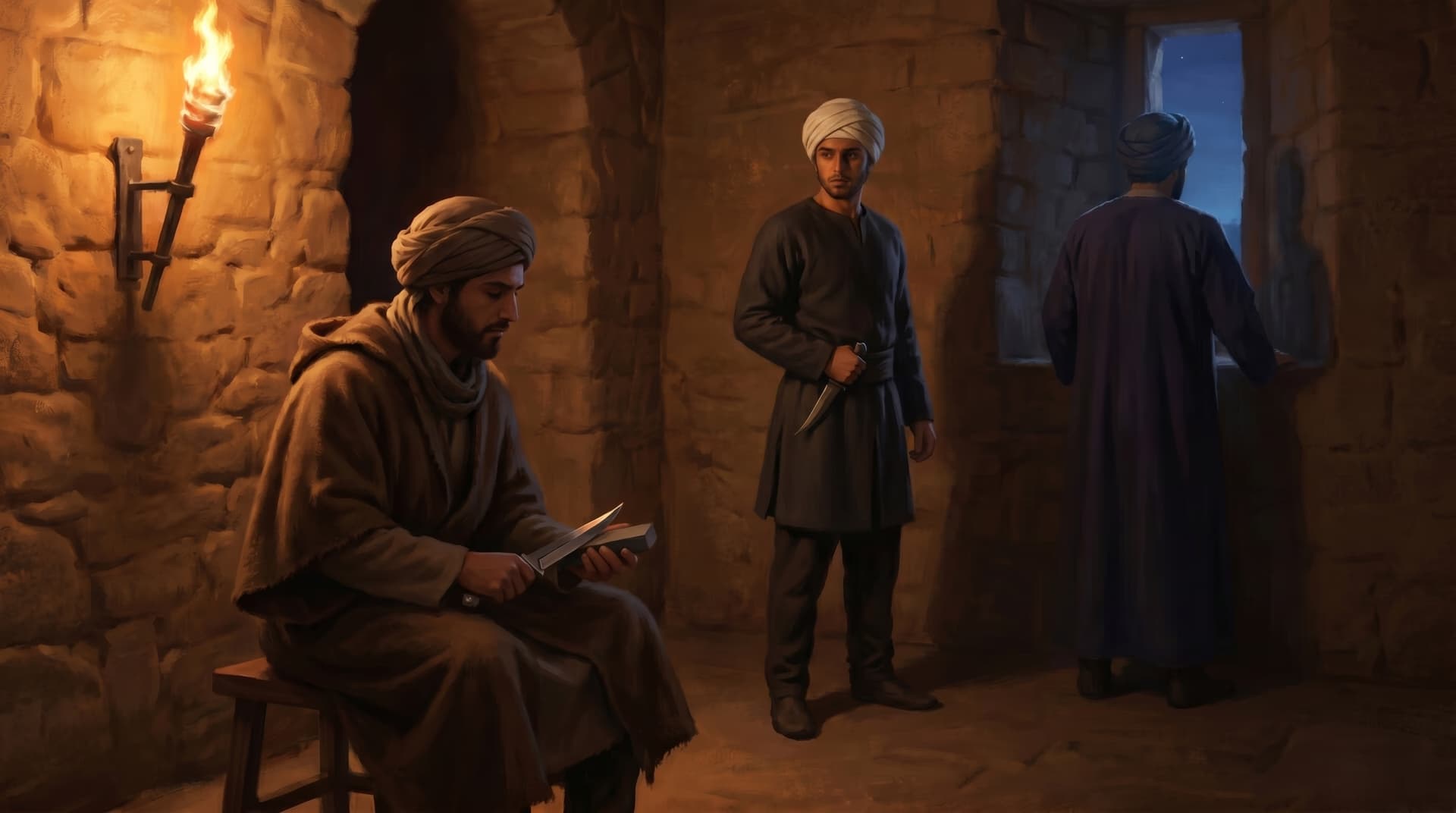
He called them fidai -- the devoted ones. Young men who volunteered to sacrifice their lives in service of their faith and community. They trained to infiltrate, to kill a specific target, and then to stand there and accept capture. They did not flee. They did not commit suicide. They submitted to torture and execution with the calm of men who believed absolutely in what they had done. Their weapon was almost always a dagger. Their method was patience.
He did not know it yet, but a man dressed as a Sufi was already walking toward him.
The Empire Strikes Back
Nizam al-Mulk was being carried in his litter on the road from Isfahan to Baghdad. It was 1092 -- two years after Hassan had taken Alamut. A figure approached -- dressed in the rough wool of a wandering holy man. No one stopped him. Sufis were common on the roads. The figure reached the litter, drew a dagger, and drove it into the most powerful vizier in the Seljuk Empire.
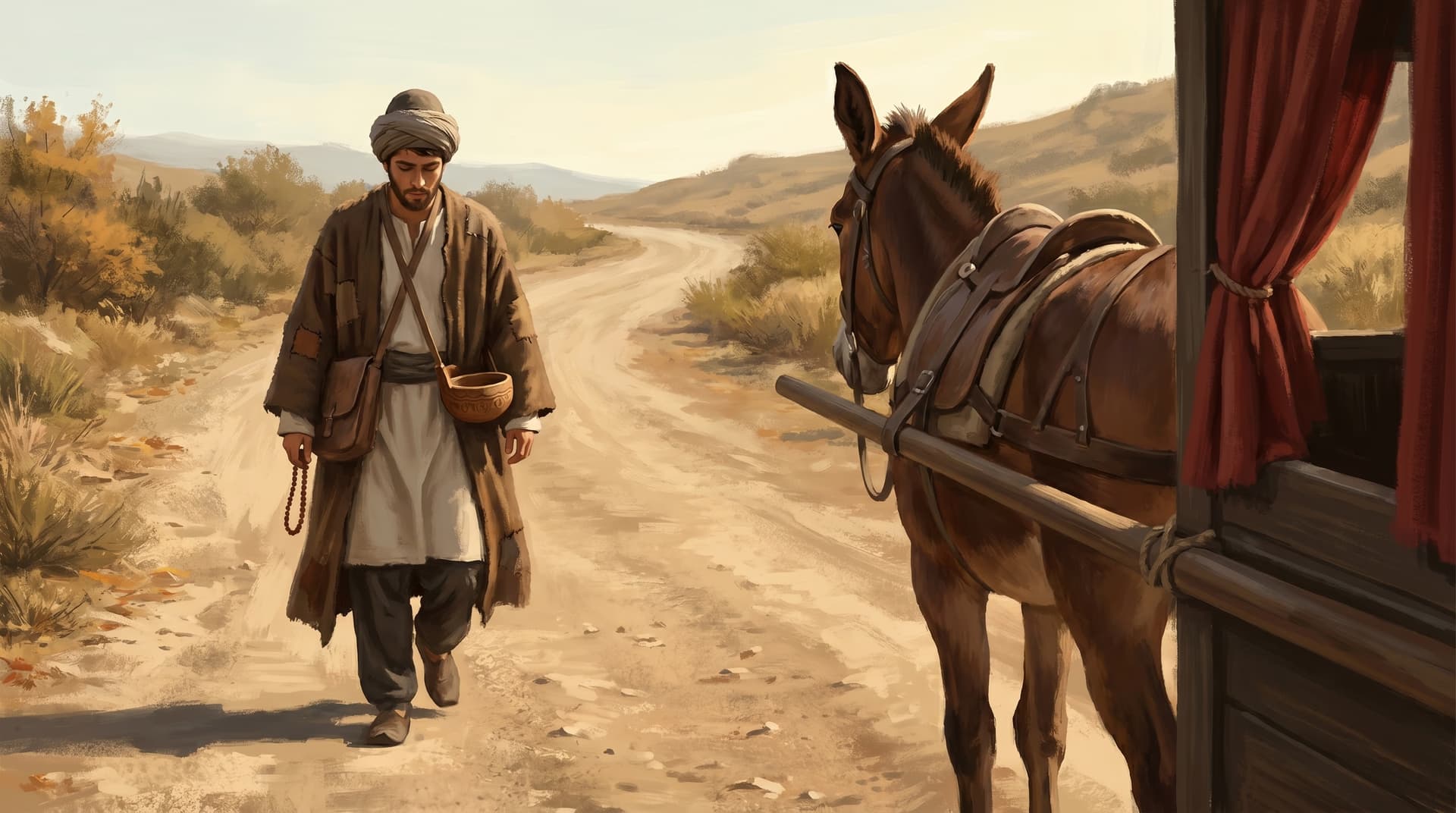
Nizam al-Mulk died on the spot. The fidai was killed immediately. He had not tried to run.
Within weeks, Sultan Malik-Shah himself was dead. The Seljuk Empire -- the most powerful state in the Islamic world -- began to fragment. One dagger. One man dressed as a holy man. And the political map of the Middle East cracked open.
But the retaliation was merciless.
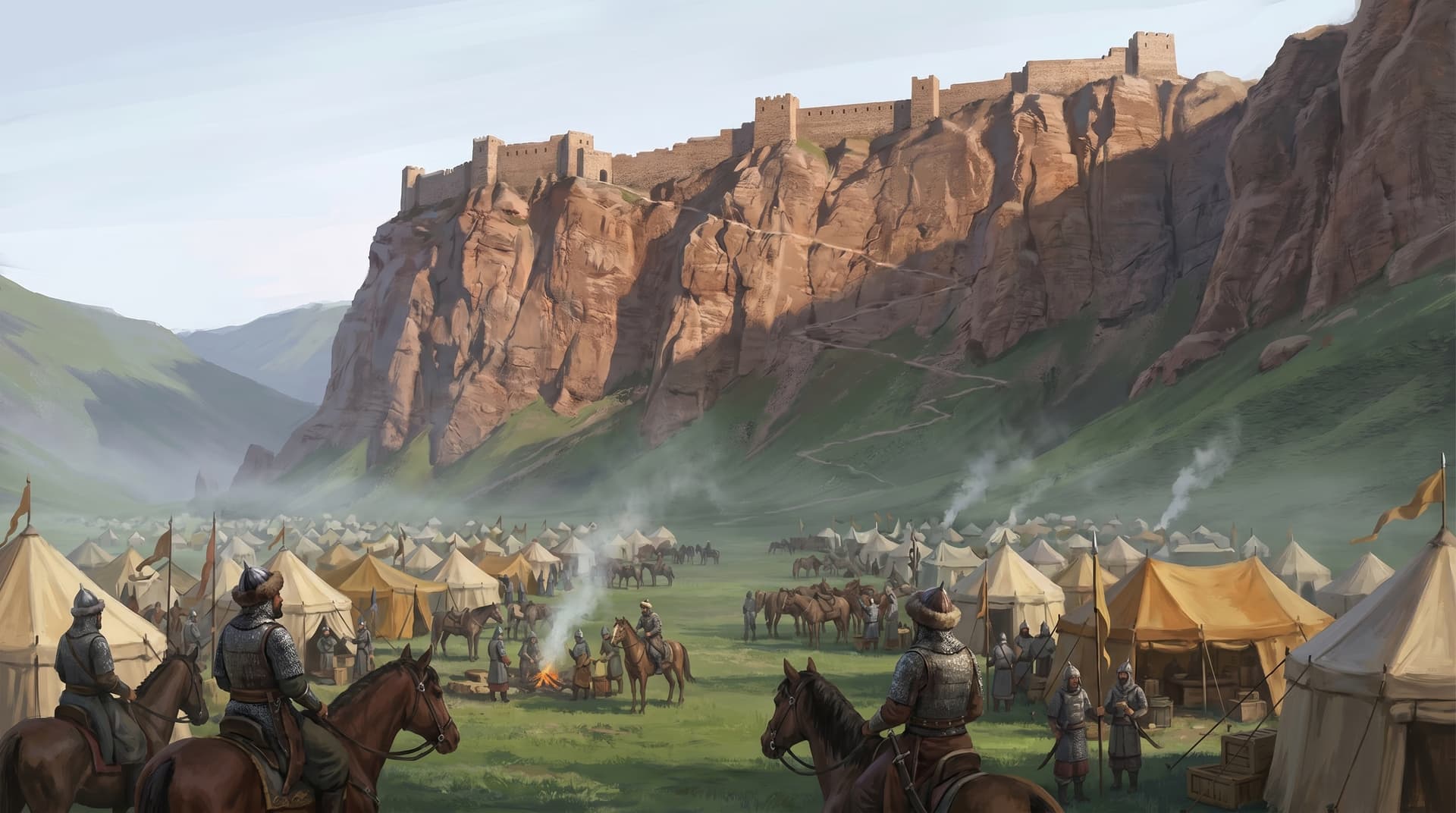
Seljuk armies launched campaign after campaign against Alamut. Across the empire, Ismaili communities were massacred -- entire neighborhoods purged, families dragged from their homes at night, anyone suspected of sympathy with Hassan's movement killed in the streets and left as a warning. The largest army in the Islamic world turned its full fury on one man in one mountain fortress. Soldiers filled the valley below Alamut. Supply lines stretched back to the lowlands. Siege camps scarred the landscape.
Hassan had proven his method worked. A single killing could shake an empire. But the empire's answer was brutally simple: drown the Assassins in blood. Conventional military power was closing in from every direction. His people were dying across Persia. And Hassan was trapped in one room, on one rock, with no army to fight back.
Subscribe to Nightfall History on YouTube
Join our community on YouTube for more historical deep dives and visual storytelling
You Cannot Besiege a Network
But the Seljuks had made the mistake every conventional power makes against an unconventional enemy. They were trying to destroy a fortress. The fortress was not the weapon.
The network was the weapon.
From his room in Alamut, Hassan understood what the Seljuk generals did not. You cannot besiege an idea. You cannot surround a network with cavalry. The Assassins' strength was never the castle on the mountain -- it was the missionary in the village, the convert inside the garrison, the fidai who looked like everyone else until the moment the dagger came out.
Hassan stopped defending and started expanding. Not through military conquest -- through infiltration. In the fortress of Lamasar, sixty kilometers west of Alamut, a garrison commander named Kiya Buzurg-Ummid had been listening to Hassan's missionaries for months. While Seljuk armies besieged Alamut from the east, Buzurg-Ummid opened Lamasar's gates from the inside. No battle. No siege. The Seljuks had been staring at the wrong castle.
It was the same method that had taken Alamut -- patience, conversion, an open gate -- and now Hassan ran it again and again across the Alborz mountains. He sent missionaries into villages the Seljuks had never bothered to map. He sent converts into courts and garrisons, men who prayed and ate and laughed with their hosts for months before revealing where their true loyalty lay. New fortresses appeared in valleys so remote, on peaks so inaccessible, that conventional armies broke themselves against the terrain before reaching the walls. The Seljuks would besiege one castle while three more fell to Hassan's missionaries in places they did not even know existed.
And the targeted killings continued. Governors. Military commanders. Allies of the Seljuk sultan. Each death fractured the empire's ability to coordinate a response. The Seljuks' own decentralization -- the very structure that made them a powerful empire -- made them vulnerable to precisely this kind of war. They could not mobilize a unified army fast enough to crush a network that moved faster than their own messengers could ride.
The man who had no army was winning a war against the largest army in the Islamic world. Not by fighting it. By making it bleed from a thousand invisible cuts.
Stay in the Loop
Get notified when new articles and videos drop. Unsubscribe anytime.
The Shadow Empire
The network outlived its founder.
When Hassan died in 1124, after thirty-four years in that single room, the system he built did not die with him. It spread. By 1141, the Assassins had seized Masyaf castle in the mountains of northern Syria -- a second stronghold that extended their reach across the entire Islamic world. What began as one man in one fortress had become a shadow empire spanning two continents.
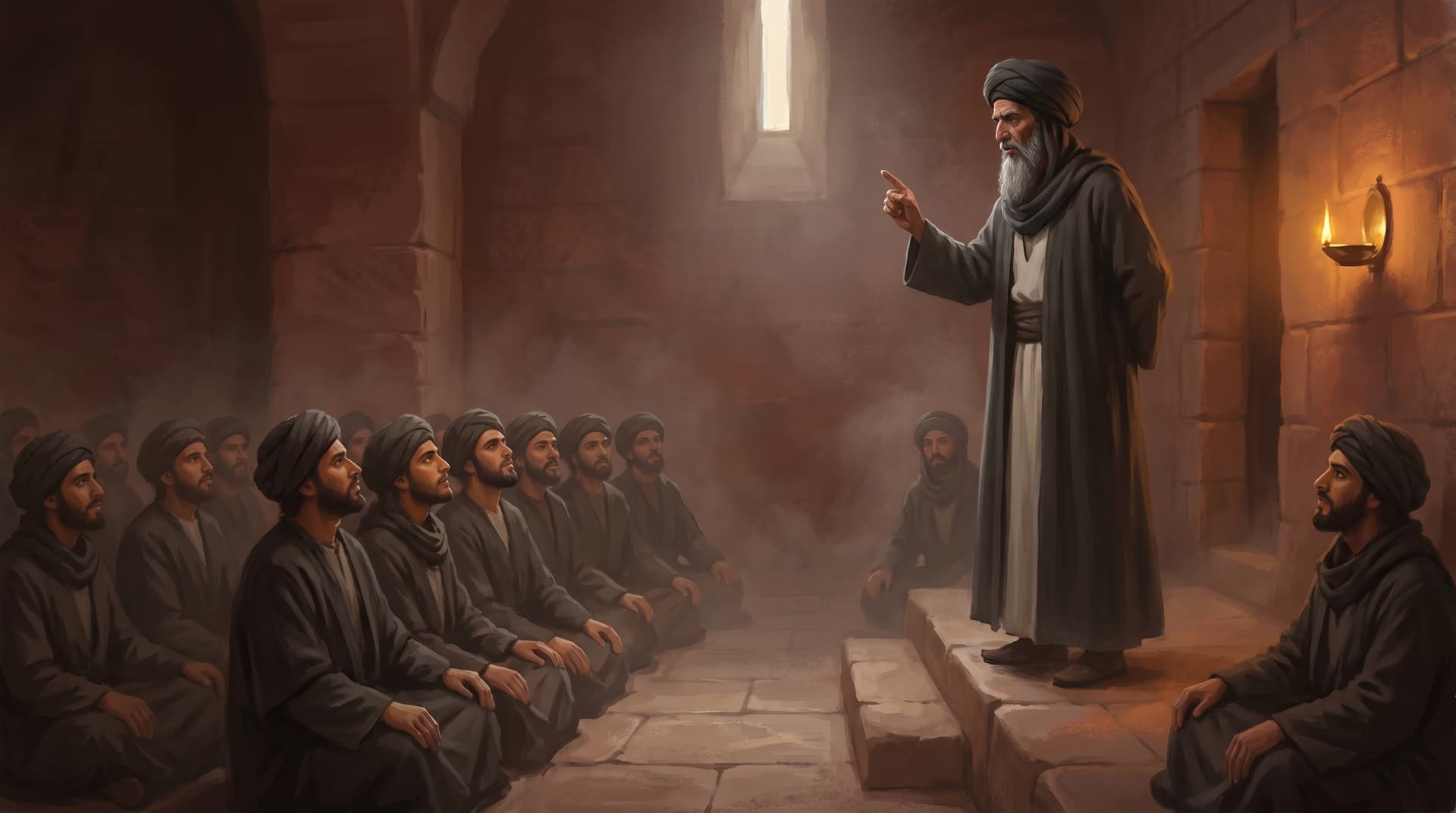
The Syrian branch found its own master. Rashid al-Din Sinan -- the man the Crusaders called the Old Man of the Mountain -- led sixty thousand faithful from Masyaf. He was charismatic where Hassan had been austere, theatrical where Hassan had been invisible. But the method was identical. Targeted killings. Infiltration. Psychological warfare so precise it became legend.
In 1176, Saladin -- the most powerful sultan since the Seljuks -- besieged Masyaf. He brought an army that should have crushed the fortress in weeks. And then, one morning -- according to some accounts -- he woke up. Beside his pillow, inside his guarded tent, he found hot flatbread. A poisoned dagger. And a note: If you do not withdraw, you will be killed.
No one saw the agent enter. No one saw him leave. Saladin lifted the siege.
That is the message Hassan had spent his life building: you are never safe from us. Not in your litter on the road. Not in your tent surrounded by guards. Not even in your sleep.
And the discipline that made it possible was absolute. Hassan executed both of his own sons. One for drinking wine. One for suspected murder. No exceptions. Not even blood. The severity, one chronicler wrote, was proof of the moral discipline that reigned at Alamut.
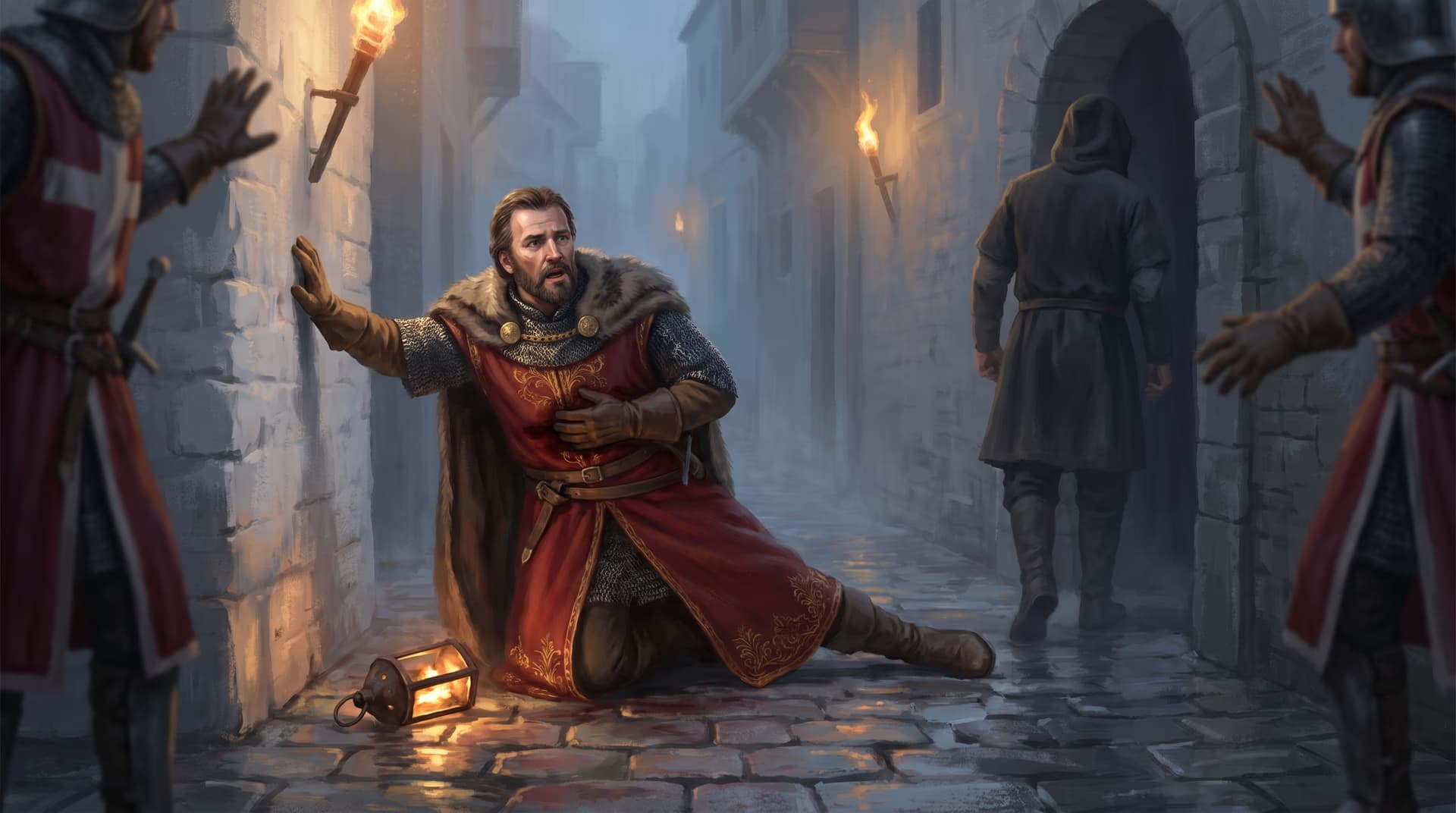
That discipline held. For 166 years. Crusaders carried the name back to Europe, and the word "assassin" entered English, French, Italian -- a permanent scar on the languages of people who had learned to fear men they could not see coming. Raymond II, Count of Tripoli, was cut down by Assassin blades in 1152. Forty years later, Conrad of Montferrat -- the newly elected King of Jerusalem -- was stabbed to death in the street in Tyre, two days before his coronation. The atabeg of Mosul was murdered in the heart of Damascus. No title, no wall, no army of bodyguards could guarantee safety.
And inside Alamut, Hassan's successors did not just maintain a fortress. They built one of the great libraries of the medieval world -- said to contain four hundred thousand volumes: astronomy, philosophy, mathematics, medicine. Astronomical instruments. Astrolabes. Manuscripts copied and collected over two centuries. The Eagle's Nest was a house of knowledge as much as a house of war. And what happened to that knowledge is one of the great tragedies of the medieval world.
Because there was one enemy coming that no strategy of targeted killing could stop. An enemy with no single point of failure. Kill one of their leaders, and another stepped forward. Kill a hundred, and a thousand more came over the horizon.
The Burning of the Eagle's Nest
In 1256, Hulagu Khan -- grandson of Genghis Khan -- marched his Mongol army into the Alborz mountains.
The Assassins had survived for 166 years by exploiting a single insight: powerful empires have single points of failure. Kill the right man, and the empire fractures. But the Mongol horde had no such weakness. There was no vizier to stab, no sultan whose death would shatter the command structure. The Mongols were a force of nature -- decentralized, relentless, and utterly indifferent to fear.
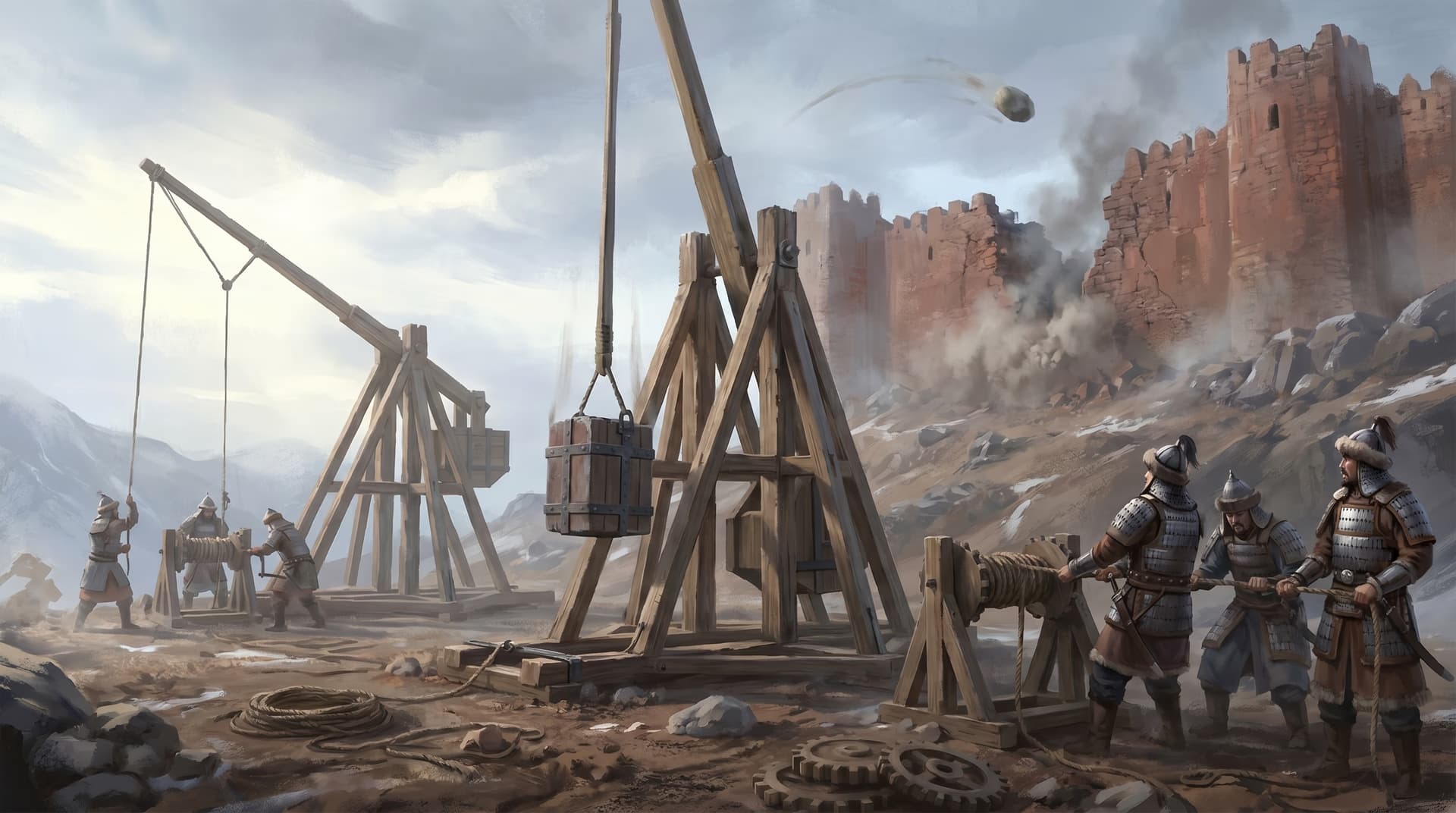
The last Grand Master, Rukn al-Din Khurshah, was twenty-six years old and had held power for less than a year. He tried to negotiate. He dismantled towers and battlements as gestures of submission, tearing apart with his own authority what Hassan had built with a lifetime of patience. It was not enough. The Mongol siege engines -- mangonels, catapults, weapons the mountain fortresses had never faced -- battered Maymundiz until the walls cracked and Khurshah descended to surrender.
Khurshah was sent to the Mongol capital at Karakorum, but the Great Khan refused to see him. On the road back, somewhere in the mountains of northwestern Mongolia, he was executed. The last link to Hassan-i Sabbah was severed.
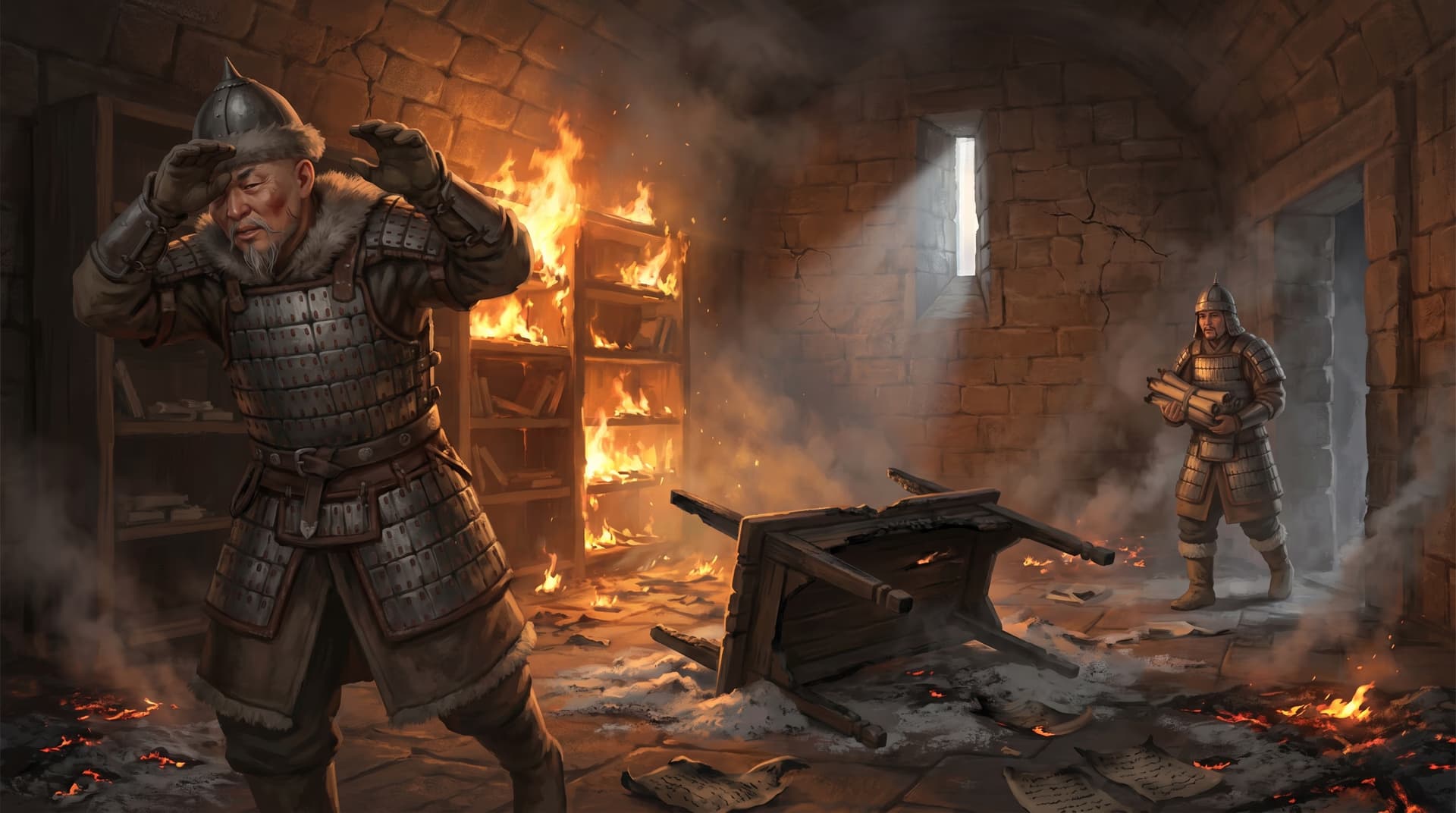
Then the Mongols turned to Alamut itself. The fortress that had never been taken by force -- the Eagle's Nest that had held for 166 years -- opened its gates in December 1256. The historian Juvayni was given permission to walk through the library before the destruction. He moved through rooms filled with four hundred thousand manuscripts -- the accumulated knowledge of two centuries of Ismaili scholarship, the intellectual legacy of a community the world had dismissed as fanatics. He saved a handful of Qurans. A few astronomical instruments. An astrolabe or two.
Then the Mongols burned the rest.
One room. No army. No cavalry. And for 166 years, a shadow empire terrified sultans and crusaders. The Mongols burned the room. They killed the last Grand Master. They thought that was enough.
But destroying a strategy is harder than destroying a castle. Nine hundred years later, when Iran wants to hit an enemy it cannot defeat in open war, it reaches for the same three tools Hassan perfected. A devoted cadre. A patient infiltration. A single decisive strike. The names have changed -- Hezbollah, the Quds Force, the proxies that stretch from Beirut to Baghdad to Sanaa. The method has not. The Eagle's Nest is gone. The playbook isn't.
And the last time a Western army marched into the heart of Persia and tried to burn its civilization to the ground, the man holding the torch was the most famous conqueror who ever lived. It was 330 BC. His name was Alexander. And the city he burned was the most magnificent palace complex the ancient world had ever seen.