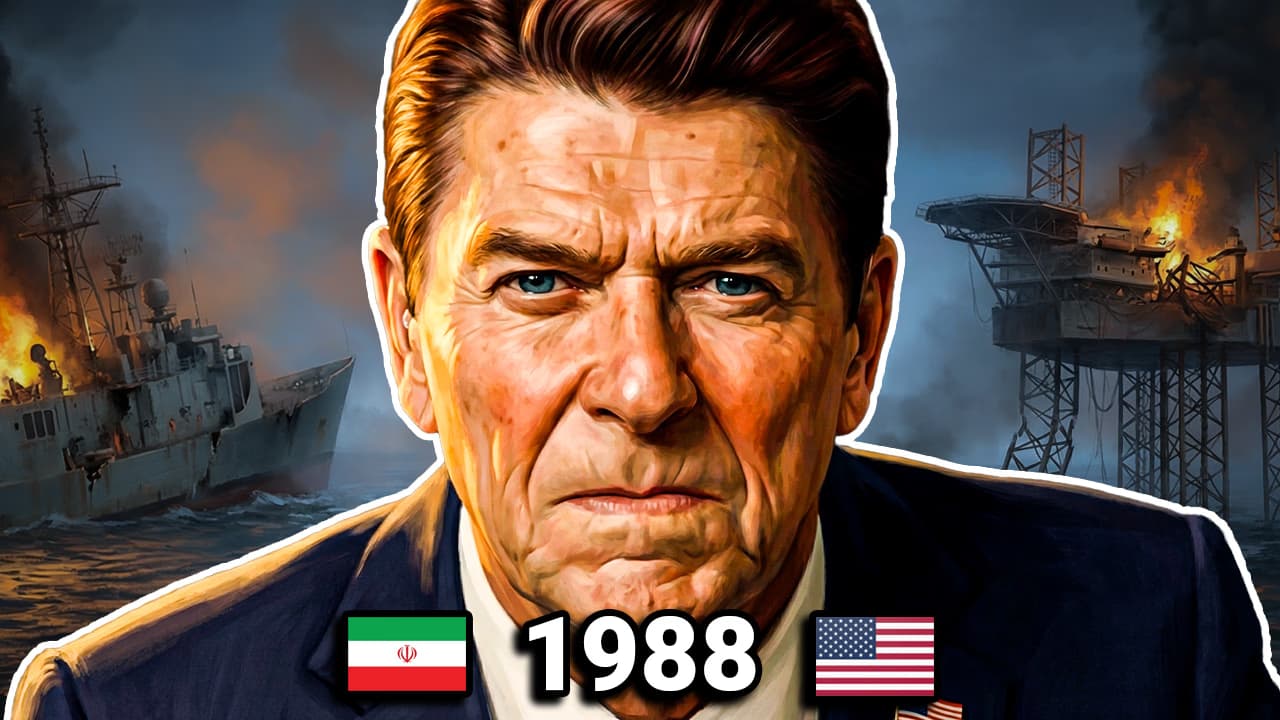
The Narrowest Water in the World
A column of black smoke rises from the horizon, so thick it looks solid against the pale Gulf sky. Somewhere beneath it, an oil tanker is burning. The crew of the next ship in line can see the flames -- orange and rolling, feeding on two hundred thousand tons of crude. They can feel the heat through the bridge windows from three miles out. The captain does not change course. There is no other route. Every barrel of oil leaving the Persian Gulf must pass through a corridor thirty miles wide, flanked by Iran on one side and Oman on the other. In 1984, that corridor becomes a killing ground -- and the captain sailing toward those flames has no other way home.
By the time this is over, more than four hundred ships will burn, more than four hundred civilian sailors will die, and the world's most powerful navy will be threading minefields in the dark -- all because two exhausted nations decided to make the ocean pay for a war neither one could win. The question hanging over everything is whether that corridor can be shut. Whether the world's oil supply can be strangled by mines and speedboats and sheer desperation.
It begins with a calculation. By 1984, the Iran-Iraq War has ground into its fourth year. Saddam Hussein's armies, which had stormed across the border expecting a swift victory, are now dug into trenches that stretch for hundreds of miles. The human-wave assaults from Iran keep coming. Tens of thousands of young Iranian soldiers -- some of them boys -- charge across minefields with plastic keys around their necks, promised that martyrdom will open the gates of paradise. The land war is a stalemate written in blood, and Saddam knows it.
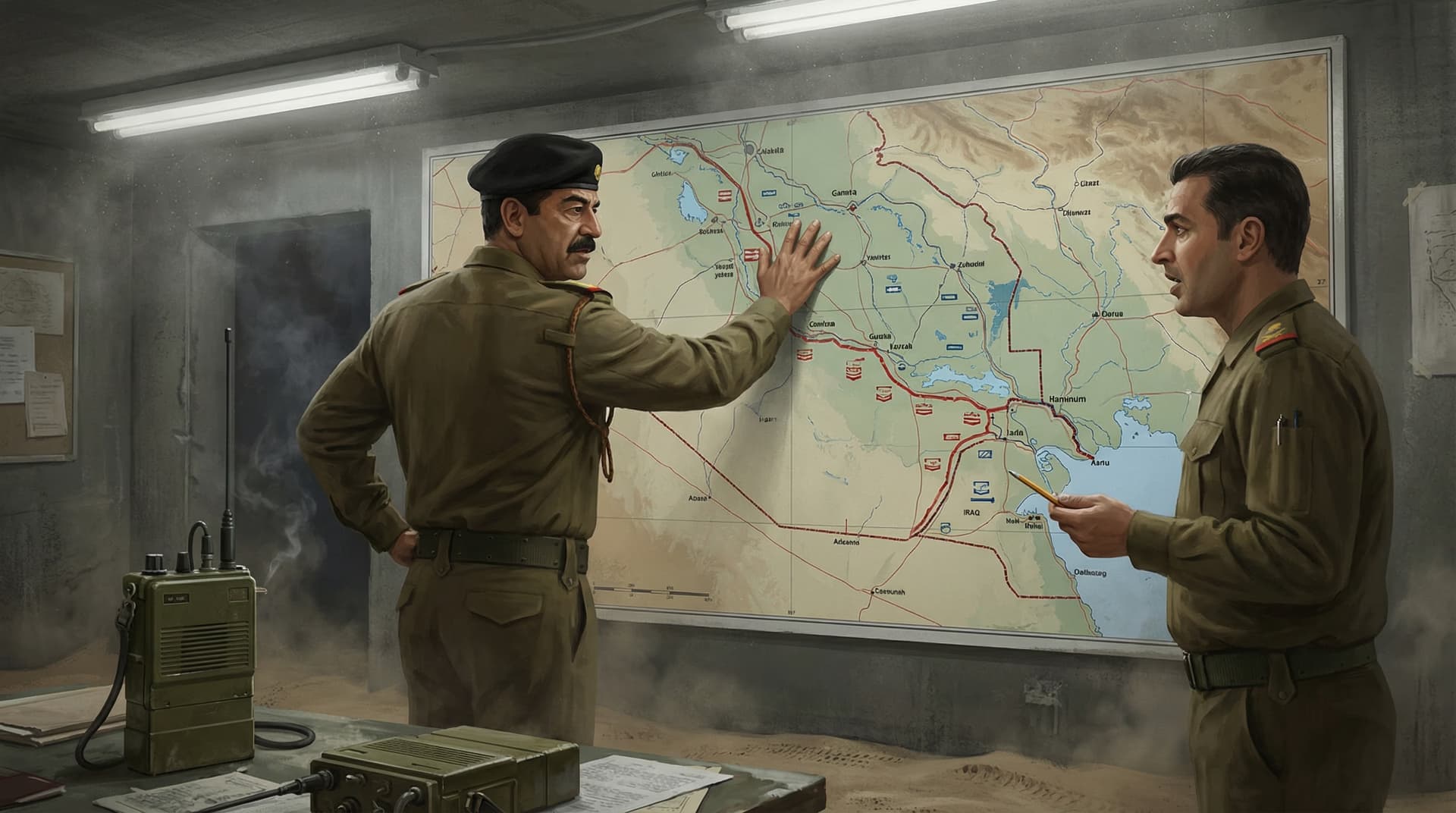
So he looks at the map and sees something Iran cannot protect: oil tankers.
Iran's economy runs on a single artery. Crude oil flows from the fields to Kharg Island, a terminal in the northern Gulf, where it is loaded onto tankers and shipped to the world. Cut that artery, and Iran starves. In March 1984, Iraqi pilots -- flying French-supplied Super Etendard fighters armed with Exocet anti-ship missiles -- begin striking tankers at Kharg Island. The attacks are methodical. A missile streaks in low over the water, too fast to dodge, and detonates against a hull the size of a city block. Oil erupts into flame. Crews scramble for lifeboats in water already slicked with burning crude.
Iraq's strategy is not just to hurt Iran. It is to provoke Iran into doing something desperate -- something that will drag the rest of the world into the fight. Saddam wants Iran to close the Strait of Hormuz. If Iran shuts down the strait, the global oil supply collapses, and the Western powers will have no choice but to intervene on Iraq's behalf.
Iran takes the bait -- but not the way Saddam expects.
The Price of Retaliation
Iran cannot match Iraq's air power. It has no Super Etendards, no precision-guided missiles capable of hitting ships from fifty miles away. What it has are speedboats, helicopters, and a Revolutionary Guard willing to fight with whatever is at hand. On May 13, 1984, Iran strikes back -- not against Iraqi ships, but against a Kuwaiti tanker carrying Iraqi oil near Bahrain. Three days later, a Saudi tanker is hit in Saudi waters.
The logic is brutal and deliberate. Iraq sells its oil through Kuwait and Saudi Arabia. If those nations' ships are not safe, then Iraq's oil revenue is not safe either. Iran cannot close the strait with a navy it does not have. But it can make every ship in the Gulf a target.
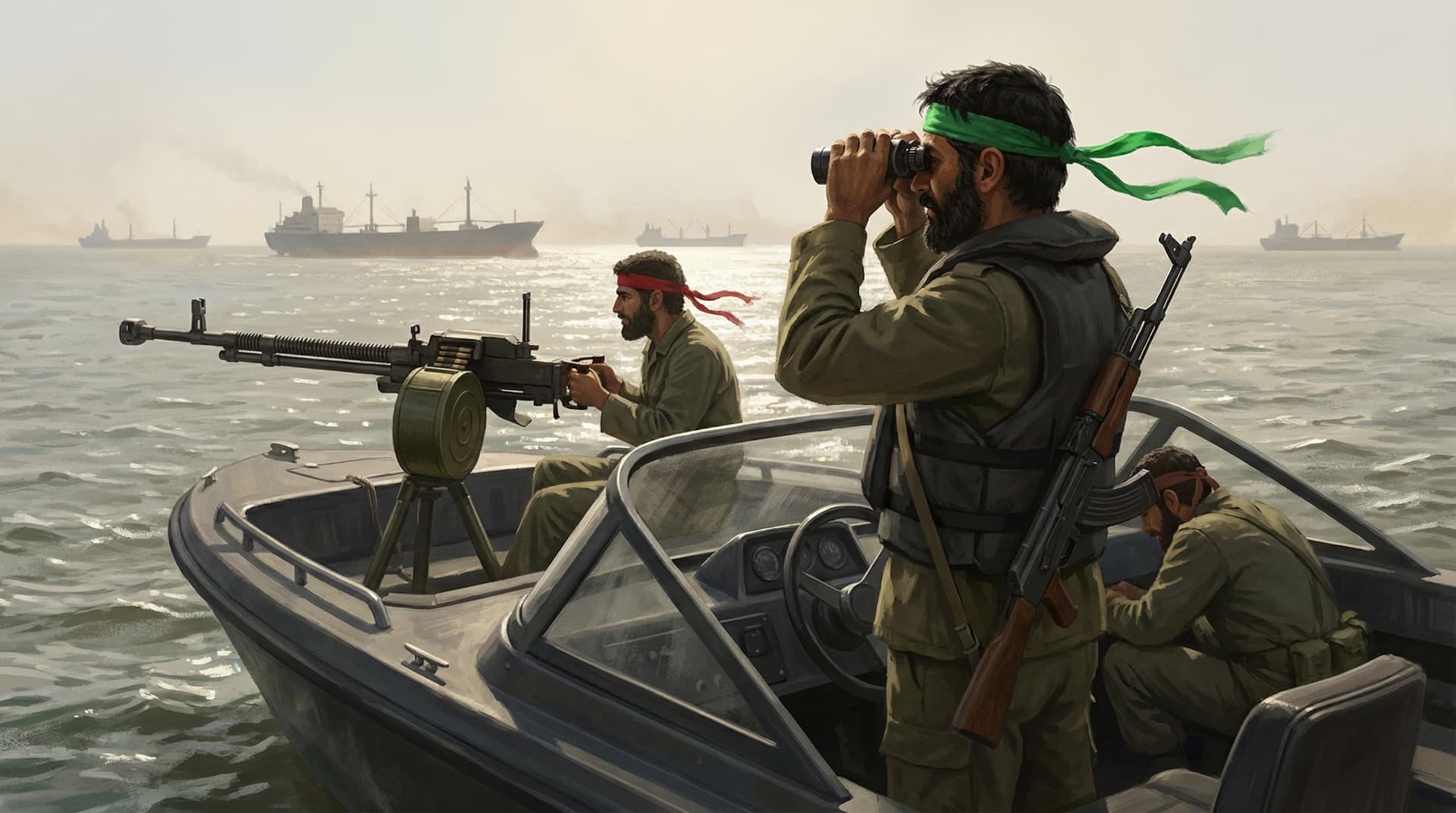
What follows is an escalation that no one can control. By 1986, the Persian Gulf has become the most dangerous body of water on Earth. Iranian Revolutionary Guard crews in Swedish-built Boghammar speedboats -- fast, agile, armed with machine guns and rocket-propelled grenades -- race out from island bases to attack merchant vessels. They concentrate their fire on crew compartments, not cargo holds. They are not trying to sink ships. They are trying to kill the men who sail them.
Subscribe to Nightfall History on YouTube
Join our community on YouTube for more historical deep dives and visual storytelling
The insurance companies notice first. Lloyd's of London begins raising war-risk premiums on any vessel transiting the Gulf. Some underwriters refuse to cover the route entirely. Oil prices spike. Shipping companies reroute. The tankers that do make the passage sail without lights at night, their crews sleeping in helmets and life vests, listening for the sound of speedboat engines in the dark.
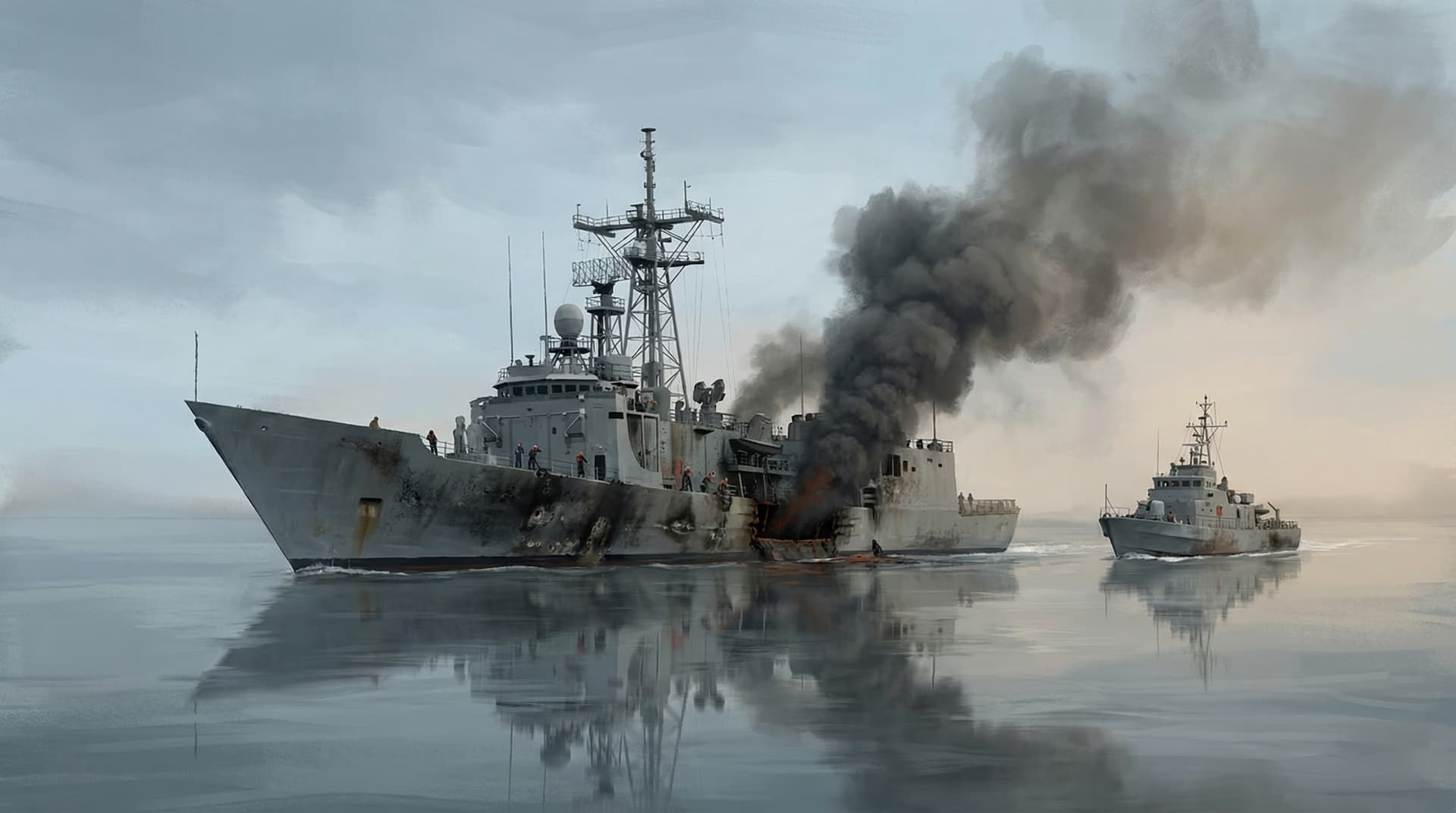
And then, on May 17, 1987, an Iraqi pilot fires two Exocet missiles into the side of the USS Stark -- an American frigate patrolling the Gulf. Thirty-seven American sailors die. The first missile strikes the port side near the bridge. It does not detonate, but its rocket fuel ignites, sending fire racing through the ship's combat operations center. The second missile hits thirty seconds later and explodes, tearing a hole ten feet by fifteen feet in the hull. Iraq apologizes. Saddam Hussein claims the pilot mistook the warship for an Iranian tanker. But the damage is done. Thirty-seven coffins draped in American flags, and suddenly the Tanker War is no longer someone else's problem.
The Calculus Changes
The Stark disaster could have ended American involvement in the Gulf. Congress is furious. Senators demand answers. The public wants to know why American sailors are dying in a war between Iran and Iraq. The easiest path is retreat.
But something else is happening -- something that changes the calculation entirely. Kuwait, watching its tankers burn and its oil revenue drain away, has quietly approached the Soviet Union. Moscow is more than interested. Soviet naval officers have already begun studying Gulf charts. Three Soviet tankers are preparing to fly the Kuwaiti flag. If they sail, Soviet warships will follow to protect them -- and once Soviet vessels are in the Persian Gulf, operating alongside Soviet-allied Iraq, they will not leave. The nightmare that every Cold War strategist has gamed out -- Soviet control of the world's oil chokepoint -- is weeks from becoming real.
Secretary of Defense Caspar Weinberger sees the trap and the opportunity at once. He tells Reagan's cabinet that the question is no longer whether America wants to be in the Gulf. The question is whether America or the Soviet Union will control it. Retreat now, and the Soviets inherit the strait by default. The reflagging, Weinberger argues, is not about protecting tankers. It is about preventing the Cold War from swallowing the Middle East's oil. It is the most dangerous gamble of Reagan's presidency -- putting American sailors directly in the line of Iranian fire to keep the Soviets out.
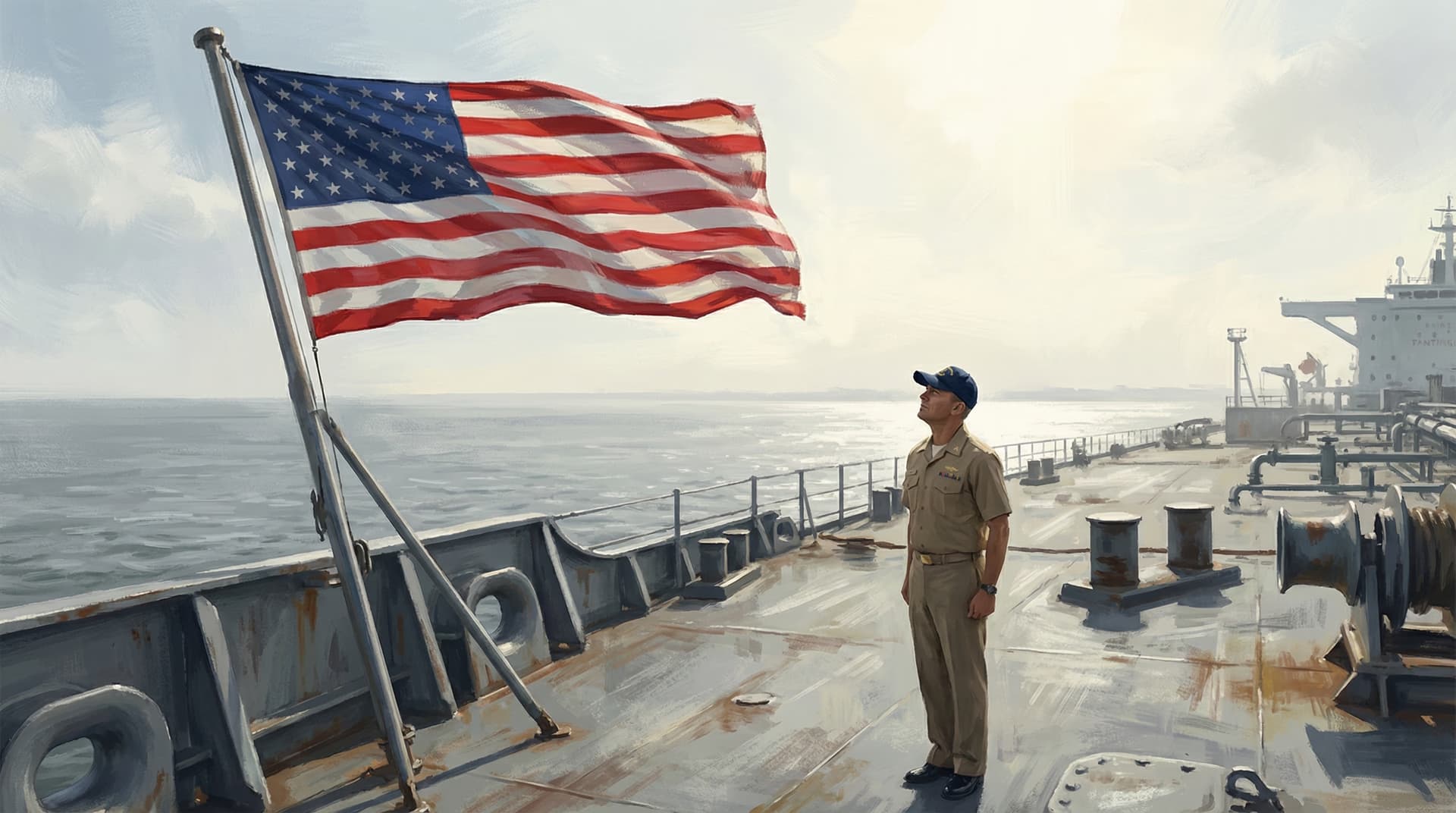
On March 7, 1987, President Reagan agrees. Eleven Kuwaiti tankers will be reflagged -- stripped of their Kuwaiti registry, repainted, and given American flags. Under international law, an attack on a ship flying the Stars and Stripes is an attack on the United States. It is a dare wrapped in a flag. The message is clear: touch these ships, and you are at war with America.
The plan is bold. It is also, in one critical respect, incomplete. Because there is a problem no one has solved. The strait is mined.
Running the Gauntlet
On July 24, 1987, the first convoy of Operation Earnest Will enters the Persian Gulf. The reflagged supertanker Bridgeton -- four hundred thousand tons, the length of four football fields -- leads the formation. Three U.S. Navy warships flank her. AWACS radar planes circle overhead. It is the largest naval convoy operation since World War II.
Two days in, the Bridgeton hits a mine.
Stay in the Loop
Get notified when new articles and videos drop. Unsubscribe anytime.
The explosion punches a dent forty-three square meters wide into the tanker's hull. On the bridge, the captain later describes the impact as a "five-hundred-ton hammer" coming down on the ship. The Bridgeton slows but does not stop. She is too massive to sink from a single mine. But behind her, the Navy escorts face a humiliating reality: they have no minesweepers. The warships fall into the tanker's wake, letting the massive double-hulled vessel break trail through the minefield. The protectors are now hiding behind the ship they were sent to protect.
Iran watches and adapts. At night, the Revolutionary Guard sends out small craft to sow mines in the shipping lanes -- cheap, dumb weapons that drift with the current and wait. Iran denies everything. The mines are anonymous. They could belong to anyone. And the United States cannot retaliate against an enemy that will not admit to attacking.
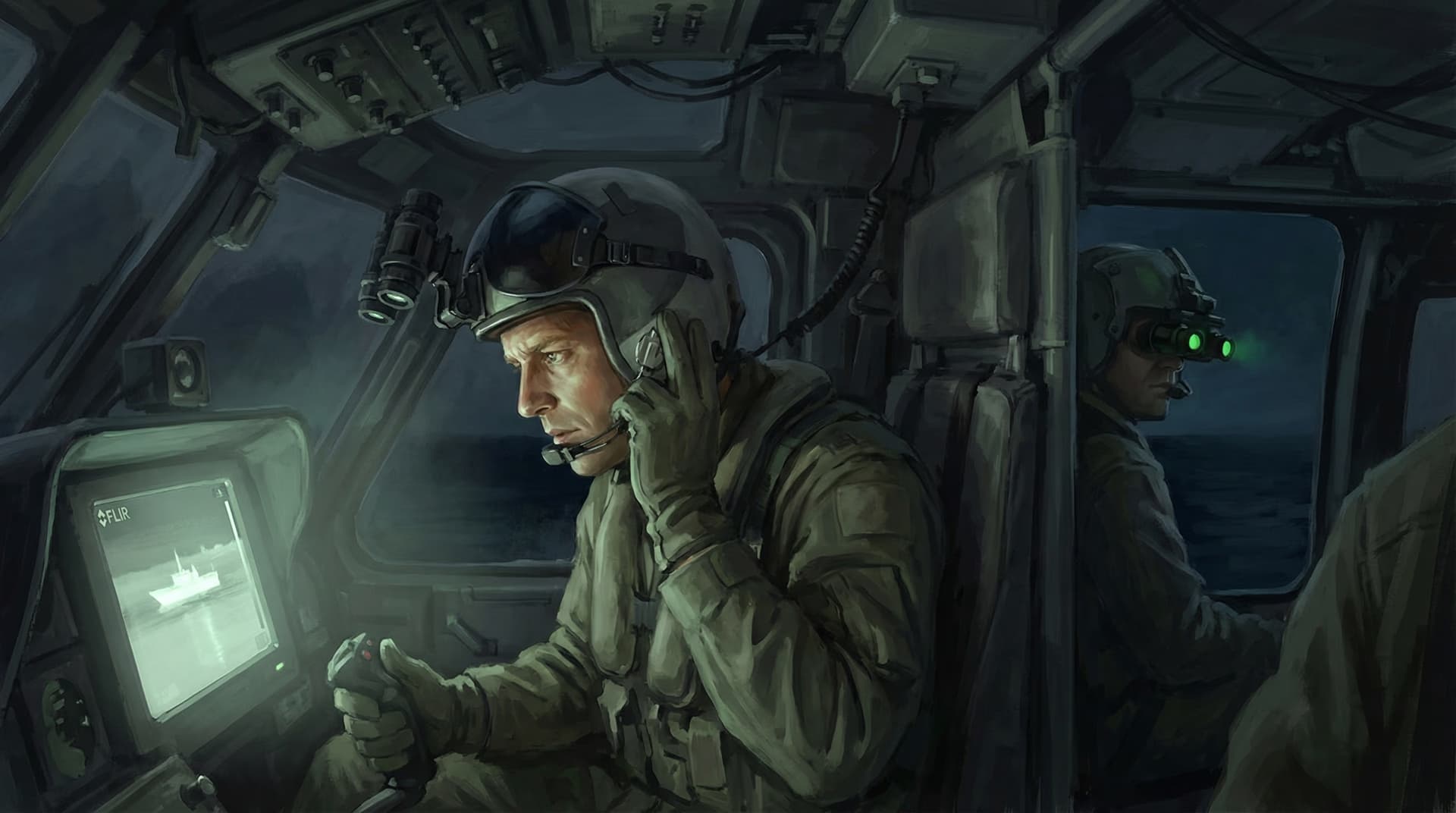
Then, on September 21, 1987, an American helicopter crew changes everything. Flying with night-vision goggles and infrared cameras over the northern Gulf, they spot a vessel in the darkness -- the Iran Ajr, a converted landing craft. Through the camera's green glow, the crew watches Iranian sailors rolling mines over the side and into the water. They film every second.
The footage is undeniable. Navy SEALs board the Iran Ajr the next morning and find nine more mines on deck, along with a logbook -- handwritten, meticulous -- recording every mine Iran has laid. Dates. Coordinates. Locations. The evidence is presented to the United Nations. Iran's plausible deniability, the shield behind which it has hidden for months, is gone.
The United States begins hitting back. On October 19, 1987, after an Iranian Silkworm missile strikes the reflagged tanker Sea Isle City in Kuwaiti waters -- blinding the American captain and wounding eighteen crewmen -- the Navy destroys Iran's Rostam oil platform with a thousand rounds of naval artillery. The message shifts: we know what you are doing, and now there is a cost.
Through the winter of 1987 and into 1988, the convoys keep running. American warships thread through minefields while Iranian speedboats circle at the edges, probing for weakness. At one point, more than thirty U.S. warships patrol the Gulf simultaneously. The convoys do not stop. The tankers do not turn back. The oil keeps flowing.
The Strait Holds
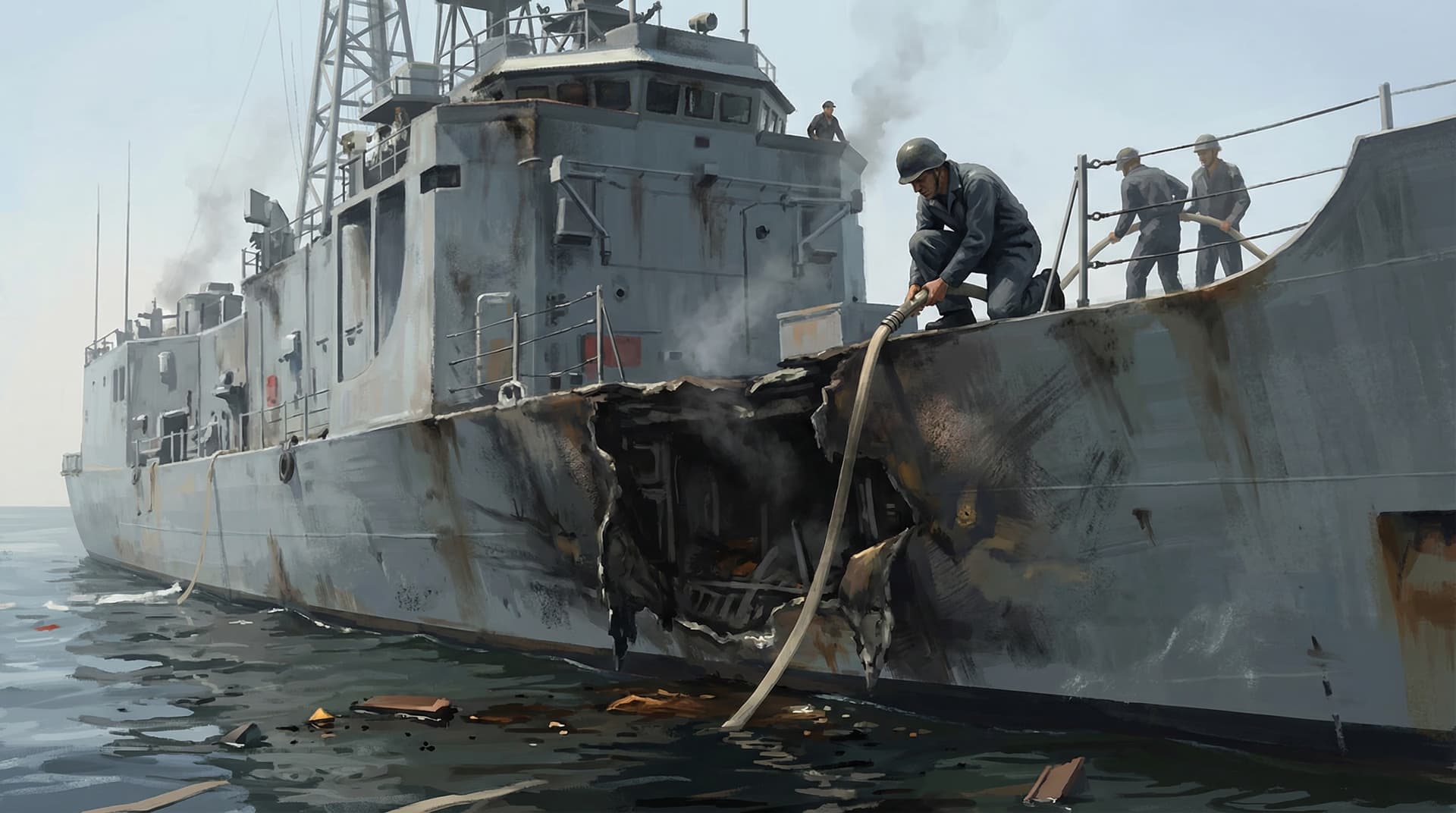
Iran tried to close the Strait of Hormuz. It laid mines in the shipping lanes. It fired missiles at tankers. It sent speedboats to strafe crew quarters with machine-gun fire. Between them, the two sides killed more than four hundred civilian sailors and damaged nearly six hundred ships. For four years, they turned the Persian Gulf into a graveyard.
And it failed.
The strait never closed. The oil never stopped. Every convoy that pushed through, every tanker that arrived intact, every mine that was swept -- each one was a small proof that the corridor could hold. By 1988, Lloyd's of London was writing Gulf policies again. The shipping companies that had rerouted came back. The thirty-mile corridor that Iran had tried to turn into a wall remained, as it had been for decades, an open door.
The cost was staggering. More than four hundred civilian sailors dead. Nearly six hundred ships scarred by missiles, mines, and machine-gun fire. An American frigate nearly sunk by a friendly Iraqi missile. Billions in damaged cargo, lost revenue, and war-risk premiums. Four years of the world's most important waterway doubling as a graveyard. And at the end of it, the oil still flowed.
That corridor is still there. Thirty miles of water between Iran and Oman, and through it passes twenty percent of the world's oil supply -- every single day. The same strait. The same calculation. The same question that hung over everything in 1984: can it be closed?
But the mines were still out there -- drifting, silent, patient. On April 14, 1988, the USS Samuel B. Roberts was on routine patrol when its hull struck something in the water. The explosion tore a twenty-one-foot hole in the ship and broke the keel. Ten sailors were wounded. The ship nearly sank. Four days later, the United States Navy launched the largest American naval surface engagement since World War II. Iran was about to find out what happens when you wound an American warship.