
The Loudest Sound of His Career
A Soviet-designed mine tears a twenty-one-foot hole in the hull of the USS Samuel B. Roberts. The keel snaps. Both gas turbine engines rip free from their mounts. The ship is sinking in the Persian Gulf, ten sailors are down, and the lights have gone out. Four days from now, the American response will erase half of Iran's navy in a single afternoon.
But first, the crew has to survive the night.
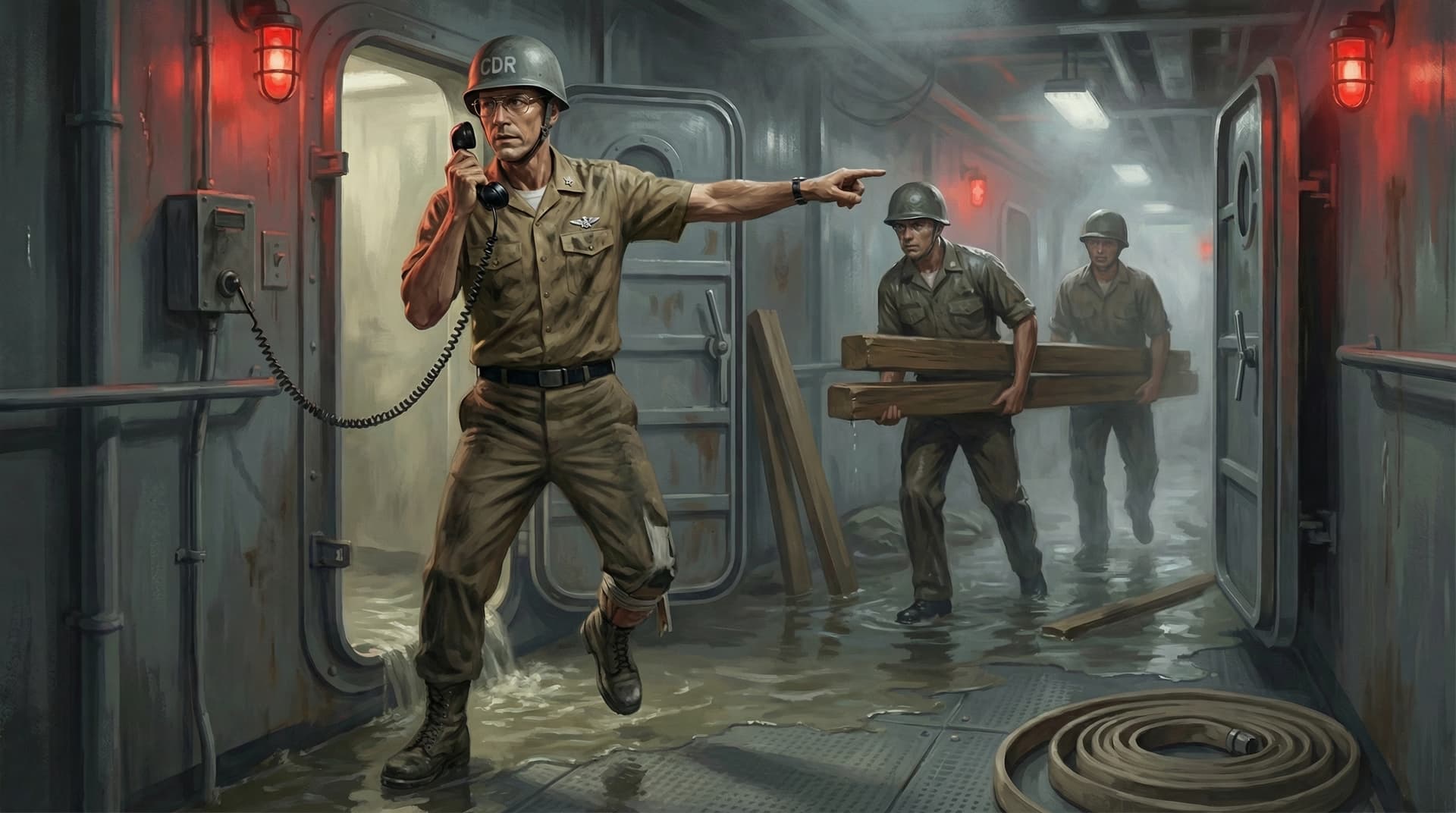
Commander Paul Rinn is standing a hundred and forty feet from the blast -- he will later call it the loudest sound of his naval career. It is April 14, 1988, and the Roberts has been threading minefields for two months, escorting reflagged Kuwaiti tankers past Revolutionary Guard speedboats that appear from nowhere, shoot, and vanish. Then someone spotted the first mine -- black and spherical and ancient-looking, trailing its anchor chain like a jellyfish. Then another. Then a third. Before the frigate could reverse course, the M-08 detonated beneath the waterline. Superheated gas screams through the exhaust vents until a fireball erupts from the ship's stack, igniting fires across four decks. The lights go out. The ship begins to flood. Ten sailors are down -- four with severe burns, the rest with blast injuries. Rinn's own foot is broken.
No American warship since World War II has come this close to sinking from enemy action. And inside the Persian Gulf, in the spring of 1988, there is no rescue coming fast enough if the Roberts goes under. The crew has one option: save the ship themselves.
They fight the flooding first. Sailors jam K-type shoring into the cracks, stuff toolboxes into breaches, tear off their own uniforms and pack them against the incoming sea. A boatswain's mate crawls onto the fantail to gauge the waterline and radios back to the captain: "Sir, if I get down on my hands and knees, I'm pretty sure I can put my hands in the Persian Gulf." The ship is sinking at the stern. Fires are still burning on four decks. And Rinn, soaked by firefighting water pouring through the overhead, makes the decision that will save or kill every man aboard.
He orders the crew to stop fighting the fire.
He has done the math. The ship will sink from flooding before the fire can be contained. If they split their effort, they lose both battles. If they pour every hand into damage control -- shoring, pumping, stabilizing -- they might keep the hull above water long enough for the fires to burn themselves out. It is a bet against physics, and it works. Five hours later, the Roberts is still afloat. Barely. The keel is broken. The engine room is a flooded tomb. But every man is alive.
Within twenty-four hours, Navy divers pull the remaining mines from the water. They are M-08 contact mines, Soviet-designed, Iranian-manufactured. The serial numbers match mines previously seized from the Iranian minelayer Iran Ajr, captured red-handed laying mines in these same waters seven months earlier. The trail is undeniable. Iran mined the shipping lane. Iran nearly sank an American warship. And now the question is no longer whether the United States will respond. It is how.
Four Days of Silence
For four days, nothing happens. The Roberts sits broken in the water, her stern riding so low that waves lap at the helicopter deck, waiting for a heavy-lift ship to carry her home. Rinn and his crew stand watches on a ship that can barely float, keeping her alive by hand while Washington decides what to do about the country that tried to sink her. Thirteen months of repairs. Eighty-nine million dollars. The crew has saved the ship, but the ship cannot save itself. And in Washington, the silence is deliberate.
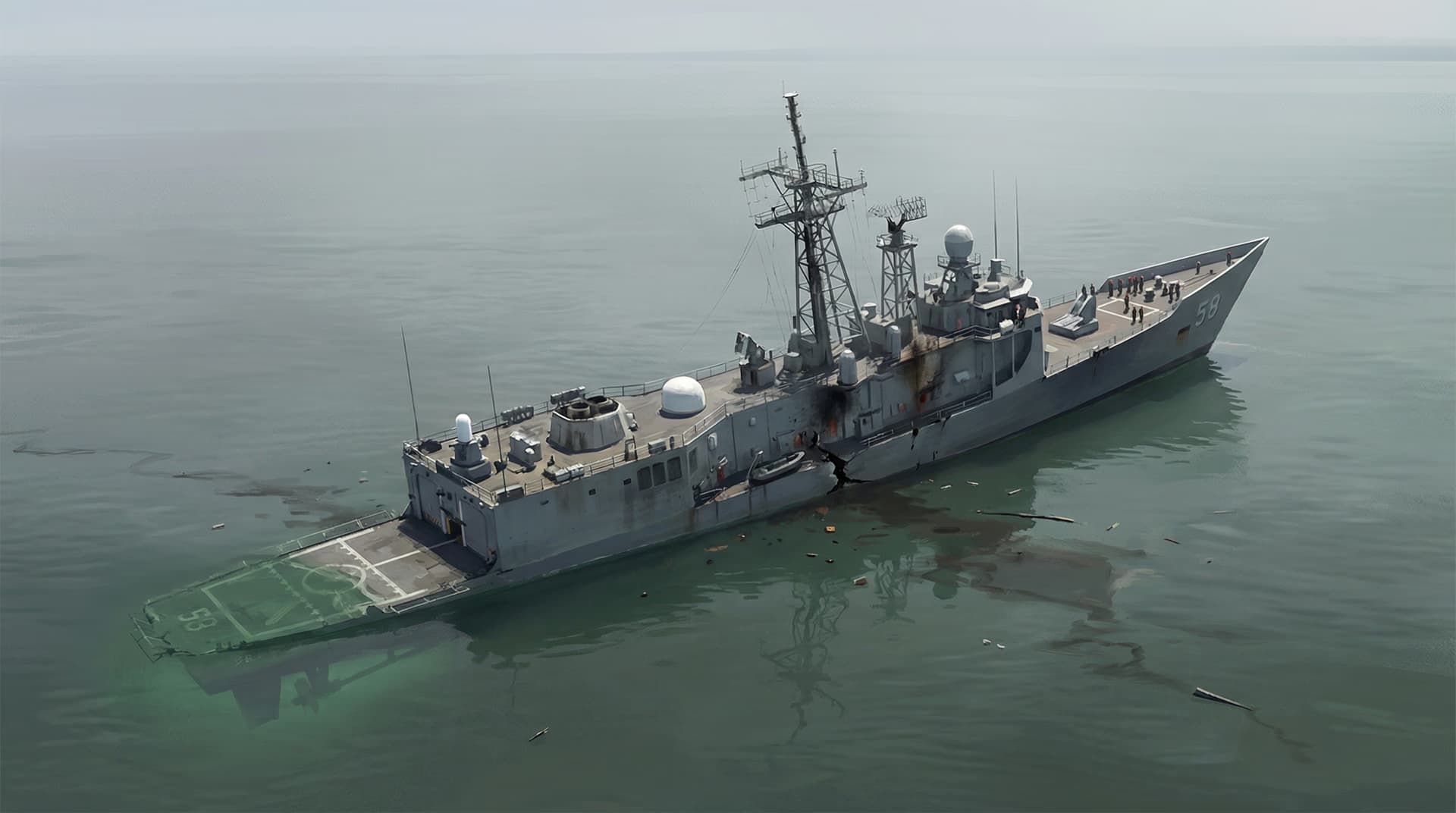
President Reagan summons his senior advisers. The Pentagon draws up options. The question is not revenge -- it is calibration. The context matters: Iran is already locked in a grinding eight-year war with Iraq. The Persian Gulf is the jugular of global oil supply. Hit too hard, and you risk pulling the United States into a wider conflict in the middle of an election year, with Iranian mines at the bottom of the world's most vital waterway. Hit too soft, and every navy on earth learns that you can mine American shipping lanes and walk away. The mine that nearly killed the Roberts cost a few hundred dollars. The message has to land somewhere between restraint and annihilation.
The target list takes shape: two Iranian oil platforms in the Persian Gulf -- Sassan and Sirri -- that Iran has been using not for pumping oil but as military surveillance posts and staging points for Revolutionary Guard speedboat attacks on commercial shipping. Radar dishes. Communications arrays. Anti-aircraft guns bolted to the railings. They are forward operating bases disguised as oil rigs. The plan is surgical. Destroy the platforms. Send the message. Get out. But what no one in Washington fully anticipates is that Iran will choose to fight back.
Subscribe to Nightfall History on YouTube
Join our community on YouTube for more historical deep dives and visual storytelling
The Turn
At dawn on April 18, 1988 -- exactly four days after the mine strike -- the operation codenamed Praying Mantis begins. Two hundred nautical miles south, in the northern Arabian Sea, the carrier USS Enterprise and her battle group have been waiting for exactly this contingency. A-6E Intruders sit armed on the flight deck. Three surface action groups fan out across the Persian Gulf.
The first group, led by the destroyer USS Merrill, approaches the Sassan platform in the gray early light. The Merrill radios the Iranian garrison and tells them to abandon the platform. They have twenty minutes. The Americans wait. Sailors on the surrounding ships watch through binoculars as figures move on the rig. Some climb down to boats. Some stay. The twenty minutes expire. The Merrill opens fire. Five-inch shells slam into the platform's legs and superstructure. The Iranians who stayed shoot back with twin-barrelled 23mm anti-aircraft guns -- a weapon designed to hit aircraft, not warships. It is like throwing gravel at a tank. Marines from the USS Trenton fast-rope onto the burning platform to plant demolition charges, then withdraw. The Sassan platform collapses into the Gulf in a column of black smoke.
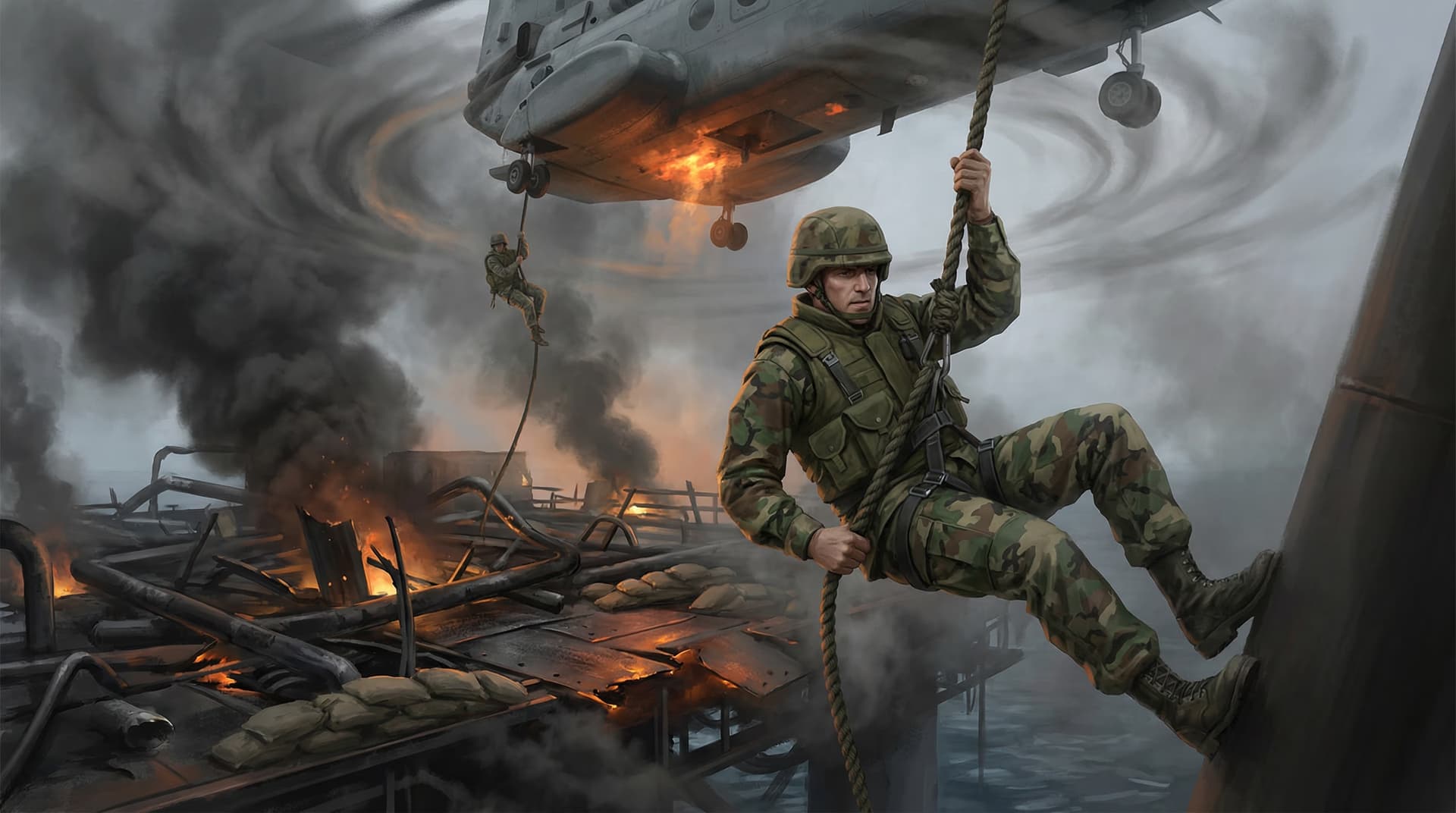
The second group, led by the cruiser USS Wainwright, hits Sirri. Navy SEALs are on standby to board and demolish the platform, but by the time the naval gunfire stops, there is nothing left worth boarding. Two Iranian military outposts -- the eyes and ears of their Gulf operations -- are gone before noon.
The message has been sent. Operation Praying Mantis is supposed to end here. But Iran does not get the message.
The Day the Iranian Navy Came Out to Fight
What happens next is something the United States Navy has not experienced since 1945.
The Iranian missile boat Joshan -- a small, fast patrol craft armed with one Harpoon anti-ship missile -- closes to within thirteen nautical miles of the Wainwright battle group. The Americans radio a warning. The Joshan's response is to fire its Harpoon. It is the only functioning Harpoon missile in Iran's entire arsenal, and they send it screaming across the water at an American cruiser. The Wainwright deploys chaff and electronic countermeasures. The missile veers off. The Americans fire back with Standard missiles from the Wainwright and the frigate USS Simpson. The Joshan takes multiple hits and sinks. The Simpson becomes the last modern U.S. Navy warship to sink an enemy vessel in surface combat.
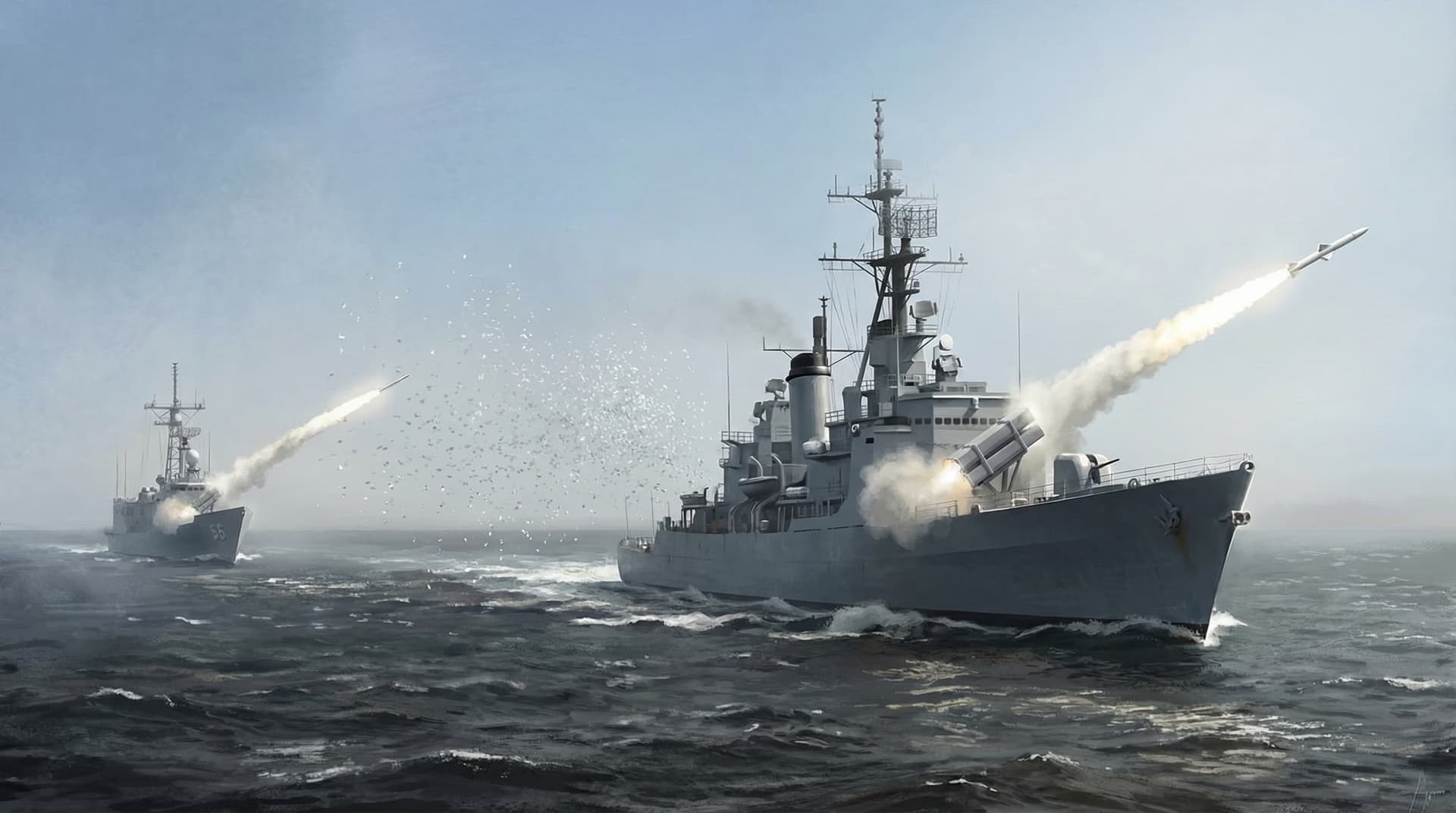
But the Joshan is only the beginning. Iranian Revolutionary Guard Boghammer speedboats swarm out of their bases and attack anything they can find -- the American supply ship Willie Tide, a Panamanian oil rig, a British tanker. President Reagan personally authorizes a strike against the boats -- the first time American forces intervene to protect a non-U.S. flagged vessel in the Gulf. A-6E Intruder aircraft from the USS Enterprise drop Rockeye cluster bombs on the Boghammar flotilla, sinking one and scattering the rest.
Stay in the Loop
Get notified when new articles and videos drop. Unsubscribe anytime.
Then Iran makes its final mistake. The frigate Sahand -- one of the largest warships in the Iranian fleet -- sorties from Bandar Abbas and steams toward the American battle groups. It is an eleven-hundred-ton Vosper Mark 5 frigate, a real warship, not a speedboat. And it is heading straight into the teeth of the most powerful navy on earth.
The Sahand never has a chance. Two A-6E Intruders from Attack Squadron VA-95 find her sixteen kilometers southwest of Larak Island. They come in with Harpoon missiles, Skipper laser-guided bombs, and cluster munitions. The destroyer USS Joseph Strauss adds another Harpoon from the surface. The Sahand takes hit after hit -- missiles punching through her hull, bombs tearing open her superstructure. She catches fire amidships and goes dead in the water, listing hard to port. The crew abandons ship. The fire reaches her ammunition magazines hours later, and the explosion sends the Sahand to the bottom in two hundred meters of water.
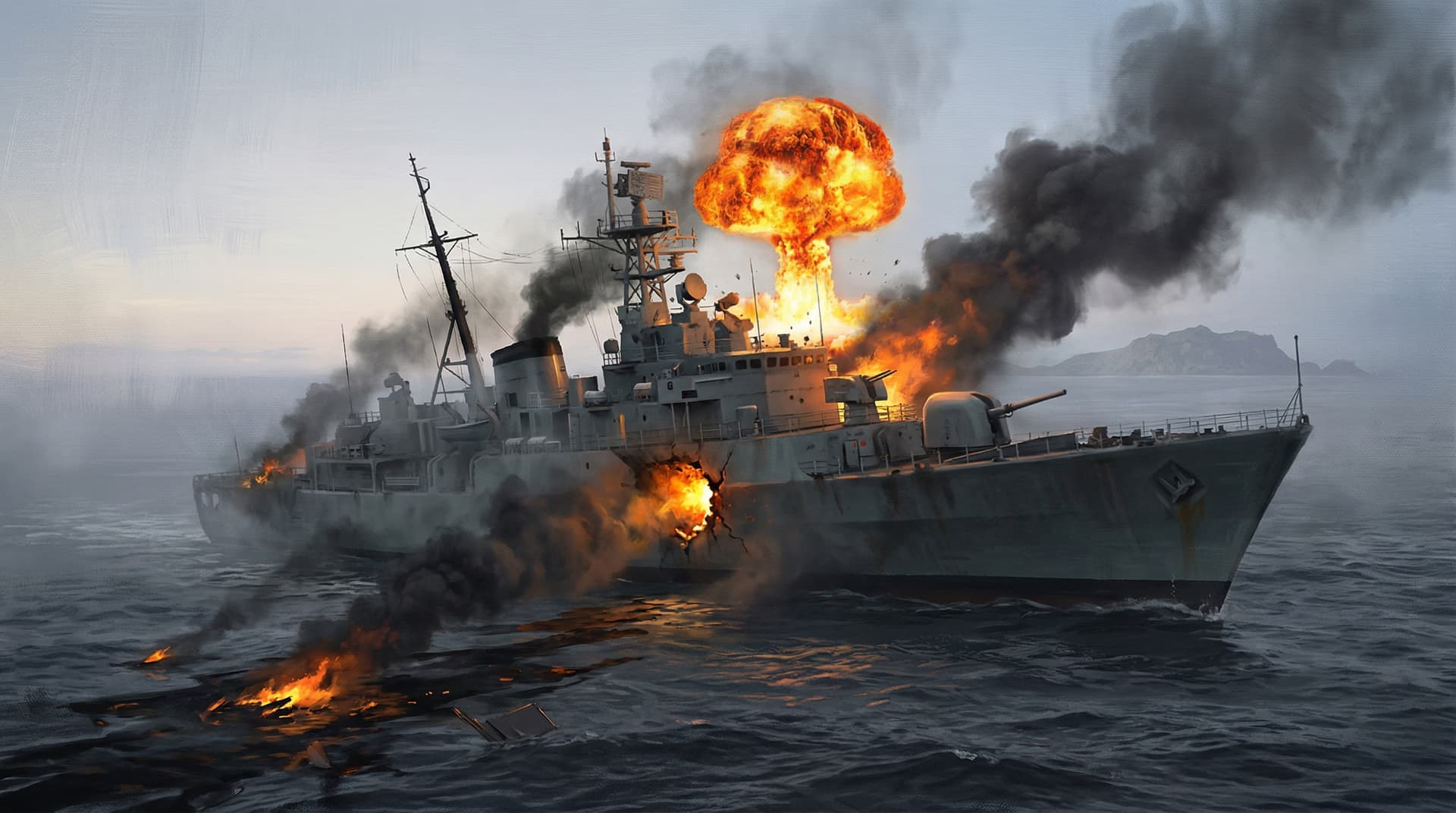
But the day is not over. Late in the afternoon, a second Iranian frigate -- the Sabalan -- steams out of Bandar Abbas and fires a surface-to-air missile at American aircraft. Lieutenant Commander James Engler, flying an A-6E, dives at a forty-five-degree angle through heavy anti-aircraft fire and drops a five-hundred-pound laser-guided bomb directly down the Sabalan's smokestack. The bomb detonates in the engine room. The Sabalan goes dead in the water, her stern sinking, smoke pouring from every opening.
The American pilots radio for permission to finish her off. The request goes up the chain -- all the way to Washington. Reagan himself intervenes. "They've had enough for one day," the president says. The Sabalan is left burning. An Iranian tug eventually tows what is left of her back to port.
What One Day Costs
By sunset on April 18, 1988, the United States Navy has destroyed two oil platforms, sunk the frigate Sahand, the missile boat Joshan, and at least three Boghammer speedboats, and crippled the frigate Sabalan. Half of Iran's operational navy is gone in a single afternoon. The engagement is the largest American surface naval battle since World War II -- the first and only time the U.S. Navy has exchanged surface-to-surface missile fire with an enemy. Two American servicemen die when their Marine Cobra helicopter crashes during the operation. Iran's losses -- in men, in ships, in pride -- are never officially confirmed by Tehran.
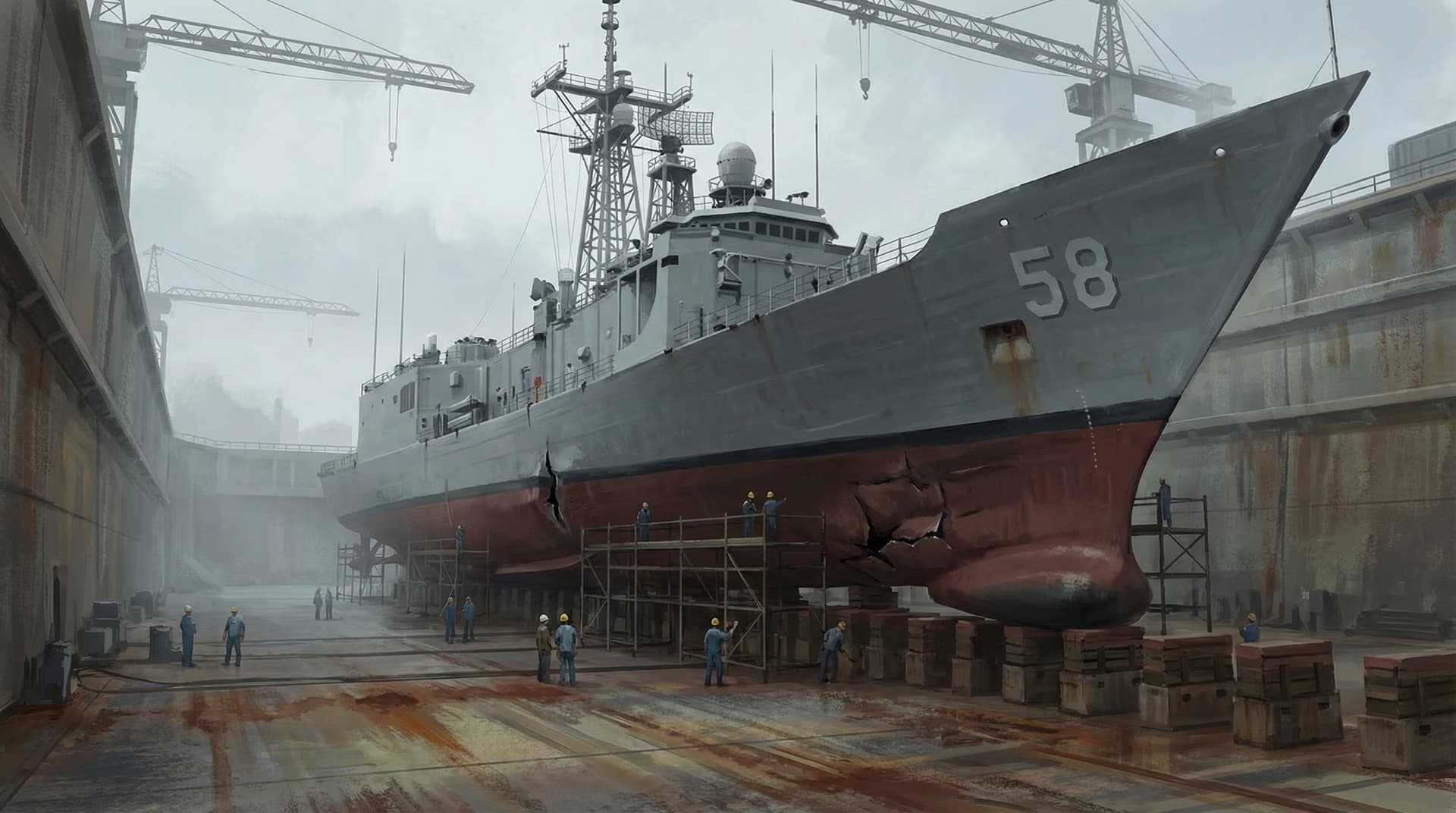
Lieutenant Commander James Engler, the pilot who dropped a bomb down the Sabalan's smokestack, receives the Distinguished Flying Cross from the Chairman of the Joint Chiefs. The crew of the Roberts -- the men who stuffed their own uniforms into a sinking hull and saved their ship -- become a case study in every Navy damage control course for the next three decades. Commander Rinn, the man who bet everything on one decision in the dark, is promoted. The Roberts herself will spend thirteen months in drydock, her keel rebuilt, her engines replaced, before she sails again.
Remember that boatswain's mate on the fantail, four days earlier, on his hands and knees, reporting that he could put his hands in the Persian Gulf through the hull? His ship almost sank because of a single mine -- a Soviet-designed device that cost a few hundred dollars. The American response cost Iran half its fleet in twelve hours.
The Navy called it proportional. Professional. A measured response. The Iranian threat in the Gulf was neutralized. The convoys were safe. The matter was closed.
Seventy-six days later, on a clear July morning, the USS Vincennes was patrolling these same waters when its radar detected an aircraft climbing out of Bandar Abbas airport. The crew had seven minutes to decide what it was. They got it wrong. Two hundred and ninety people -- including sixty-six children -- were about to die. And America was about to make a choice that Iran would never, ever forget.