- Known for
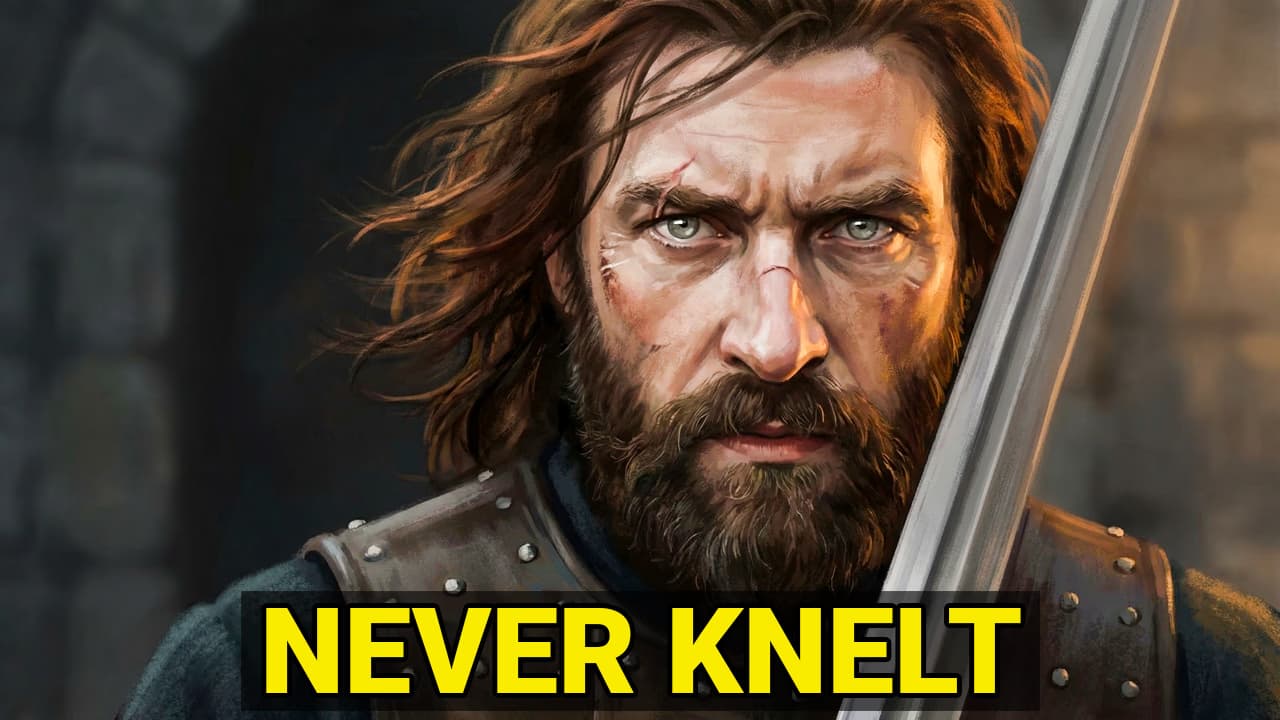
- Joint Guardian of Scotland and rival of Robert the Bruce, whose murder at Greyfriars Church triggered the Scottish revolution
- Fatal flaw
- A pragmatist in an age that demanded revolutionaries, he tried to play both sides until neither side would let him live
The Story
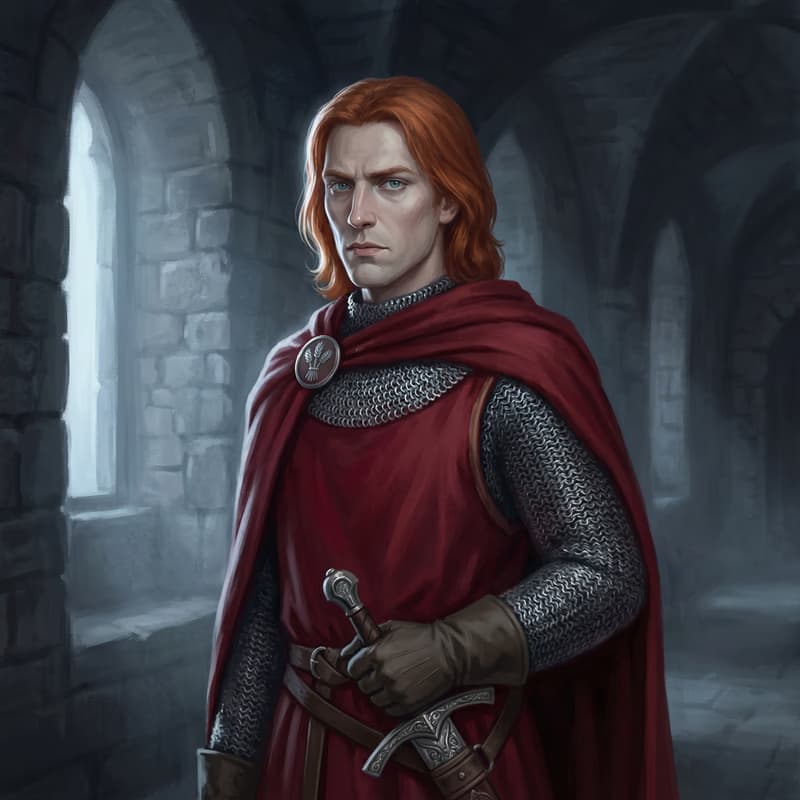
February 10th, 1306. Greyfriars Church, Dumfries. Winter light falls cold through the windows onto a man bleeding on the flagstones.
John Comyn, called the Red, is crawling toward the high altar. Robert Bruce's dagger has already opened his chest. Blood spreads across the stone floor of a Franciscan friary where men are supposed to speak truth and no weapon is supposed to be drawn. Comyn's hands slip in his own blood. He is trying to reach sanctuary, trying to reach God, trying to reach the one place where even enemies cannot kill you.
He does not make it. Roger Kirkpatrick pushes past Bruce in the doorway, draws his own blade, and finishes the work. "I'll mak siccar," he says. I'll make sure. Comyn's uncle Robert dies trying to save him.
The man who bled out on that church floor was not a footnote. He was the head of Scotland's most powerful family, a former Guardian of the kingdom, a military commander who won a battle the Bruce regime deliberately erased from history. He had a stronger legal claim to the Scottish throne than the man who killed him. For six years, while Wallace fought and fled and died, Comyn held Scotland together through negotiation, diplomacy, and sheer political weight.
History remembers him as Bruce's victim. The man who had to die so Scotland could have a king. But before the dagger, before the church, before the blood on the flagstones, John Comyn was the most important man in Scotland. And the story of how he got there, and why he had to die, is darker and more complicated than either side wanted to admit.
Personality & Motivations
Comyn was not Wallace. He did not fight from rage or principle or the stubborn refusal to kneel. He fought from calculation. Born into a family that had dominated Scottish politics for a century, he believed the kingdom belonged to his bloodline through the Balliol claim, and he spent his career maneuvering to prove it.
He was physically aggressive when provoked. At a council meeting in Peebles in August 1299, an argument over Wallace's confiscated property escalated until Comyn seized Robert Bruce by the throat in front of the assembled Scottish leadership. Bishop Lamberton had to pull them apart. This was not a man who hid behind diplomacy when his temper broke.
But beneath the volatility was a pragmatist. He served as Guardian in King John Balliol's name, not his own. He negotiated with Edward I when negotiation could preserve Scottish interests. He submitted to English authority in 1304 when resistance was hopeless, insisting that Scottish laws and customs be maintained as they were under Alexander III. Where Wallace chose death over submission and Bruce chose murder over compromise, Comyn chose survival. It was the rational choice. It was also the choice that put him in a church in Dumfries with a man who had stopped being rational.
What Most People Get Wrong
Most people think John Comyn was a minor figure, a coward who fled Falkirk and got himself stabbed in a church. The truth is almost the opposite. The Comyn family was the single most powerful noble house in 13th-century Scotland, controlling or influencing as many as thirteen earldoms at their peak. Three successive Comyns held the Justiciarship of Scotia for 66 consecutive years. They controlled castles from Lochindorb in the Highlands to Inverlochy in the west, commanding the main lines of communication across the entire kingdom.
Comyn himself served as Guardian of Scotland longer than Wallace did. He won the Battle of Roslin in 1303, a stunning Scottish victory that Bruce's propagandists deliberately buried because acknowledging it would have elevated a rival's legacy. He was not a minor noble who stumbled into Bruce's path. He was the establishment, the most politically connected man in Scotland, and Bruce was the revolutionary who had to destroy him to seize power.
Key Moments
Dunbar, April 1296. The wars began badly for Comyn. Captured at the Battle of Dunbar alongside his father, he was imprisoned in the Tower of London while Edward I dismantled Scottish independence piece by piece. The experience taught him what English power looked like from the inside. It also connected him to the English court through his wife Joan de Valence, Edward I's own cousin. When he was released, he carried both hatred of English captivity and intimate knowledge of the enemy.
Falkirk, July 1298. The battle that defined him in the worst possible way. Commanding the Scottish cavalry reserve, Comyn withdrew his mounted knights from the field without striking a blow while Wallace's spearmen died under English arrows. Whether it was deliberate betrayal, tactical calculation, or simple cowardice, the result was the same: thousands of Scottish commoners slaughtered while the nobleman rode away. Wallace never forgave him. Scotland never forgot.
Peebles, August 1299. Appointed joint Guardian alongside Robert Bruce after Wallace's resignation, Comyn lasted barely a year before the partnership exploded. At a council meeting in Peebles, he grabbed Bruce by the throat during an argument. Bishop Lamberton was appointed as a third Guardian specifically to keep the two men from killing each other. It was a preview of what would happen seven years later, only next time there would be no bishop to intervene.
Roslin, February 1303. Scotland's forgotten victory. Comyn and Sir Simon Fraser ambushed an English force near Roslin, south of Edinburgh, inflicting a sharp defeat on Edward's troops. It was the last significant Scottish military victory before Bruce's eventual campaigns. The Bruce regime erased it from the national narrative because it belonged to the wrong man.
Strathord, February 1304. Facing Edward I's most overwhelming invasion yet, Comyn negotiated Scotland's surrender. The terms he extracted were not unconditional. He insisted that Scottish laws and customs be preserved as they had existed under Alexander III. But the submission agreement specifically named William Wallace as a wanted man, stripping him of any remaining noble protection. Within eighteen months, Wallace was captured, dragged to London, and butchered. Comyn's pragmatism had a body count.
The Detail History Forgot
Comyn's son, John Comyn IV, was sent to England after the murder at Greyfriars and raised in the English court by Sir John Weston, guardian of the royal children. He grew up among English princes, not Scottish lords. When he finally returned to Scotland in 1314, it was not to reclaim his father's legacy. It was to fight against it.
At the Battle of Bannockburn on June 24th, 1314, the younger Comyn charged with the English cavalry against the Scottish schiltrons, the same spear formations his father had abandoned at Falkirk sixteen years earlier. He died in the charge. The son of Scotland's Guardian, killed fighting for England, on the battlefield that secured the independence his father had spent his life trying to preserve through other means. The Comyn lands were forfeited and redistributed to Bruce's allies. A family that had dominated Scottish politics for over a century ceased to exist as a political force within eight years of the murder at Greyfriars.
The Downfall
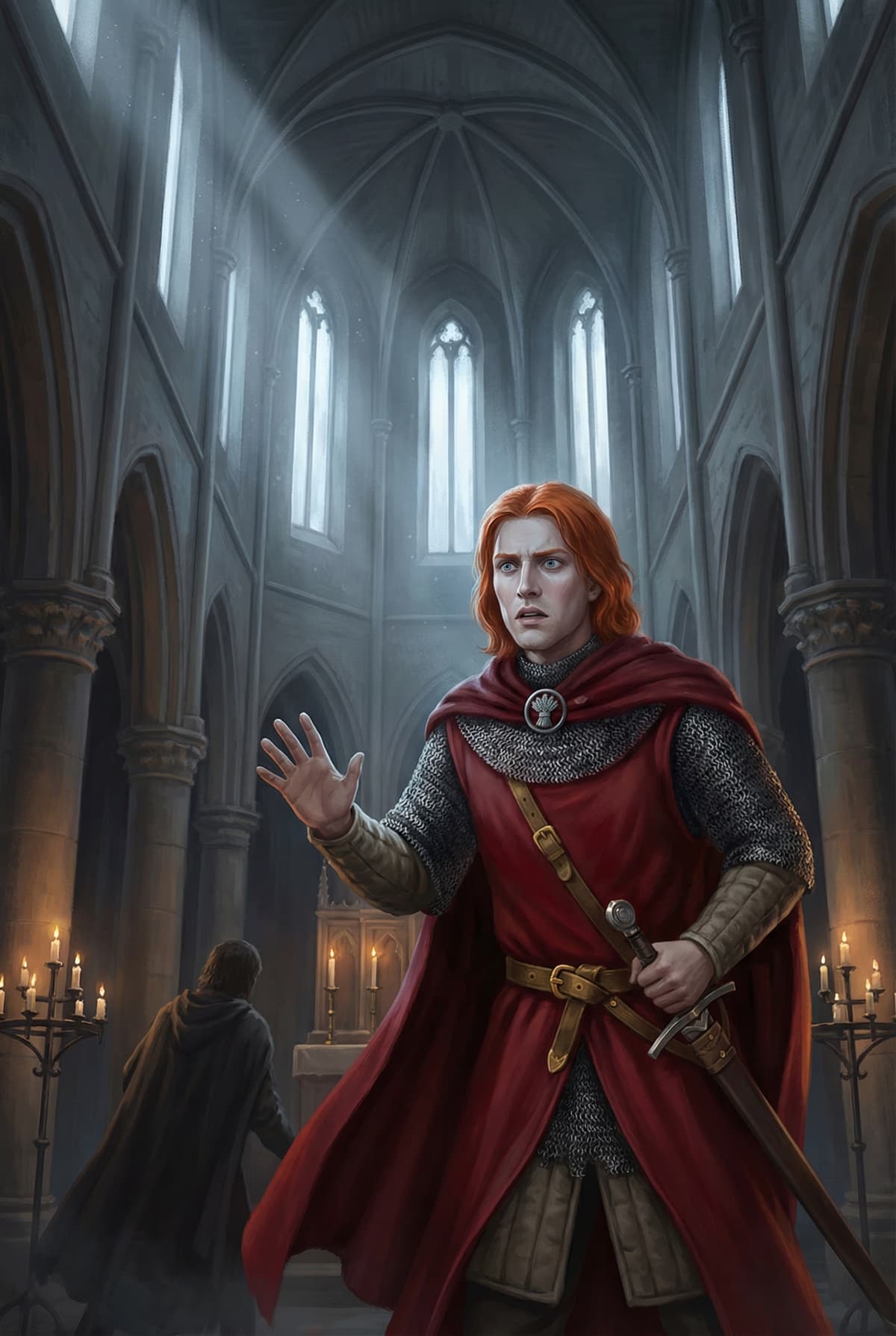
Comyn's fatal flaw was not cowardice or incompetence. It was caution in an age that punished it. He tried to navigate between Edward I and Scottish independence, between his own claim and Bruce's ambition, between resistance and survival. He calculated when others acted. He negotiated when others fought. He submitted when others died.
The legends say he and Bruce made a secret pact in the summer of 1305: one man would take the crown, the other would take the lands. Comyn allegedly chose the lands and agreed to support Bruce's bid for kingship. Then, according to Bruce's chroniclers, Comyn betrayed the agreement to Edward I, hoping to destroy his rival with English swords rather than Scottish ones.
Whether the betrayal was real or invented by Bruce's propagandists remains one of medieval Scotland's unsolvable mysteries. What is certain is that on February 10th, 1306, Bruce asked Comyn to meet him at Greyfriars Church in Dumfries. Words were exchanged before the high altar. Bruce's hand went to his dagger. And the most powerful nobleman in Scotland died crawling across a church floor, killed by a man who had decided that the time for calculation was over.
The murder was almost certainly not premeditated. No sane man would choose to commit sacrilege before the altar of a Franciscan church, guaranteeing his own excommunication, unless rage had overtaken reason. But premeditated or not, it was decisive. Bruce walked out of Greyfriars a murderer and a sacrilegist. Six weeks later, he was crowned King of Scots. The pragmatist had died. The revolutionary had begun.
Comyn held Scotland together for six years through the worst of the English occupation. He preserved its laws, led its armies, and kept its fractious nobility from tearing each other apart. In the end, the thing that killed him was not English steel or Scottish treachery. It was the simple fact that Scotland needed a king who would gamble everything, and Comyn was a man who always hedged his bets.
Frequently Asked Questions
Yes. John Comyn III of Badenoch, known as "the Red Comyn," was a real Scottish nobleman who lived from around 1274 to 1306. His murder by Robert Bruce at Greyfriars Church in Dumfries on February 10th, 1306, is one of the best-documented events in medieval Scottish history, recorded in multiple contemporary English and Scottish chronicles.
He was stabbed by Robert Bruce before the high altar of Greyfriars Church in Dumfries on February 10th, 1306. Bruce's initial attack wounded but did not kill him. Sir Roger Kirkpatrick then entered the church and finished Comyn off with his own dagger, reportedly saying "I'll mak siccar" ("I'll make sure"). Comyn's uncle, Sir Robert Comyn, was also killed trying to save him.
The exact reason is debated. Bruce's supporters claimed Comyn had betrayed a secret agreement between them to Edward I, and that Bruce confronted him over the treachery. English sources suggest Bruce planned the murder to eliminate his chief rival for the Scottish throne. Most historians believe the killing was unplanned, the result of a confrontation that escalated beyond control inside the church.
Arguably, yes. Comyn's mother was Eleanor Balliol, sister to King John Balliol. Through her and his grandmother Devorguilla of Galloway, Comyn descended from the senior line of King David I. Bruce's claim came through a younger branch. In the Great Cause of 1292, when Edward I adjudicated the Scottish succession, the Balliol-Comyn line was judged to have the superior claim.
This remains one of the great controversies of Scottish military history. Some historians believe Comyn deliberately abandoned Wallace out of class resentment and political rivalry. Others argue it was a tactical withdrawal when the battle was clearly lost. Pro-Bruce chroniclers used it as evidence of Comyn treachery, but modern historians note that medieval cavalry often withdrew when infantry formations collapsed under archery.
The Comyns were the most powerful noble family in 13th-century Scotland. They controlled or influenced up to thirteen earldoms, held the Justiciarship of Scotia for 66 consecutive years, and commanded key castles across the kingdom. Their network of marriages, landholdings, and political offices gave them more concentrated power than any other Scottish house, including the Bruces.
The family was destroyed within a generation. John's son, John Comyn IV, was raised in the English court and died fighting for England at the Battle of Bannockburn in 1314. All Comyn lands were forfeited and redistributed to Bruce's allies. The Comyn-Buchan earldom was devastated in Bruce's "Harrying of Buchan" in 1308. A family that had dominated Scotland for over a century effectively ceased to exist.
Yes, by marriage. Comyn's wife, Joan de Valence, was the daughter of William de Valence, who was the half-brother of King Henry III of England and uncle to Edward I. This made Joan Edward I's cousin. The man fighting for Scottish independence was married into the English royal family, a connection that complicated his loyalties throughout the wars.
The Battle of Roslin, fought on February 24th, 1303, was a Scottish victory led by John Comyn and Sir Simon Fraser against English forces near Roslin, south of Edinburgh. It was the last significant Scottish military victory before Bruce's later campaigns. The battle was deliberately downplayed by Bruce's regime because it was Comyn's achievement, earning it the title "Scotland's forgotten victory."
It means "I'll make sure" in Scots. Sir Roger Kirkpatrick of Closeburn reportedly said these words before entering Greyfriars Church to finish off the wounded Comyn after Bruce's initial attack. The phrase became the Kirkpatrick clan motto, and their family crest depicts a hand holding a bloody dagger with this inscription. It remains one of the most famous quotes in Scottish history.