Intro
In May 2026, in Beijing, the leader of China sat across a table from the President of the United States and said something about a small island that should have stopped the room cold. He called Taiwan the single most important issue between their two countries. And he said that the island's independence, and peace in the region, were, in his words, as irreconcilable as fire and water.
That island is Taiwan. Twenty-three million people, about a hundred miles off the Chinese coast. China says it is a province in rebellion. Taiwan governs itself completely, like a country. And the United States has spent decades promising, in deliberately vague language, to defend it.
This is the most dangerous standoff on the planet, because it is the one place where the world's two strongest militaries, both armed with nuclear weapons, have agreed to disagree about something neither one can afford to lose.
Almost everyone has heard that China might invade Taiwan. Almost nobody can answer the simpler question underneath it. Why is there a conflict here at all? How did one island end up with two governments that each insist they are the real China?
I am going to answer that in five chapters. Each one is a real moment in history, and I am going to take you inside each of them. By the end you will understand exactly how this happened, and exactly why Beijing cannot let it go. It begins with two men who, before they spent their lives trying to destroy each other, were friends.
Chapter 1: The War That Never Ended
In the 1920s, the China that those two men were trying to save barely functioned as a country. The emperor was gone, and power had broken apart among dozens of warlords, each with a private army.
Two movements set out to put it back together. The Nationalists, led by a cold, iron-willed officer named Chiang Kai-shek. And the Communists, a young party whose members included a farmer's son and onetime library assistant named Mao Zedong. At first, they were not rivals. They worked side by side, one joint army marching north, taking the country back from the warlords city by city. They were winning. And then, in the spring of 1927, with that army now holding Shanghai, Chiang decided he did not want to share the China he was about to win.
It is still dark. April the twelfth, 1927, and the streets of Shanghai are quietly filling with men who are not soldiers. They are armed, but they wear plain clothes. They are gangsters, members of the Green Gang, the syndicate that runs the city's docks and opium and crime. Tonight, the Green Gang is working for Chiang Kai-shek. They move through the dark with addresses. Union halls. Boarding houses. The homes of labor organizers and Communist Party members, men who are Chiang's own allies, who went to sleep that night certain the army that held the city was on their side. The gangsters take them out of their beds and into the street. By sunrise the killing is open, and it does not stop at Shanghai. It runs outward, city to city, for weeks, and the dead are counted first in hundreds, then in thousands.
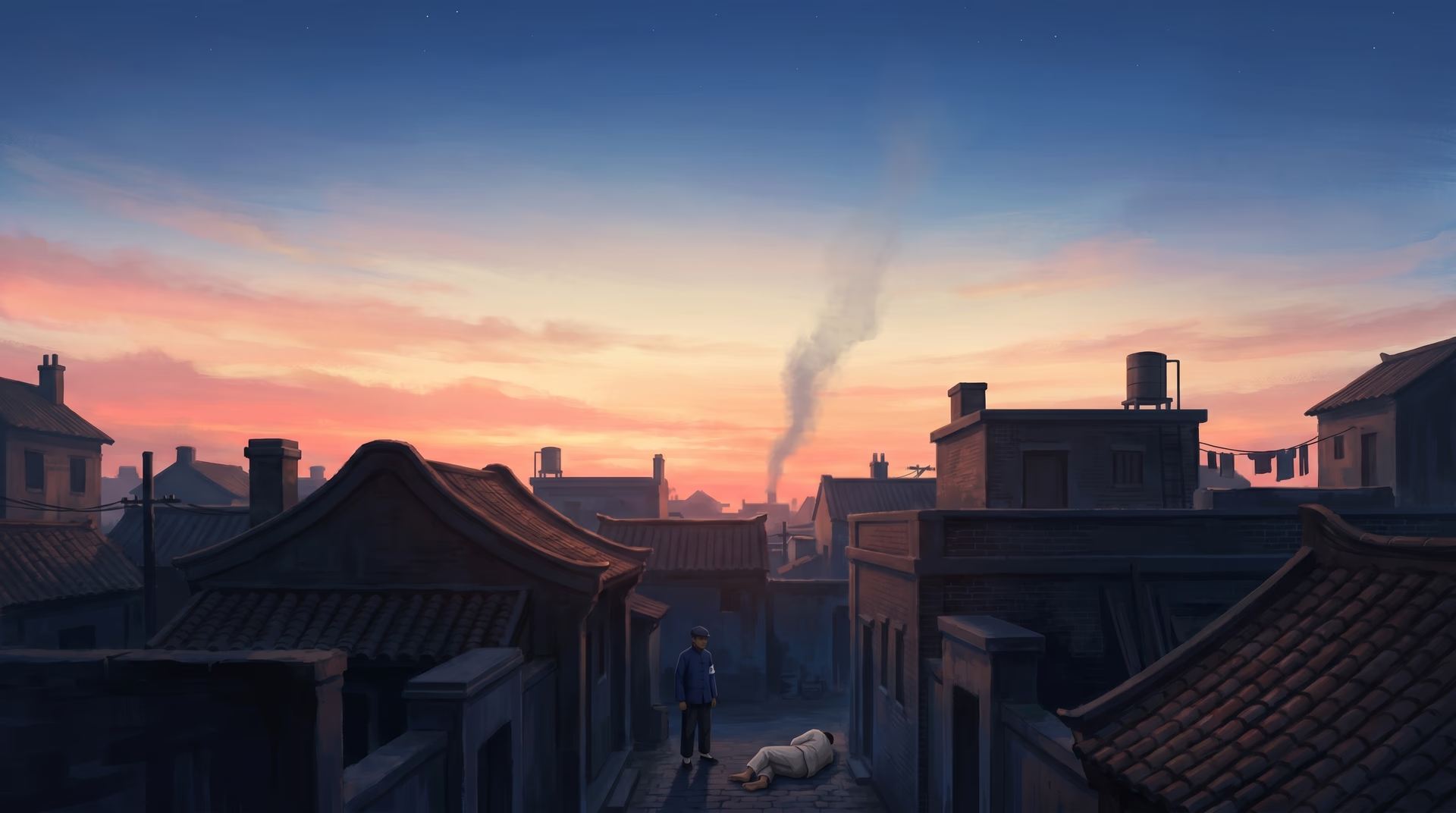
That was the morning the friendship died. Historians call it the Shanghai Massacre. Chiang had decided he did not want to share China with the Communists, so he removed them, and the alliance was over. From that day the Nationalists and the Communists were at war for the country, and that war would run for twenty-two years. It paused exactly once, in 1937, when Japan invaded and forced the two enemies to fight the invader instead. The day Japan was defeated, in 1945, they turned and resumed the war. And here is the one thing to carry out of this chapter. That war never officially ended. No treaty was signed. Nobody surrendered. The fighting eventually stopped, but the war was never closed. So when Beijing says today that Taiwan is a province in rebellion, it is not being dramatic. It is being literal. It means that war, the one that began in a Shanghai street before dawn in 1927, and it considers that war still on.
One quick thing, now that you have the first piece. If this is the kind of history you want more of, subscribe. It genuinely helps. Back to it.
Because that war ended with a loser. And it was not the librarian. It was the general. Chiang Kai-shek, the man with the bigger army, the American backing, every advantage there was, lost all of China. What he did in the last weeks of losing it is the only reason there is a Taiwan to fight over.
Subscribe to Nightfall History on YouTube
Join our community on YouTube for more historical deep dives and visual storytelling
Chapter 2: 1949, Two Chinas
By 1949, Chiang Kai-shek was losing that war, badly.
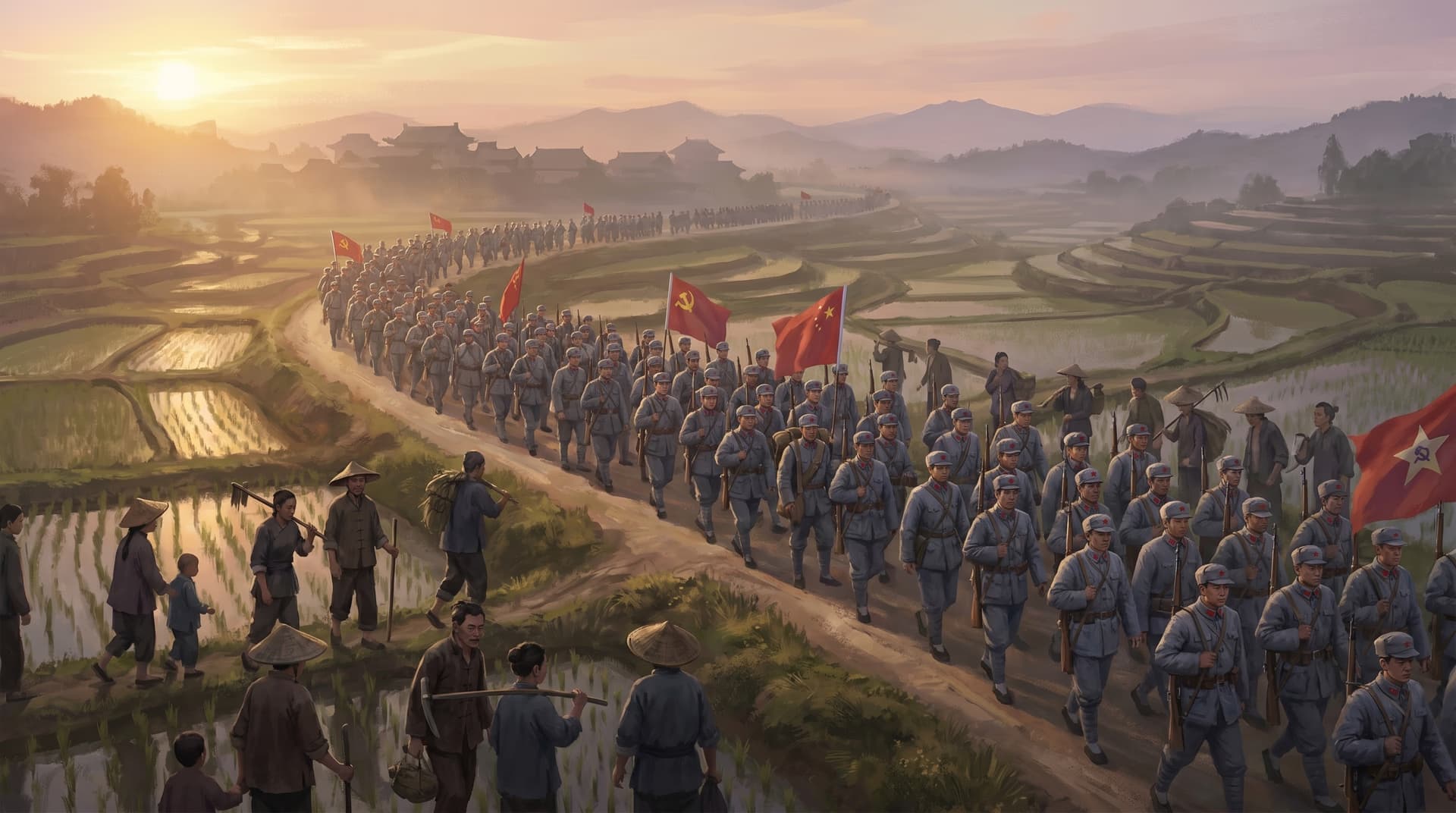
His soldiers were defecting to the Communists by whole divisions. His currency had collapsed so completely that people carried cash in sacks and shop prices changed through the day. The countryside had turned against him. Mao's armies were sweeping south, city after city, and Chiang was running out of China to stand on. Now, when a government loses a war, it usually does one of two things. It surrenders, or it disappears. Chiang did neither. He did something almost no government in history has done. Watch what he does.
It is late 1949. In the ports still under Nationalist control, the docks are a controlled panic. Naval ships are being loaded, and not with troops. They are being loaded with a country. Crates come up the gangplanks by the thousand, packed with the imperial art of China's National Palace Museum, treasures that emperors spent centuries collecting. The national gold reserve goes aboard, most of it. The air force flies out. Then the people. Soldiers, officials, and ordinary families, around two million of them, crowding onto anything that floats, carrying what they can hold. The ships pull out into the strait and turn toward an island many of the people on the decks have never once seen. Taiwan.
On the first of October that year, Mao had already stood above Tiananmen Square in Beijing and announced a new country, the People's Republic of China. He had the mainland, all of it, a fifth of the human race. But that December, Chiang's government simply reopened, in the Taiwanese city of Taipei. And here is the decision that built the world we live in now. Chiang did not call this a defeat. He did not call Taiwan a new country. Officially, the government that had just fled to an island was still the government of all of China. It had only, temporarily, relocated. So now there were two of them. Two governments, each calling itself the real China, each calling the other a fraud. That argument was never resolved. It is the exact argument Xi Jinping was having with an American president in that room in 2026. And the first time the world tried to settle it by force, it nearly ended in nuclear war.
Chapter 3: The Frozen War
People call the China-Taiwan standoff a frozen conflict. The word makes it sound safe, something behind glass. It was not.
When Chiang fled, his soldiers did not only hold the main island of Taiwan. They also held a scatter of tiny islands pressed right up against the Chinese mainland. The most important was called Quemoy. It sat a few miles off the coast, close enough that the soldiers dug in there could look across the water and see mainland China with their own eyes. To Mao, that was an insult he could see from his own shore. In the summer of 1958, he decided to erase it.
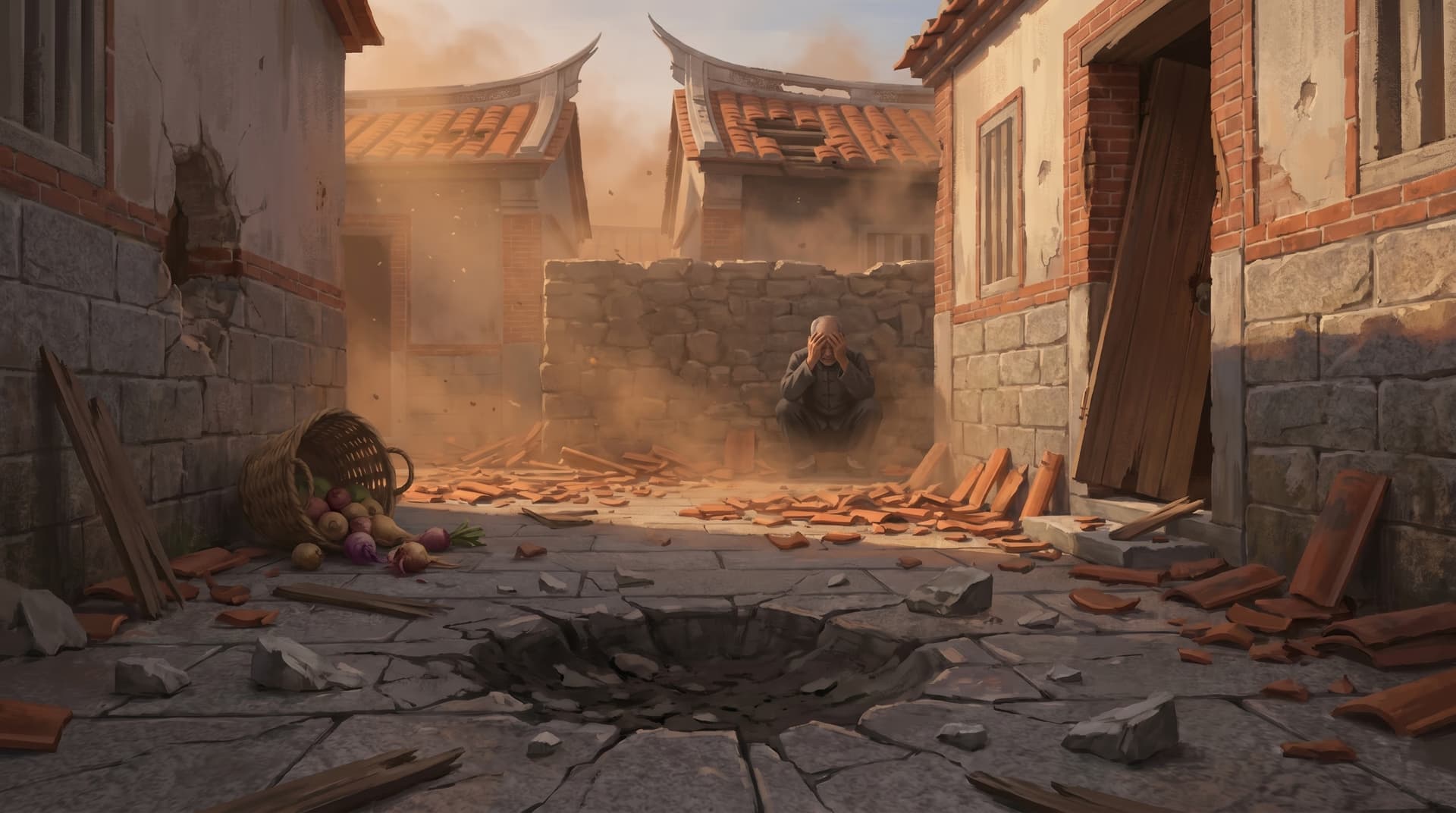
It is the afternoon of August the twenty-third, 1958. On Quemoy, an island a few miles wide, soldiers and civilians are going about an ordinary day. Then the mainland opens fire. Not a barrage. A deluge. In the opening hours, tens of thousands of artillery shells fall on the island. The fire does not let up for days, and then for weeks. Hundreds of thousands of shells come down on a patch of land smaller than a city. It is one of the most concentrated bombardments in the history of war. And across the strait, in Washington, in a room inside the Eisenhower administration, military planners lay out the options for stopping a Chinese assault on that island. The options on the table, later confirmed by a classified study that leaked decades afterward, include using nuclear weapons on mainland China.
Sit with the year. 1958. This was four years before the Cuban Missile Crisis, the moment the world remembers as its closest brush with nuclear war. And here was the United States already gaming out nuclear strikes on China, over two islands most Americans could not have found on a map. It did not happen. The crisis cooled into something almost too strange to believe. China kept shelling Quemoy for years, but on a schedule, odd-numbered days only, and after a while many of the shells held propaganda leaflets instead of explosives. A war on a timetable. That is what frozen actually means. Not safe. Just a fire that everyone agreed to stop looking at. Taiwan had become the place the United States and China rehearse a war without quite fighting one, and they have never stopped rehearsing. For decades, through all of it, the two governments agreed on exactly one thing: the people who actually lived on Taiwan would never get a vote. And then the island did the one thing nobody had planned for. It started voting.
Stay in the Loop
Get notified when new articles and videos drop. Unsubscribe anytime.
Chapter 4: The Island Starts Voting
Everything so far has been a fight between two dictatorships, Mao's and Chiang's.
For almost forty years Taiwan was not a democracy at all. It was a military fortress under martial law, braced for a war to retake the mainland that never came. Chiang Kai-shek died in 1975 still waiting for it. And then, slowly, under his son and the men who followed, the fortress opened. Martial law ended. Opposition parties became legal. The press was freed. And in 1996, Taiwan scheduled something no Chinese society anywhere had ever done. A direct, free election, the people themselves choosing their own president. To Beijing, that was more dangerous than any weapon, because an island that picks its own leaders is not a province waiting to come home. It is a country. So Beijing tried to stop the vote. Here is what that looked like.
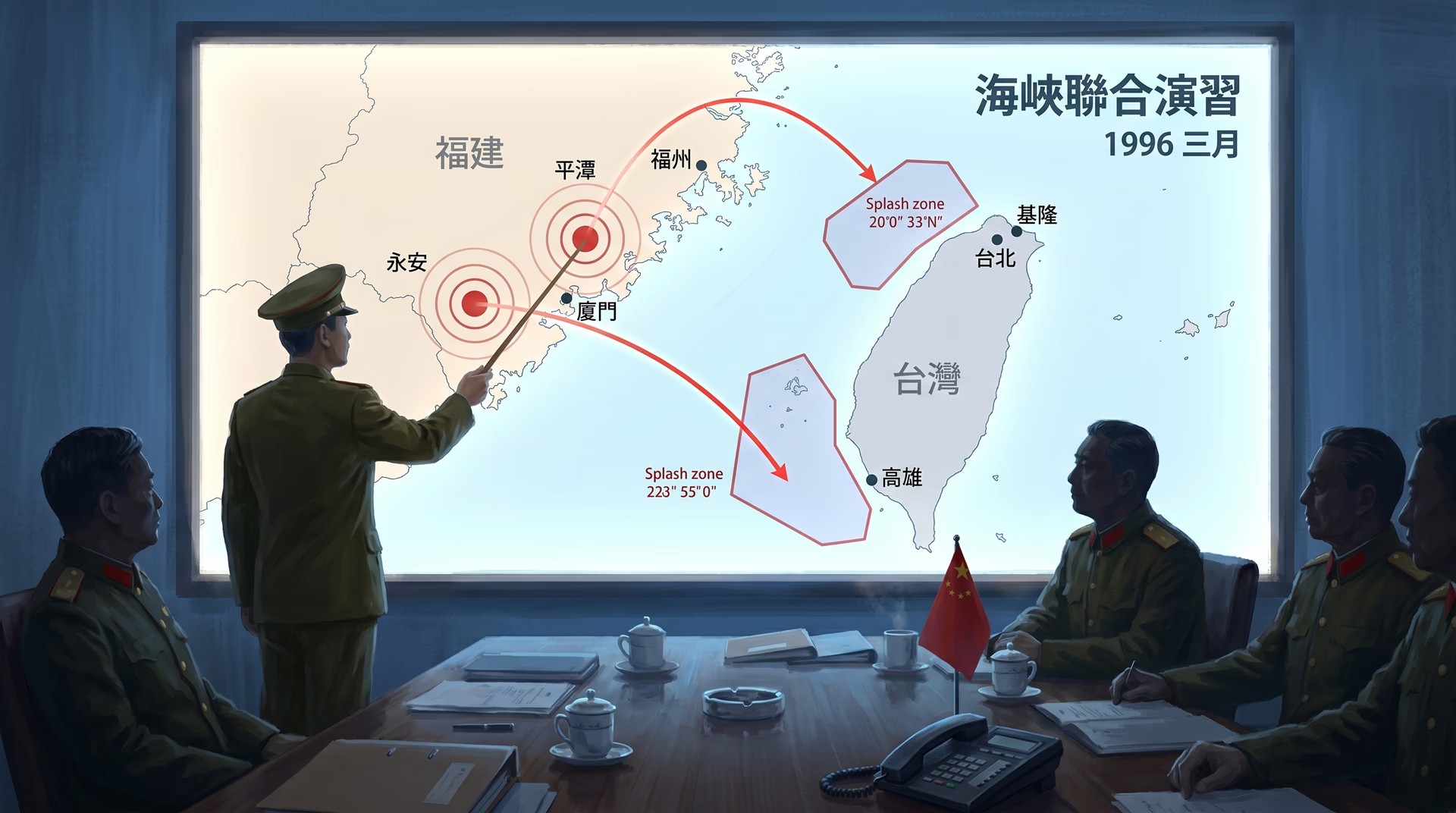
It is March 1996, the weeks before the election. Off the coast of Taiwan, the sea is erupting. China's military is firing live ballistic missiles into the water, on purpose, dropping them into shipping lanes and into the approaches to Taiwan's two largest ports. Every missile is a sentence aimed at the island's voters: choose wrong, and these stop being warnings. And then, over the horizon, the answer arrives. The United States sends two aircraft carrier battle groups toward Taiwan, the largest American show of naval force in Asia since the Vietnam War. Two of the most powerful fleets ever assembled, moving into the water between China and the vote. The island goes to the polls anyway. Turnout is enormous. And the people of Taiwan, told to their faces that voting could start a war, hand a landslide to the very candidate Beijing had been trying to frighten them away from.
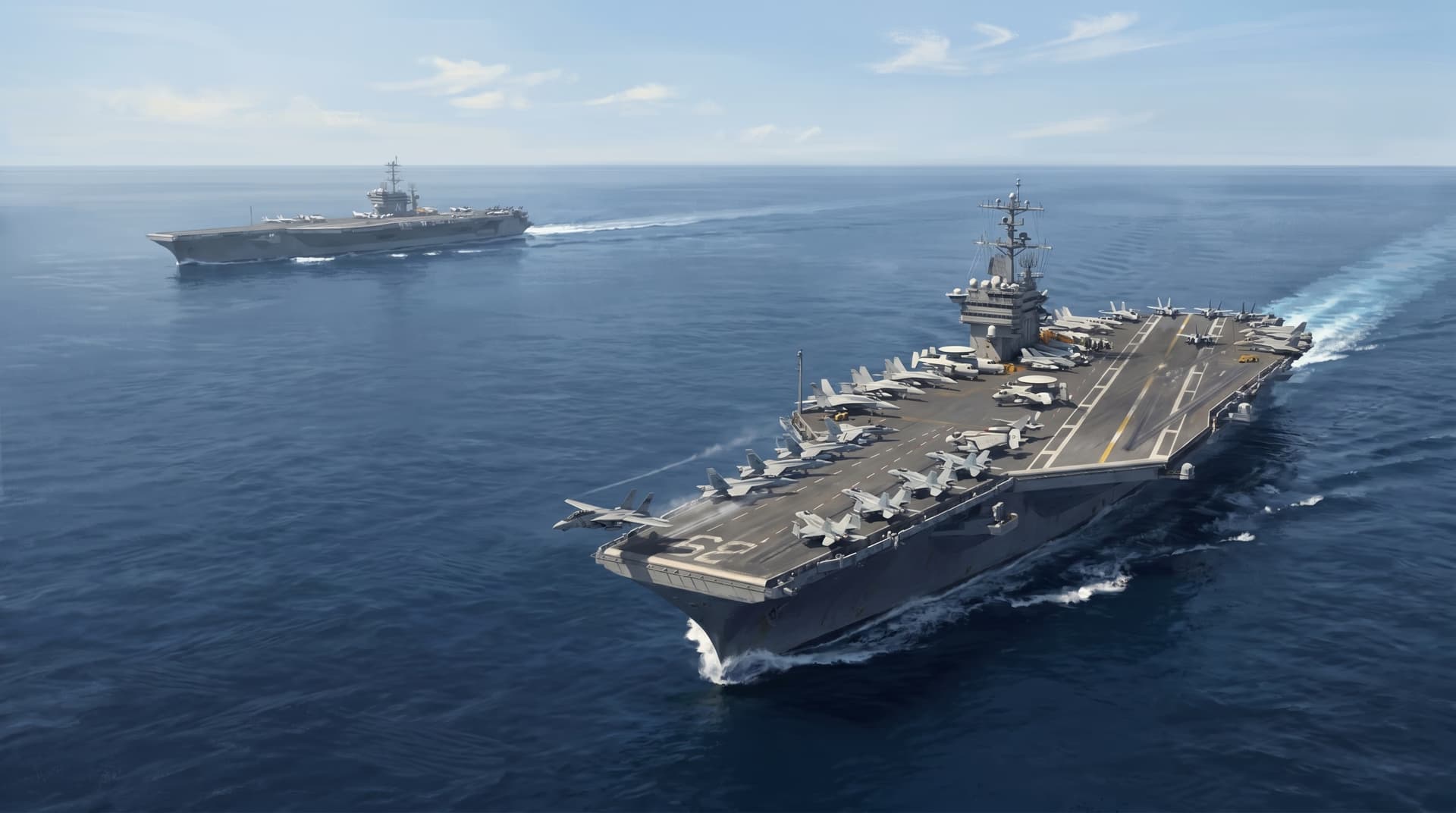
That standoff, in 1996, set the pattern the world is still living inside. China applies pressure. The United States moves warships. Taiwan does what it wants anyway. Thirty years later it is still running. Every Chinese fighter jet that crosses the strait, every American destroyer that sails through it, is a rerun of 1996. Which brings us back, finally, to that room in Beijing, and the two leaders, and one sentence about fire and water.
Chapter 5: Today
A civil war that never ended. A government that sailed a country to an island. A nuclear standoff over two rocks. A democracy that could not be frightened. Five chapters, and they all arrive in the same place. That room in Beijing, in 2026.
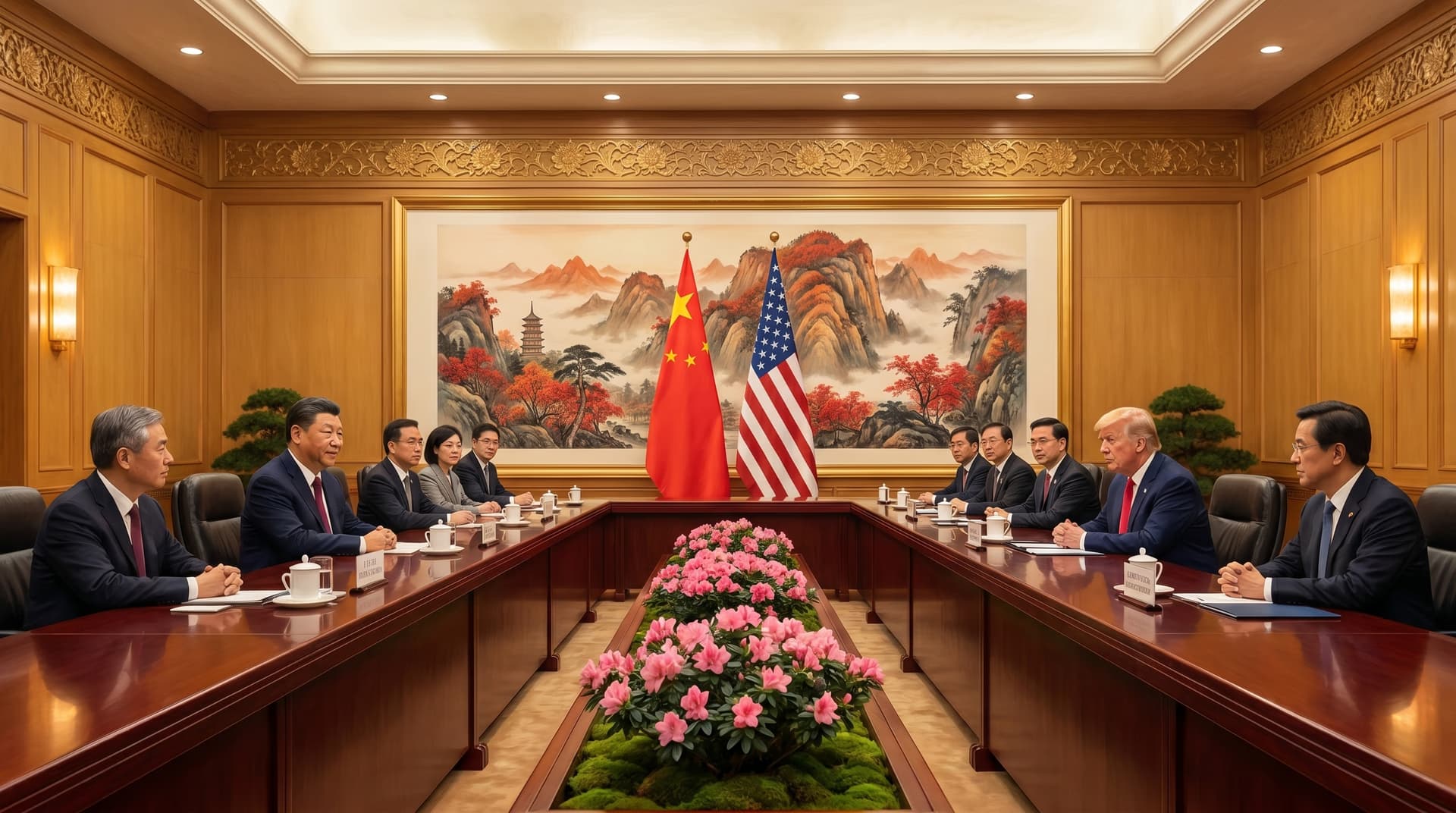
Picture the table. On one side, the President of the United States. On the other, Xi Jinping, who has run China for over a decade and means to run it longer. Between them, on the agenda, the small island. And Xi says the thing this whole video has been walking toward. Taiwan's independence, he says, and peace, are as irreconcilable as fire and water. It is not a threat in the ordinary sense. It is a description of a trap.
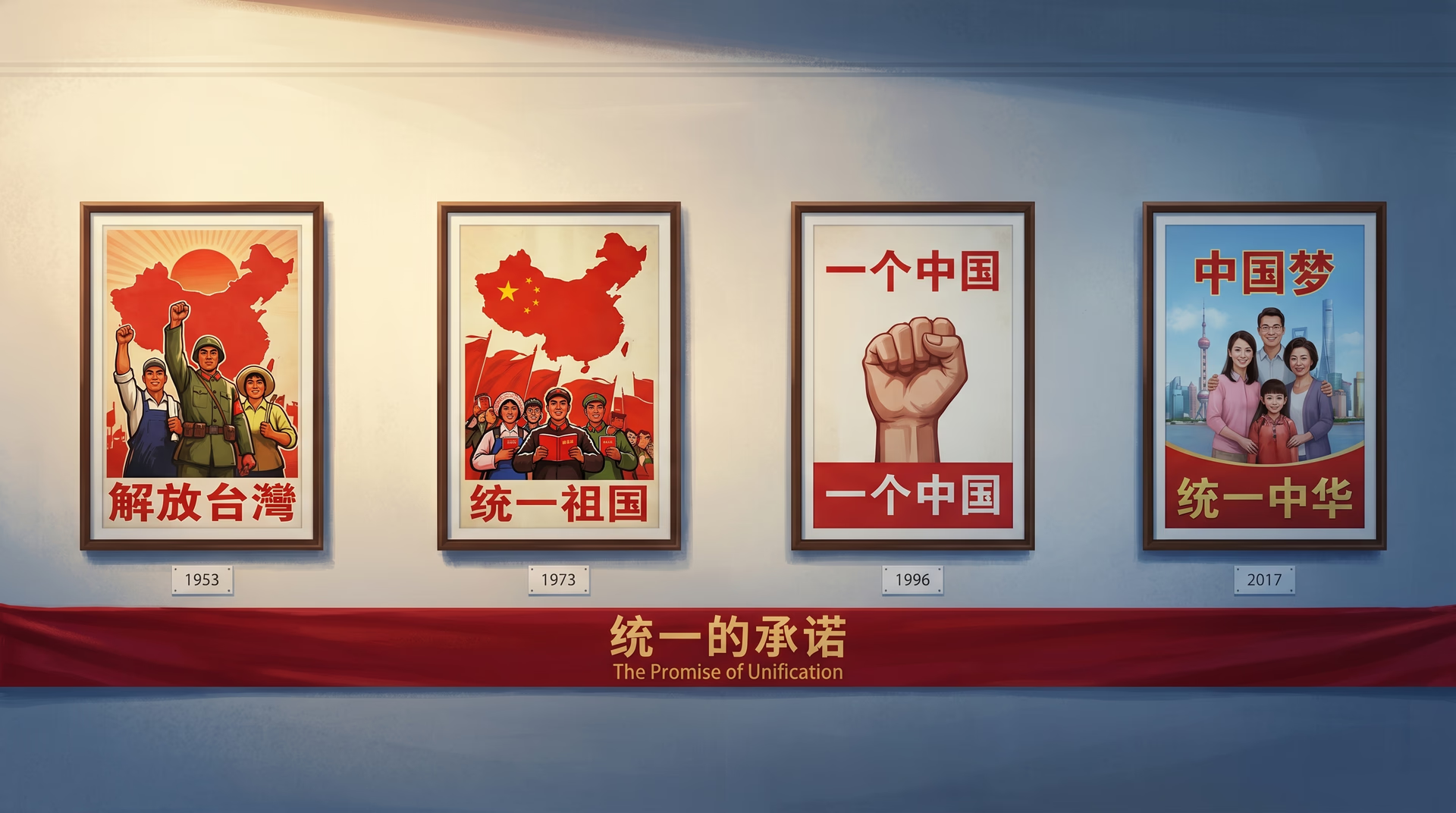
Here is the trap, and it is the real reason this never gets solved. Beijing cannot allow Taiwan to become formally, permanently independent. Not mainly for the island's wealth, though it is rich, and not only for its computer chips, though it makes most of the world's most advanced ones. The deepest reason is a promise. The Communist Party has staked its right to rule on one vow, repeated for decades: that it will make China whole again and erase a century of humiliation. A Taiwan allowed to walk away forever turns that vow into a lie. And on the other side, Taiwan cannot simply declare the independence it effectively already has, because Beijing has said, plainly and for decades, that the declaration itself, the words on paper, is the one act that triggers an invasion. So both sides are frozen. Taiwan governs itself completely and carefully never calls it independence. China insists the island is already its own and carefully, so far, never invades to prove it. Neither side can say the true thing out loud, because the true thing is what starts the war.
Outro
Here is what almost every news report about Taiwan gets slightly wrong. They cover it as a crisis. A war that might break out.
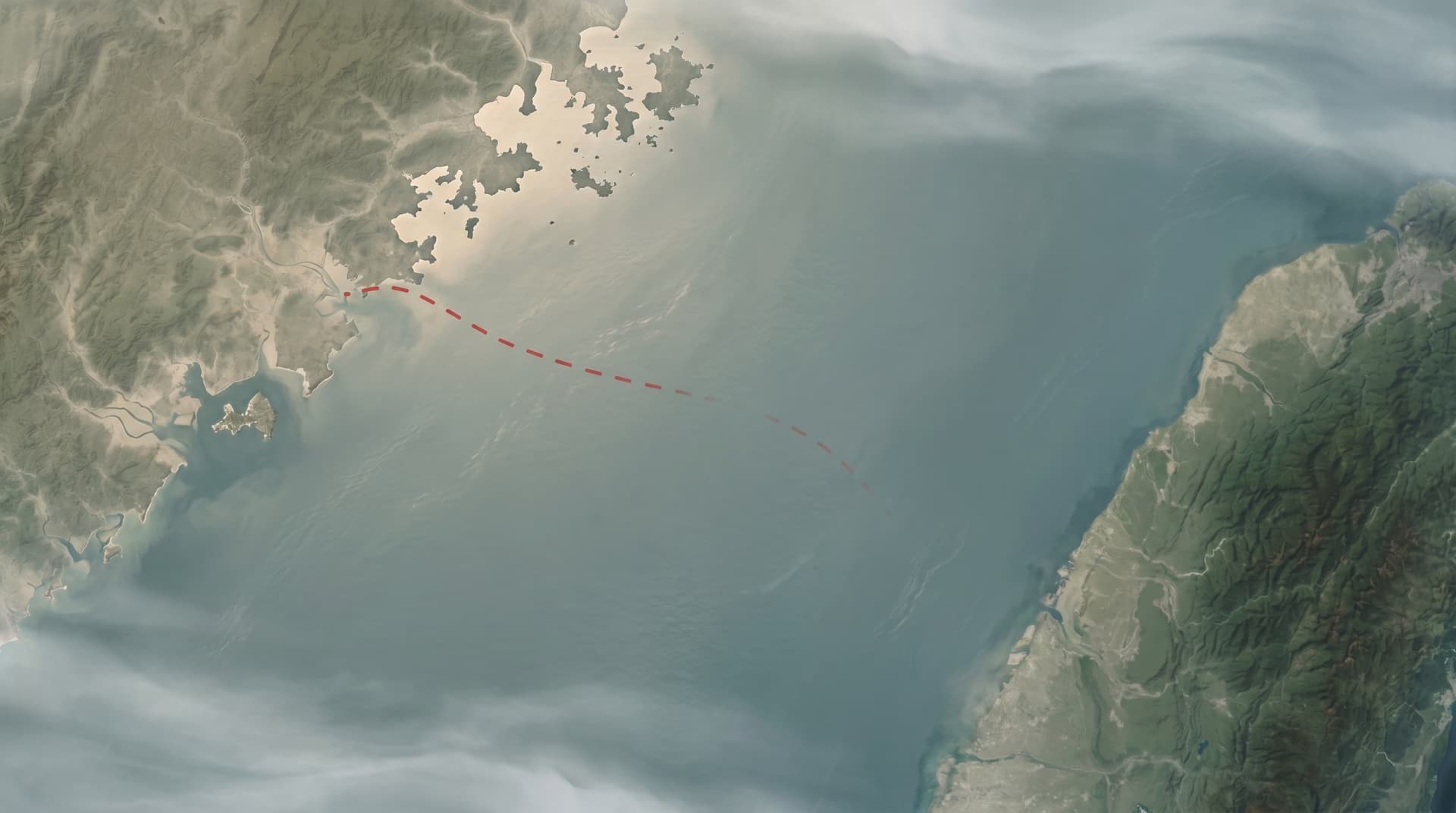
But a war cannot break out if it never ended. And this one never ended. There was no treaty in 1949. There was no surrender. There is still, today, no agreed border between China and Taiwan, because officially neither government will admit there is a border to draw. What the world calls the Taiwan crisis is not a crisis. It is the oldest unfinished war on the planet, a civil war that began in a Shanghai street in 1927, stopped its front line at the sea in 1949, and has been holding its breath ever since. 1958, 1996, that summit in 2026, none of them was a new war starting. They were all the same old war, reminding everyone it is still there.
The world keeps asking when the war over Taiwan will begin. The better question, the one this whole history actually answers, is why anyone still believes it stopped.
If this video did its job, you are holding questions it did not answer. How the losing side actually lost. Who Chiang Kai-shek really was. What Taiwan was, and who lived there, in the centuries before any of this. Those are their own stories, and they are coming. Subscribe so you do not miss them. I will see you in the next one.