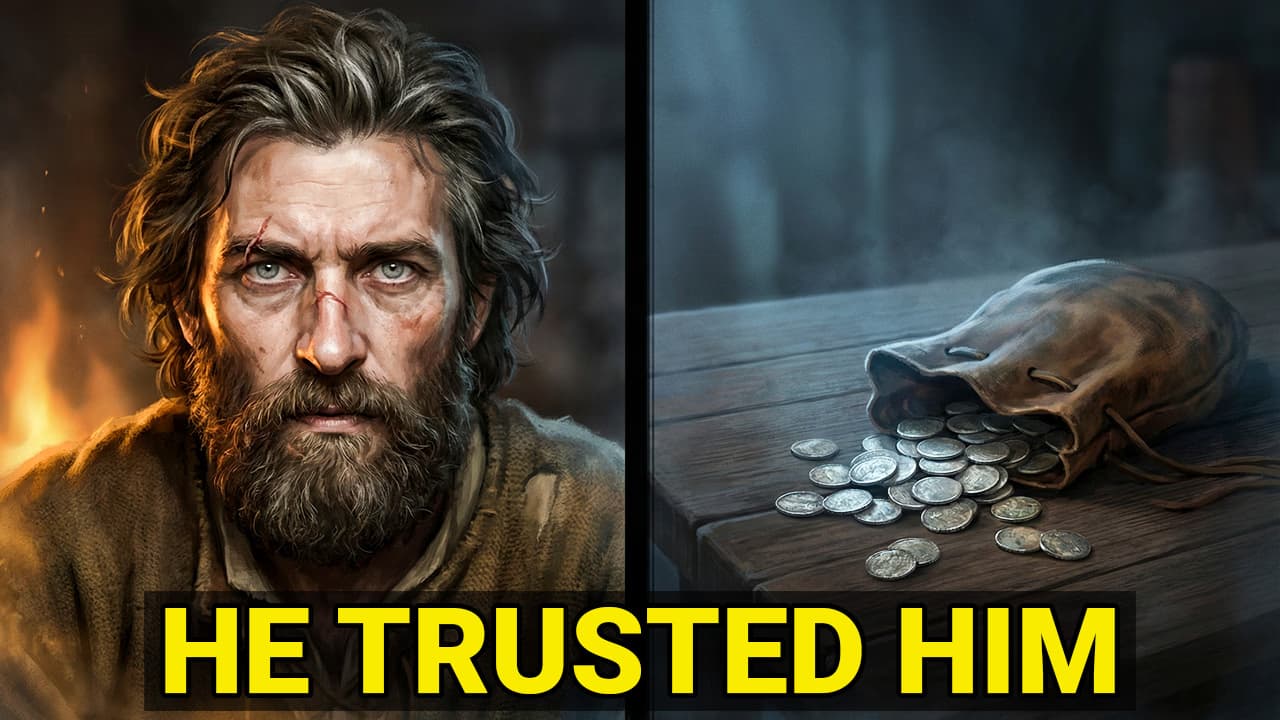
- Known for
- Wallace's personal servant who betrayed his master's location to Sir John de Menteith, leading directly to Wallace's capture and execution in 1305
- Fatal flaw
- A small man crushed between impossible forces, he chose survival over loyalty and bought a future with the only currency he had: his master's life
The Story
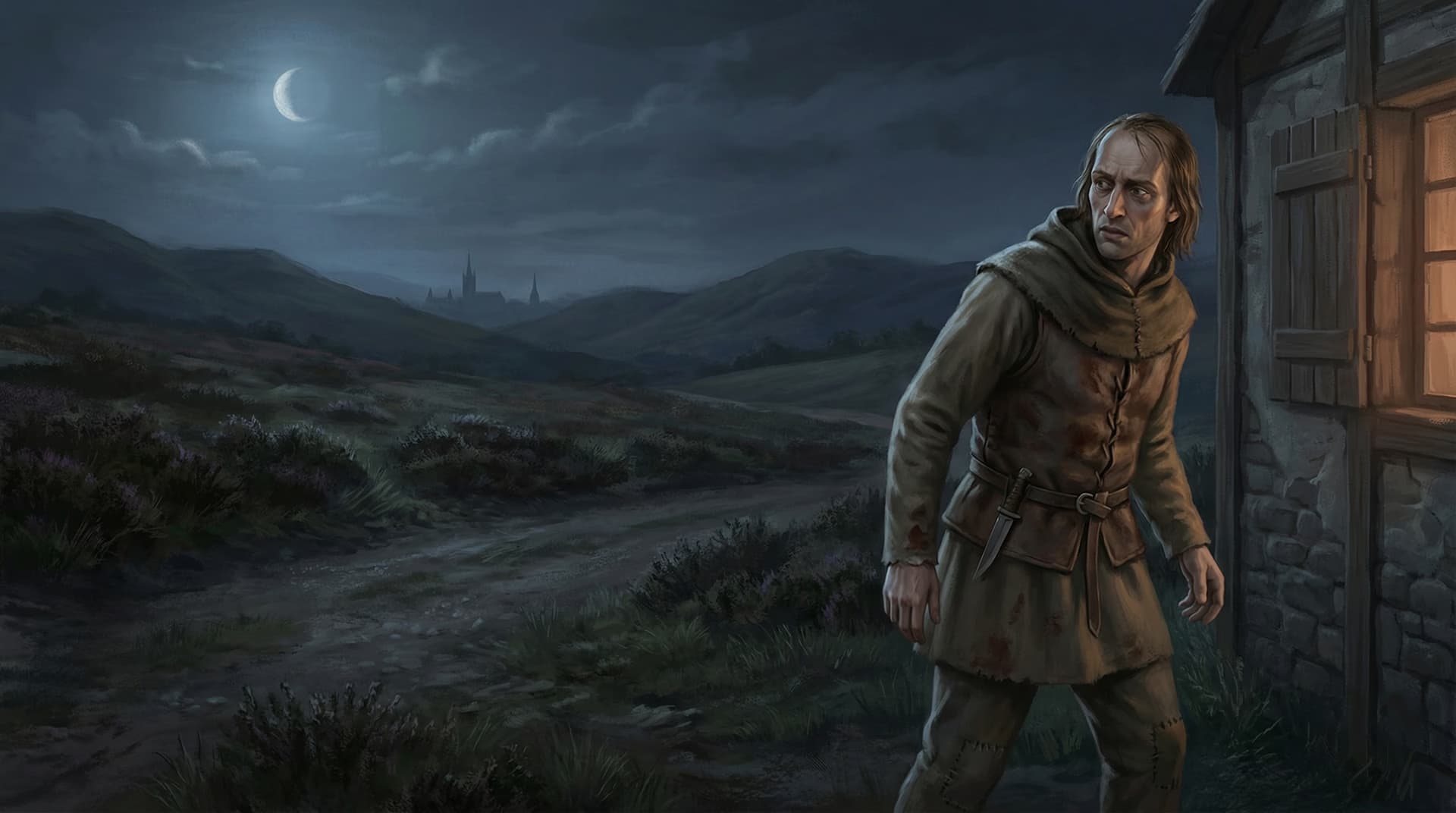
August 3rd, 1305. A house near Robroyston, just outside Glasgow. The night is still and warm. Inside, William Wallace sleeps on a straw bed, his greatsword within arm's reach. He has slept this way for seven years, always moving, always listening for the sound of boots in the dark.
Tonight, someone who knows exactly which house, which room, which bed, has already told the men coming to kill him.
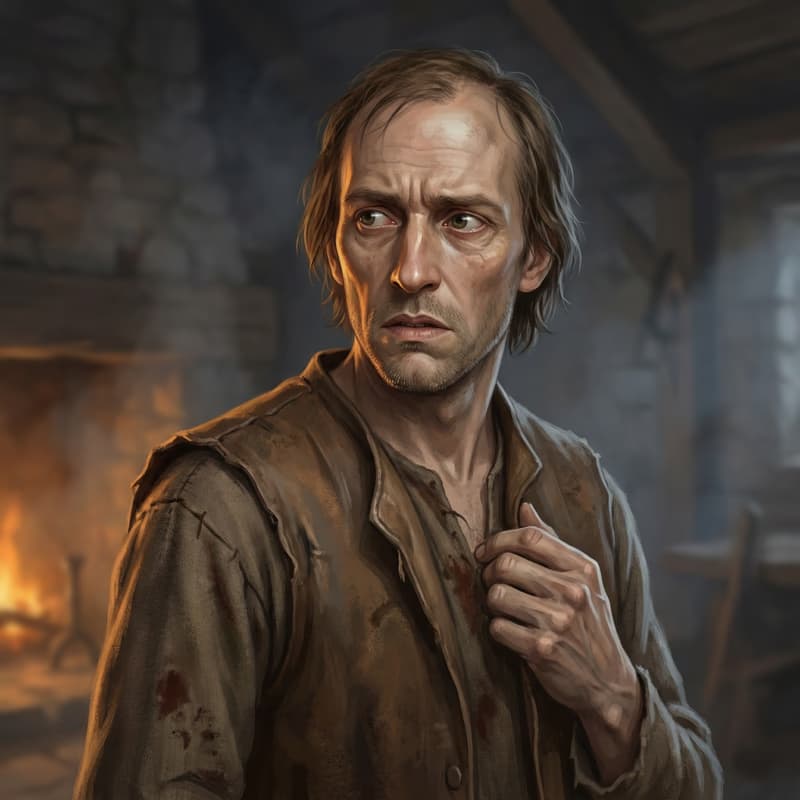
Jack Short had served Wallace for years. The chronicles do not say when he entered Wallace's service, or how. He appears in history only once, in the account of the English chronicler Piers Langtoft, named as the servant who gave up his master's hiding place to Sir John de Menteith, Sheriff of Dumbarton. Before that single mention, he is invisible. After it, he vanishes entirely. His entire recorded existence amounts to one act of betrayal.
But that act changed Scotland. Without Jack Short's information, Menteith could not have found Wallace. Without Menteith's capture, Edward I could not have staged the trial and execution that turned a fugitive outlaw into an immortal martyr. The most consequential act in the final chapter of Wallace's life was performed not by a king or a knight, but by a servant no one remembered to write about.
He was the kind of man history uses and discards. A nobody who, for one night in August 1305, held the fate of a nation in his hands. He traded it for thirty pounds and a chance to disappear.
Personality & Motivations
Jack Short was not a warrior. He was not a patriot. He was a servant, a man who carried gear, prepared meals, scouted roads, and kept his mouth shut. For years he had followed Wallace through the worst conditions medieval Scotland could offer: sleeping in forests, moving between safe houses, running from English patrols, watching the circle of men around Wallace shrink year by year as allies were captured, killed, or surrendered.
By 1305, Wallace's cause was finished. Every Scottish noble had submitted to Edward I. The castles flew English banners. The war was over for everyone except Wallace, who refused to accept it, and the handful of men still bound to him. Jack Short was one of those men. He had stayed when others left. He had remained loyal when loyalty meant living as a fugitive, hunted across a conquered country with no army, no allies, and no hope.
What broke that loyalty is the question history cannot answer. Piers Langtoft, the English chronicler who provides the only contemporary account of Short's role, claims that Wallace had killed Jack's brother. If true, it reframes the betrayal entirely: not greed but grief, not cowardice but revenge, a man carrying a private wound through years of forced service until the opportunity to settle the debt finally arrived. Whether the story is true or a convenient justification invented after the fact, no one can say. What is certain is that sometime in the summer of 1305, Jack Short made contact with Sir John de Menteith and told him everything.
What Most People Get Wrong
Most people assume Jack Short was a simple mercenary who sold Wallace for money. The reality is more complicated. Edward I had offered specific bounties for Wallace's capture: forty merks to any servant who spied out Wallace's location, and sixty merks to those present at the arrest. These were enormous sums for a common man, enough to buy land and livestock, enough to build an entirely new life.
But the financial incentive had existed for years, and Short had not acted on it. Something changed in 1305. Perhaps it was the total collapse of Scottish resistance after the submission of the nobles in 1304. Perhaps it was the realization that Wallace would never stop running, never surrender, and that everyone around him would eventually share his fate. Or perhaps, as Langtoft suggests, the death of Short's brother had been festering for years, and the summer of 1305 was simply when the poison finally surfaced. The truth is that Jack Short's motives died with him. History recorded the act but not the man behind it.
Key Moments
Service to Wallace, c. 1298-1305. Jack Short served Wallace through the bleakest years of the Scottish resistance. After Wallace's resignation as Guardian in late 1298 and his diplomatic mission to France, he returned to Scotland to find a country that had moved on without him. The nobles had submitted. The castles had fallen. Wallace went underground, conducting small raids and ambushes with a dwindling band of followers. Short was among them, one of the nameless men who kept Wallace alive, fed, and moving through a country crawling with English patrols and Scottish collaborators.
Contact with Menteith, summer 1305. At some point during the summer of 1305, Jack Short approached Sir John de Menteith, the Scottish-born Sheriff of Dumbarton who served under English authority. Short told Menteith where Wallace would be sleeping on the night of August 3rd: a house in Robroyston, near Glasgow. He provided the exact location, the layout, and the timing. It was the kind of intelligence only someone inside Wallace's inner circle could have known. Menteith, who had been tasked by the English administration with finding Wallace, now had everything he needed.
The night of August 3rd, 1305. Menteith's men moved through the fields around Robroyston under cover of darkness. They knew exactly which house. They knew exactly which room. Jack Short had given them everything. The door was broken down. Wallace surged from his bed, reaching for his sword, but there were too many of them. His companion Kerlie was killed in the scuffle. Wallace was seized, bound, and dragged to Dumbarton Castle. The most wanted man in Britain, taken in his nightclothes by men who knew where to find him because his own servant had drawn them a map.
The reward. Jack Short received his payment. The records of the era place it at thirty pounds, consistent with the forty merks Edward had offered for information from a servant. It was enough to buy land, livestock, a future. What Jack Short did with that future, where he went, whether the money brought him peace or ate at him for the rest of his days, the chronicles do not say. He vanishes from history as completely as he entered it.
The Detail History Forgot
Jack Short's name survives in a single source: the chronicle of Piers Langtoft, an Augustinian canon at Bridlington Priory in Yorkshire who wrote a verse history of England in Anglo-Norman French. Langtoft's account is the only contemporary document that names the servant responsible for Wallace's betrayal. Without this one mention in one English chronicle, Jack Short would be completely unknown, his role absorbed into the general narrative of Menteith's treachery.
This matters because it reveals how medieval history worked. Menteith, a knight and sheriff, was remembered and vilified for centuries. The Scots called him "Fause Menteith," False Menteith, and the name followed his descendants for generations. But the man who actually provided the intelligence, the servant who made the capture possible, was barely recorded at all. Medieval chroniclers documented the actions of nobles and knights. Servants were invisible. Jack Short's single appearance in Langtoft's chronicle is almost accidental, a detail included because the English wanted to emphasize that Wallace was betrayed from within, not captured through English skill. Even in the act of recording his name, the chronicler was using him as a prop for someone else's story.
The Downfall
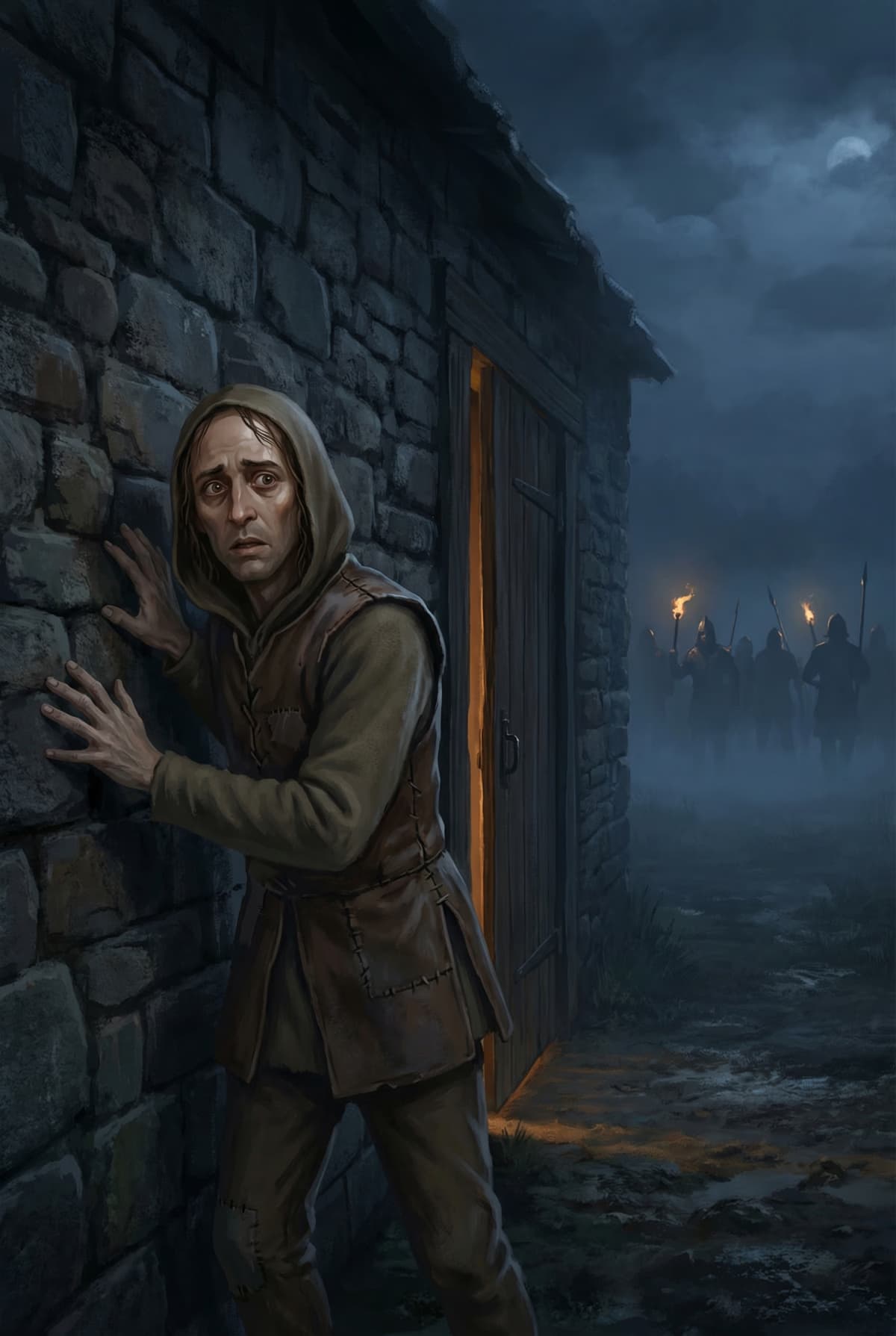
Jack Short's betrayal was not a dramatic reversal. It was the quiet collapse of a man who had been worn down to nothing. Years of fugitive life, sleeping in forests, eating what could be foraged or stolen, watching the cause he served crumble from the inside as every nobleman in Scotland bent the knee to England. He had stayed loyal longer than most. He had endured more than most. And then, in the summer of 1305, he stopped enduring.
The chronicler Piers Langtoft offers one possible explanation: Wallace had killed Jack's brother. If true, then Short spent years serving the man who murdered his own family, smiling and carrying gear and sleeping beside a killer, waiting for the right moment. If false, then the betrayal was simpler and uglier: a man who decided that thirty pounds and a clean break were worth more than loyalty to a doomed cause. Either way, the result was the same. Wallace was dragged to London, tried without defense, and executed with a brutality designed to terrify a nation into obedience.
Jack Short bought his freedom with his master's life. He took the money, and he disappeared. History does not record his death, his burial, or whether anyone mourned him. He exists as a single act, a name in a chronicle, the man who opened the door. In a story full of kings and knights and martyrs, Jack Short is the reminder that the pivotal moments often belong to the people nobody writes about. The servant. The informer. The man who knew which room, which bed, which night. He sold that knowledge, and Scotland's greatest hero died screaming on a scaffold in London. Jack Short lived. That was the whole of his ambition, and the whole of his legacy.
Frequently Asked Questions
Yes. Jack Short is named in the chronicle of Piers Langtoft, an Augustinian canon at Bridlington Priory in Yorkshire who wrote a verse history of England in Anglo-Norman French. Langtoft identifies Short as Wallace's servant who provided information to Sir John de Menteith that led to Wallace's capture at Robroyston on August 3rd, 1305. This is the only contemporary source that names him.
The exact motivation is unknown. The chronicler Piers Langtoft claims that Wallace had killed Jack Short's brother, which would make the betrayal an act of personal revenge rather than simple greed. However, Edward I had also placed a bounty of forty merks on intelligence from any of Wallace's servants, offering a powerful financial incentive. It may have been one reason, the other, or both working together. The truth died with Jack Short.
The reward was approximately thirty pounds, equivalent to forty merks. Edward I had specifically offered forty merks to any servant who provided intelligence leading to Wallace's capture, and sixty merks to those present at the actual arrest. For a common servant in 1305, thirty pounds was a transformative sum, enough to purchase land, livestock, and the foundations of a new life.
Nothing is known. Jack Short vanishes from the historical record entirely after the betrayal. No chronicle records where he went, what he did with his reward money, or when and how he died. He appears in history for a single act and then disappears completely.
As Wallace's personal servant, Short had intimate knowledge of his master's movements, hiding places, routines, and network of safe houses. He knew which houses Wallace used, which routes he traveled, and where he would be on any given night. This was exactly the kind of inside intelligence that Edward I's bounty system was designed to extract from members of Wallace's inner circle.
Both were essential. Menteith had the authority, the soldiers, and the political connections to carry out the arrest, but he could not have found Wallace without Short's intelligence. Short knew where Wallace would be sleeping, but he lacked the means to capture him alone. The betrayal required both men: the servant who knew the secret and the sheriff who had the power to act on it. History has vilified Menteith far more than Short, largely because medieval chroniclers focused on nobles, not servants.
There is no record of Wallace learning who specifically betrayed him. He was seized in his bed in the middle of the night and immediately bound and transported to Dumbarton Castle, then to London for trial and execution. Whether he ever learned that his own servant had sold his location is not recorded in any surviving chronicle.
Wallace was captured at Robroyston, a small settlement just outside Glasgow. The name may derive from "Rab Rae's Toun," referring to the owner of the property where Wallace was staying. A memorial in the form of a Celtic cross marks the site today. Menteith's men approached the house under cover of darkness on the night of August 3rd, 1305, using intelligence provided by Jack Short.
The chronicle of Piers Langtoft, also known as Peter de Langtoft, an Augustinian canon at Bridlington Priory in Yorkshire. He wrote a verse history of England in Anglo-Norman French that covers events from the legendary founding of Britain to the death of Edward I. His account of Wallace's capture is the sole contemporary source that names Jack Short as the servant who betrayed Wallace to Sir John de Menteith.
No. The 1995 film Braveheart does not include Jack Short or the historical circumstances of Wallace's capture. In the film, Wallace is betrayed by Robert Bruce at the Battle of Falkirk, which did not happen historically. The actual betrayal by a servant at Robroyston, the role of Menteith, and the involvement of Jack Short are entirely absent from the movie. The real story of Wallace's capture is, in many ways, more tragic than the fictional version.